This will be step by step the disembarkation of the cruise ship under high security measures
From this Saturday, the executive has the judicial go-ahead for the passengers' quarantine
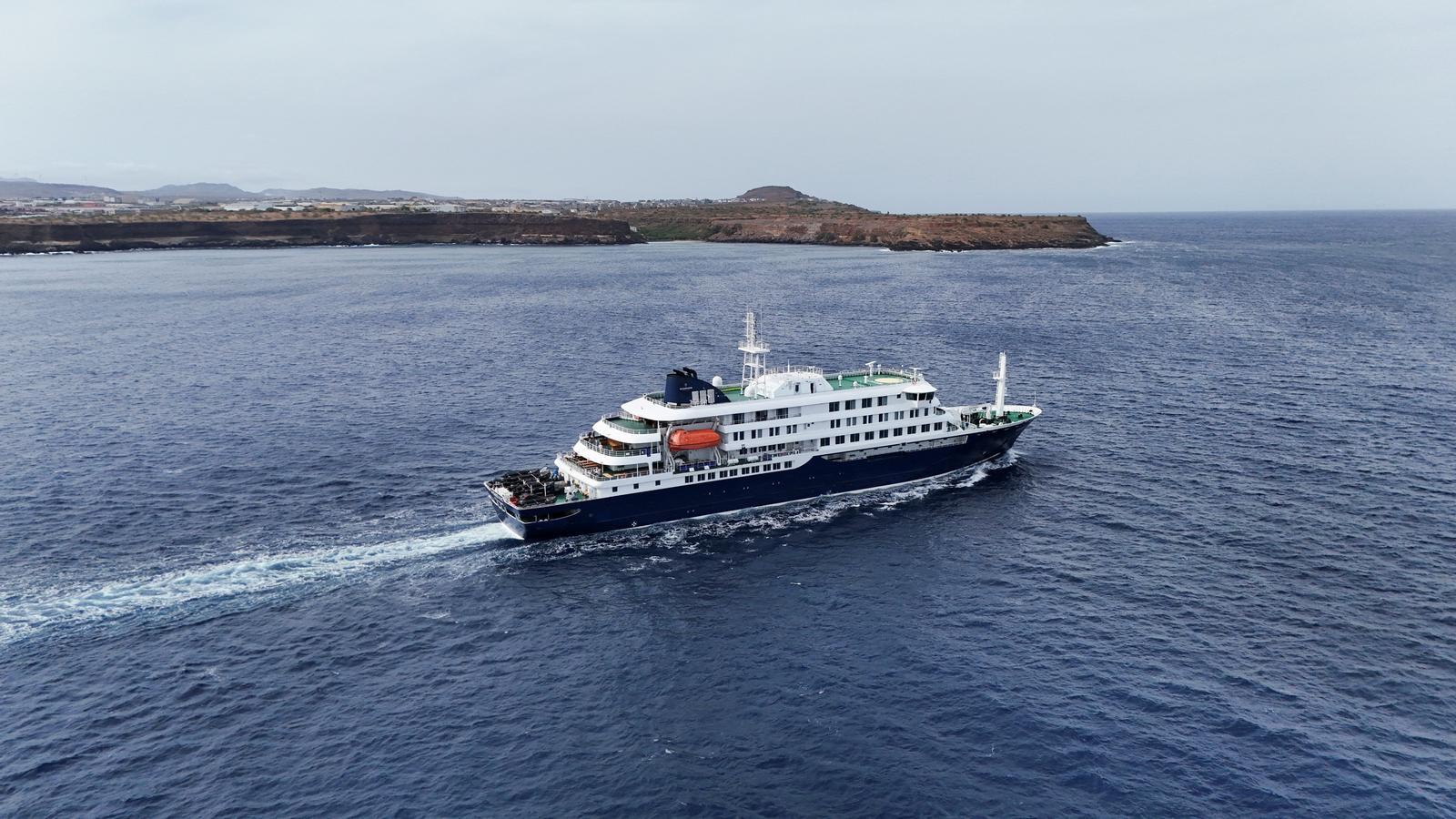
BarcelonaThe complex operation that this Sunday must evacuate the passengers and part of the crew of the MVHondius has involved great diplomatic efforts to coordinate the actions of the different countries, but also to allay the fear of hantavirus and the reluctance for the cruise ship to approach the Canary coast. Concerns that have also served to fuel political attacks. The outbreak totals six positive cases – including the three fatalities – so the ship will arrive in port without any new infections having been confirmed.
Spanish ministers have been insisting for days that the operation will not put the population of Tenerife at risk at any time. Politicians and scientists, who insist on differentiating the current situation from that of covid-19, have also sent messages of reassurance about the extent of the virus. This Saturday, the Director-General of the World Health Organization (WHO), Tedros Adhanom, also wanted to do so. In a message on social media, he addressed Canarians directly: "This is not another covid. The current risk to public health from hantavirus remains low. Trust the preparations that have been made. And know that the WHO is with you."
Adhanom arrived in Tenerife this Saturday, at the same time as the Ministers of Health, Mónica García, and the Interior, Fernando Grande-Marlaska. They landed in the south of Tenerife a few hours before the cruise ship docks there. The forecast is that the ship will be in Canary waters between five and seven this Sunday, Catalan time, and will not enter the port of Granadilla until daylight. At that moment, the evacuation of the 151 people on board will begin, which will always be done by nationality groups. In total, there are people from 23 different countries.
The first step of the protocol will be an "exhaustive evaluation" to check that everyone continues to be asymptomatic, as the Spanish government underlined this Saturday night. If so, they will begin to disembark in a "staggered and orderly manner," Marlaska and García explained. The ship will anchor within the port, but will not reach the coast, and, while it is there, the Spanish government has prohibited any navigation within one nautical mile of the vessel. Only the army's small boats will approach, bringing passengers ashore in groups of five. The executive has reiterated that no one will leave the ship until the plane that will repatriate them is ready to take off, and therefore insists that there will be no risk of contagion for the island's inhabitants.
Zodiacs and 11 kilometers by bus
The first to disembark from the ship will be the 14 Spanish passengers on board and the WHO representative in Africa who is also on the ship – there are four epidemiologists in total – and who is considered a contact of an infected person. The zodiacs will take them to shore, where buses will be waiting to cover the 11 kilometers to the airport. There they will board a Spanish Air Force plane. The fifteen will be quarantined at the Central Defense Hospital Gómez Ulla in Madrid. The isolation period they must undergo will be calculated based on the day contact occurred, and will be reviewed based on their progress and test results. From the moment they arrive at the port of Granadilla, they will also be accompanied by a psychiatrist who will stay with them until they are admitted to the hospital, and they will also have access to a psychological support telephone line available 24 hours a day.
So far, all persons on board the ship have shown willingness to isolate themselves to prevent the spread of the virus. Even so, since this Saturday, the executive has had judicial approval for the quarantine. A Madrid court has ratified the Ministry of Health's order notifying the isolation measures that the Spaniards on the MVHondius must follow, and considers the measure to be "proportional" to the risk of contagion.
All persons disembarking from the MVHondius this Sunday will only be allowed to carry a small piece of hand luggage, which must be closed in a bag. Only basic items, such as identification, mobile phone, and charger, may be carried. Both those evacuated and the personnel participating in the operation will be protected with FFP2 masks to prevent contagion.
Only 30 crew members will remain on board – the other 17 will be repatriated – who will continue sailing to the Netherlands, the country under which the cruise ship is flagged. This is the option that the Spanish government had defended during the week in negotiations regarding the ship's destination.
Exhaustive" tracing
For now, the WHO has confirmed six positive cases of hantavirus, among which there are three deaths, and there are two more probable cases. Spanish ministers have reiterated in recent days calls for calm and not to magnify the scope of the virus, and have also insisted that an "exhaustive" tracing is being carried out of all persons who were on the plane that traveled the Johannesburg-Amsterdam route, where the woman who had been infected on the cruise and ended up dying boarded for a few minutes. Italy also has four people under surveillance who were on the same flight. Therefore, it cannot be ruled out that more contacts may appear.
For now, the Spanish government has three possible contacts under its radar who were on the plane where one of the victims boarded. The first was a 32-year-old woman, who was admitted to a hospital in Alicante on Friday because she presented symptoms after having been in contact with the Dutch woman who died in Johannesburg. This Saturday, however, the PCR result has been negative for hantavirus, and as protocol, she will be given another test within 24 hours.
Health authorities have also contacted, through the embassy, a South African woman who spent a week in Barcelona and is now in her country. The woman stated that she had not had close contact during her stay in the Catalan capital. Finally, this Saturday, a woman has been admitted to the Hospital Clínico in Barcelona to undergo quarantine there. Like the others, she has undergone a PCR test to verify if she has contracted hantavirus. For now, then, the only suspected case – that of the woman from Alicante – has been ruled out, and the other two women – who are not considered suspected cases, but contacts – are awaiting laboratory results.
