Which fires are the Firefighters putting out? The map of Catalonia, fire by fire
The extinction body is facing a scenario of simultaneity every day, one of the most concerning

-
CAT -
CAST
BarcelonaCatalonia faces a much better water scenario this summer than in previous years, but this does not mean that the risk of fires is lower. Abundant rainfall, especially during winter, has allowed water reserves and the territory's water status to be recovered. Reservoirs have been filled, forests have been recovering from the historic drought, and vegetation has grown strongly after months of generous rainfall.
However, this same vegetation growth brings a less positive consequence. With the premature arrival of high temperatures and the lack of rain in recent weeks, a large part of the vegetation cover has been drying out rapidly and has become a large amount of fuel available in case of fire. This means that, even though the territory is much less dry than in previous summers, the potential for a fire to gain intensity remains high in many areas, especially in the interior of the country.
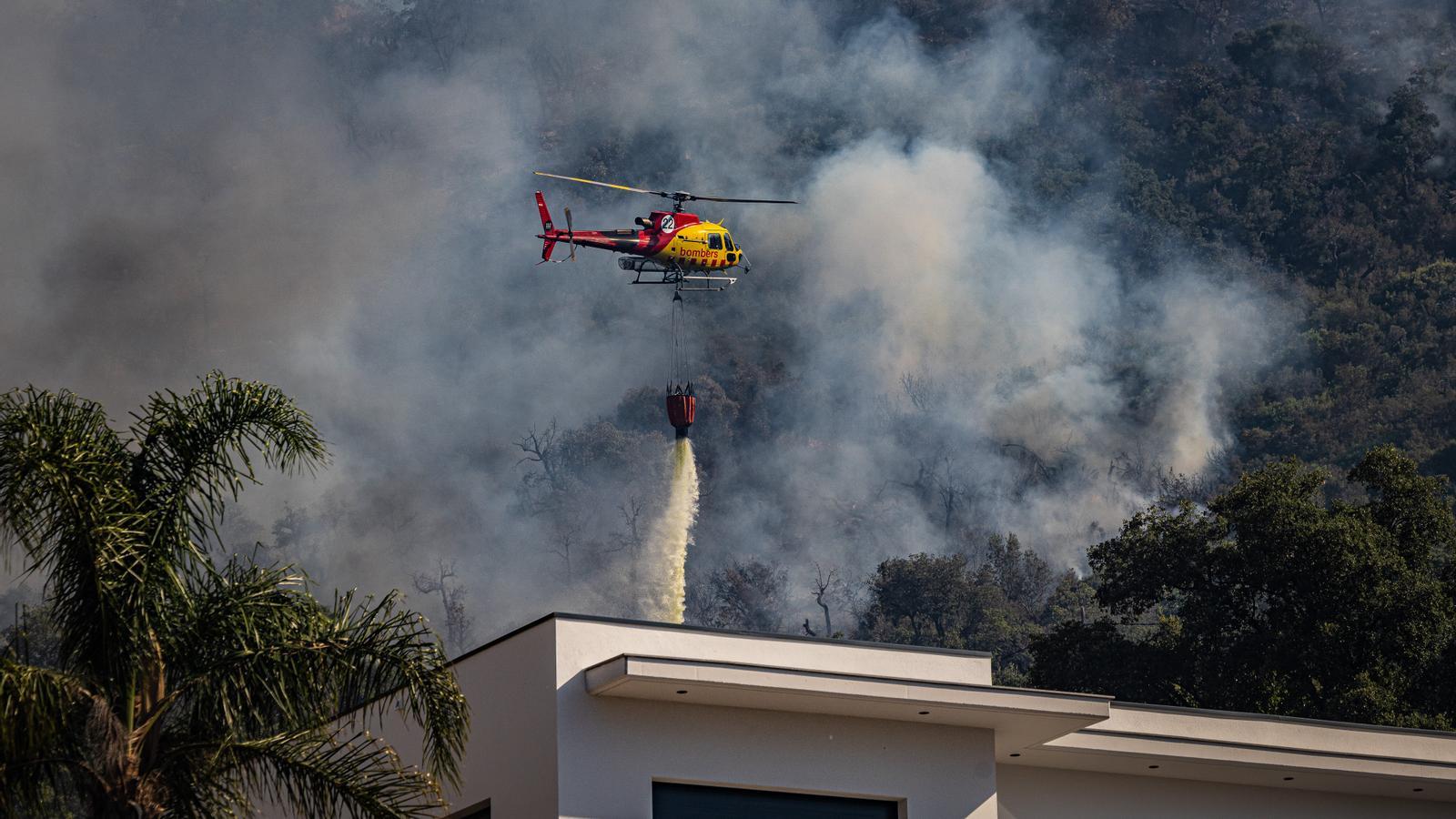
A clear example is the serious forest fire that burned in early July in the area of Bisbal d'Empordà (Baix Empordà). During its first 48 hours, it advanced uncontrollably, fueled by the reheated tramuntana wind. Many other fires have also occurred throughout the country, especially during the first fortnight of July, due to constant heatwaves, although they did not burn nearly as many hectares as the one in Bisbal. After this wave of simultaneous fires, new ones have been occurring in some areas. Notable is the one that also burned in Senet (Alta Ribagorça) in an area of difficult access and affected hectares of the peripheral zone of the Aigüestortes National Park, a natural treasure of the Alt Pirineu threatened by the flames due to the drought the area is experiencing this summer. It is the first high-intensity fire in the Pyrenees, which burned more than 100 hectares.
With the constant heatwaves we are having this summer, simultaneous fires are occurring practically every day in southwestern Europe, the worst-case scenario for firefighters. July has been particularly devastating in the Iberian Peninsula and France, where the fires have been historic. The serious fire that burned between the Community of Madrid and Ávila has ravaged more than 55,000 hectares, the worst scorched area in Spain's history. Also noteworthy is the serious fire near Bordeaux, which has scorched more than 42,000 hectares, the worst fire in that country's history. The most tragic fire was the one in Los Gallardos, Almería, which caused the death of 13 people. In Europe as a whole, more than 400,000 hectares of forest have already been burned this year, half of which in Spain, the country most affected by this wave of fires resulting from extreme heat and drought.
Active fires
In this map, updated minute by minute by the Bombers de la Generalitat, you can consult all the fires declared in Catalonia depending on their status, be it active, stabilized, controlled, or extinguished. The scenario of simultaneous fires is always one that causes the Bombers the most distress, as they face the possibility, however remote, of not being able to reach all fires or not being able to allocate the necessary resources to them. To define the fires that occur in our country, the Bombers speak of generations.
Lately, there has been much talk of sixth-generation fires, which burn at unprecedented speeds, affect large areas, and create large pyrocumulus clouds that generate their own extreme meteorological conditions. Fifth-generation fires, however, are those that occur simultaneously. On Tuesday, July 7, in the evening, for example, the situation was very critical, as the Bombers had to work on about fifty fires at the same time.
The risk of fire
In this other map updated daily you can check the fire danger level of your municipality, which is high or very high in many regions. Nevertheless, showers and strong afternoon thunderstorms have reappeared in several regions this August, especially in the Pyrenees, Pre-Pyrenees, and Central Catalonia. This has helped to reduce the risk of fires. Forecasts indicate that throughout this month showers will increase and wet more land. Good news considering the extreme heat we are suffering. The maps also indicate that temperatures may normalize during the second half of August, after so many weeks soaring above average.
Precisely, extreme heat is a key factor this summer. Since spring, Catalonia has been experiencing extraordinarily high temperatures, with several intense heat episodes culminating in three consecutive heatwaves. In fact, Catalonia has recorded the warmest start to summer since records began, with a record average temperature of 3.8 ºC above the climatic average between June 1 and July 15. Furthermore, July has also been the warmest and one of the driest months since records have been kept. There are areas of the country that have gone practically two months or more without receiving a single drop of water. High temperatures accelerate the drying of vegetation, reduce environmental humidity, and create more favorable conditions for any ignition to quickly turn into a forest fire.

How many hectares have burned this year?
This year, more than 3,600 hectares of forest have already been burned in Catalonia, the vast majority of which during the Bisbal d'Empordà fire. We have already had almost 600 fires declared, and the region with the most fires registered so far is Vallès Occidental. This is a figure of burned land that is currently better than, for example, last year, when during the heatwave between the end of June and the beginning of July a large fire occurred in Ponent that destroyed more than 5,000 hectares of forest and agricultural land. However, the number of fires declared is higher than that of 2025.
In fact, last year was the worst in the last decade in terms of burnt area. If we add forest and non-forest areas, 10,000 hectares were scorched. In the following graph, you will find the forest hectares burnt each year since 1970, with 1994 being the worst year for burnt area, followed by 1986. The large investment made for years in Catalonia for fire prevention and extinction is helping to ensure that recent years are very far from the catastrophic figures of the eighties and nineties, especially regarding the number of fires.
With global warming and the climate crisis, summers are starting earlier and are increasingly dry and warm in our region. Episodes of intense heat are more frequent and can cause increasingly devastating and fierce fires, due to the extreme weather conditions that are generated. These are what are known as sixth-generation fires.
The combination of abundant vegetation and persistent, premature heat creates a scenario that requires extreme vigilance. Catalonia is experiencing this summer with more water in reservoirs than in recent years, but also with more fuel in the forests and a lot of heat. Factors that will mark the evolution of this year's fire campaign.
