Jaume Collboni: "We want to triple what cruise ships pay in Barcelona"
Mayor of Barcelona
-
CAT -
CAST
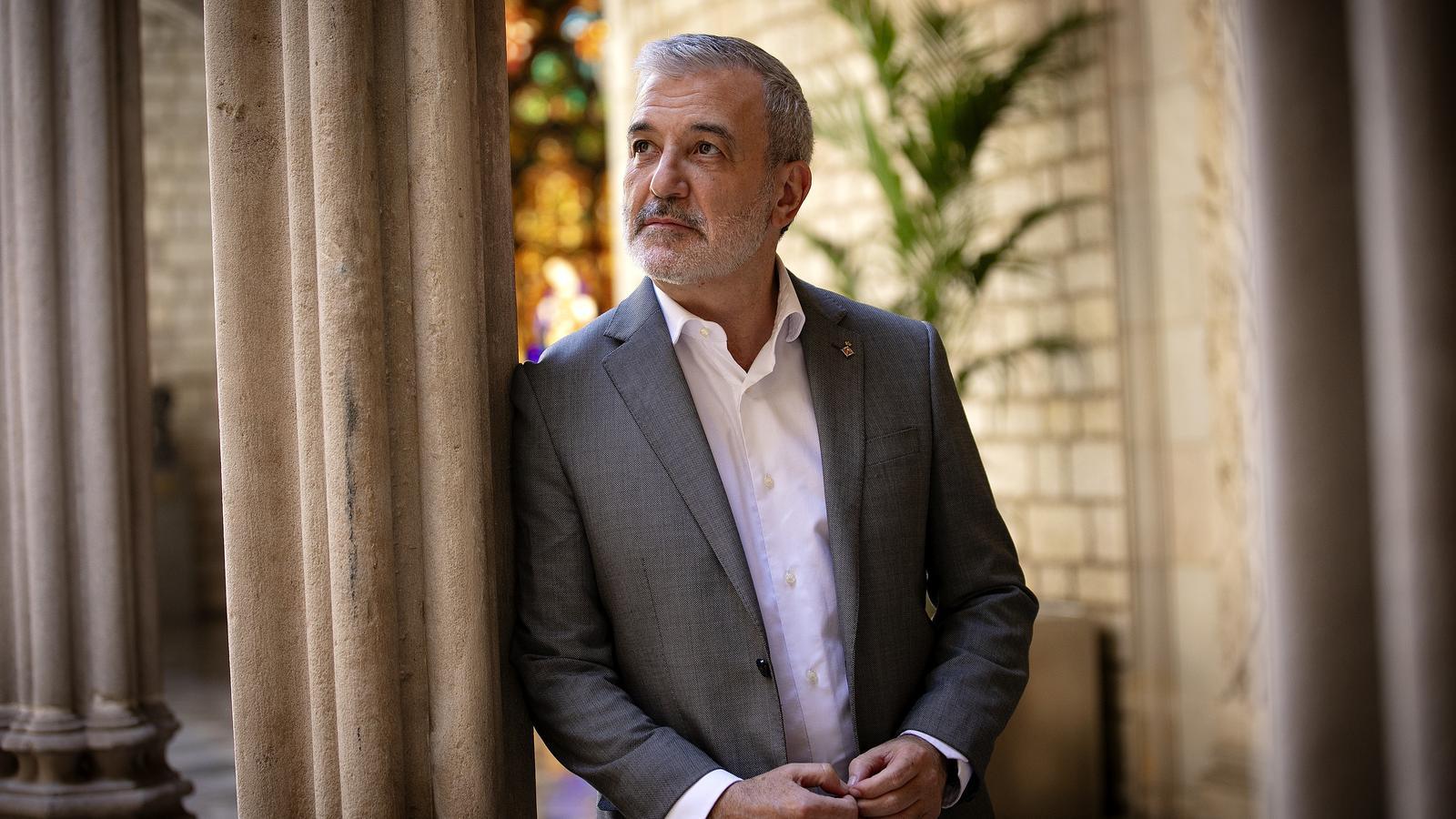
BarcelonaMayor Jaume Collboni (Barcelona, 1969) receives ARA when there is just one year left until the municipal elections. We talk about housing –the main problem for Barcelonians–, tourism, security, and also about the situation of the PSOE amidst the Zapatero storm.
If you had to approve a single measure in what remains of your term, what would it be?
— The one that makes it possible to reduce cruise ship stairs to zero.
The Port has not taken it well, for now.
— Well, it doesn't just depend on the Port. It is evident that the tourism model in Barcelona must have limits. We are making decisions that no other city is making regarding tourist apartments, the tourist tax, or the regulation of high-traffic areas. We have agreed to reduce the cruise terminals from seven to five, and now my goal is to reduce port calls to the maximum, a zero objective. First, through taxation.
Will negotiate with the Generalitat to extend the surcharge. Until when?
— Triple the current maximum of 8 euros, up to 24 euros per day. We believe this figure is proportionate to the impact of these types of cruises. Our model is to be a home port.
Is it compatible to reduce cruise ships and at the same time expand the airport?
— It is to the extent that what the airport expansion does is above all increase the capacity to have direct transcontinental flights and connect us with the United States or with Asia. Limiting tourist overcrowding has to do above all with the number of beds available in a city. In Barcelona we have a ceiling for hotel construction and we will recover 10,000 tourist homes. It was a bad decision, this policy of free rein for tourist apartments.
Is it compatible to de-massify with events like the Tour or the Pope's visit?
— The same could be said of Bad Bunny or major music festivals because people come from abroad. But the first to benefit is the Barcelonian, who can access it. And I don't want to give up having a city that can organize the start of the Tour. And much less that the Pope comes to visit us.
He has said at some point that investment funds are leaving the city.
— The measures we are taking with the regulation of rentals, including seasonal rentals, or the elimination of tourist apartments have a first direct consequence: it discourages funds that came only to speculate. It is beginning to be seen that there are funds that are divesting or not buying in the city. Some have told me: "If there is no profitability here, we will go to Madrid." Well, poor Madrilenians.
But finding a flat to rent in Barcelona continues to be an impossible mission.
— Prices have been objectively contained, unlike in other communities. They could be around 250 euros more expensive now without regulation. Today in Barcelona there are more active rental contracts than two years ago. But it is true that many apartments are missing.
And how many more floors can be built?
— Regarding planning, the city is able to build 75,000 more homes. The City Council will continue to increase its production rate. In the past term we built 1,000 protected apartments, in this one we will build 3,000 and in the next one the objective I have as mayor is to build 6,000. But there is still a lot to develop. We have the Marina neighborhood, which is currently under development, and we have the future Sagrera neighborhood, where more homes can be built.
And beyond building, are they considering converting empty commercial spaces into housing? Today many are already sold as such even without having a certificate of occupancy.
— With the issue of commercial premises I ask for caution because it is very important that the city maintains economic and commercial activity within the city. I always temper these expectations a lot because normally the ground floors were not designed to live in but for there to be economic activity.
And with the empty housing, what should be done?
— We are preparing measures precisely to encourage these vacant apartments to be put up for social or regulated rent with all guarantees. The small owner is the main supplier of housing in the city, and I agree with those who say that they should be given stability and legal security so that they dare to put the apartment up for rent.
What measures?
— We will see. They are still in the oven. I don't like to beat around the bush or make proposals that are not well thought out. We are working to mobilize housing that is empty and to give security to small owners so that they put their housing up for rent and that it reaches families who need it.
Will Saint Augustine and the Butterfly Block end up like Casa Orsola?
— We shall see. There is no other mechanism in a market economy than reaching an agreement with the property. And that's what we're doing.

Barcelona is breaking homelessness records. Does the City Council have the capacity to face this situation?
— Alone, no. The City Council invests 51 million euros a year in homelessness policies and has more than 3,000 places for people who are in the process of leaving the street and regaining a normal and dignified life. No other administration is doing this. Barcelona can reasonably handle the pressure it has as a city, but it cannot take care of the entire metropolitan area or all of Catalonia.
Is there a lack of collaboration from other cities?
— I believe that all administrations should commit themselves as the City Council does. In Barcelona there is a policy of reintegration and of removing people from the streets, and other towns not only do not have it, but they have also allowed themselves the luxury of closing day centers. This is a problem for the country and, therefore, the scale of the solution must be for the country.
Have you found understanding on the other side of Plaça Sant Jaume?
— Yes, but this needs to be specified with the budget and resources.
Lately there have been shootings in the city. Is there a problem with organized crime?
— In Barcelona today, the number of crimes has fallen to the level of ten years ago. There are more police, Mossos and Guardia Urbana, and there are more courts. And there has been a modification of the Penal Code that I hope will bear fruit. I believe we are on the right track to address the issue of security. And it is true that we are seeing phenomena of violence that are surely related to drug trafficking and that, evidently, go beyond the responsibility of the city councils.
Does it worry you that this could lead to a rise in the far-right?
— We must be very clear in telling people that we know when there is an insecurity problem and that our police are working on it. But we must not make the problem bigger or create social alarm, which is what the far-right does frivolously and irresponsibly to break coexistence. The great political battle of our time is against the far-right. I aim to turn Barcelona into their electoral tomb.
The far right also talks a lot about immigration. Is Barcelona doing a good job of integration?
— During the last 25 years it is evident that there has been a demographic change in our country and in our city, and it has been done reasonably well. Those who come to provoke and stir up are precisely the far-right ideologies, which afterwards do not fix anything when they govern but rather make it worse. One only needs to see what Meloni is doing in Italy or what Trump is doing in the United States.
Barcelona has consolidated itself above 1.7 million inhabitants. Can it absorb more?
— Barcelona is already very dense. It has 15,000 inhabitants per square kilometer, and Madrid has 5,000. I think there are areas of the metropolitan area that can be densified, but populations that already have high density must be careful when making generalizations about whether it can be densified or not.
Lately it has closed several agreements with Junts. Will we also see an agreement for 30% protected housing?
— I don't think so, frankly. With this I want to temper expectations a lot, because there is an inversely proportional relationship between reaching agreements and getting closer to the election date.
And any sanction for non-compliance of 30% will we see this mandate?
— Those who are perceptive and state the procedures. In the administration, processes are often very protective and have their own times. We must respect them.
Does he/she like Consell de Cent street?
— Yes, but there are things to improve, obviously. The issue of loading and unloading is not well resolved, and not having prioritized the uses of public space causes certain confusions at certain times. I believe the city has already learned that when pacifications are done vertically and not horizontally, the effects on mobility or the distribution of goods work differently.
Would the City Council be willing to modify Consell de Cent as it is now?
— Physically, it is very difficult and I don't think it is convenient. No one thinks of it.
After La Rambla, does the upcoming mandate mean it's time for Plaça Catalunya or Passeig Colom?
— Rather than thinking about large emblematic works, what we like to do is guarantee the right to stay in their neighborhood or city by making specific urban planning improvements in the neighborhoods. We focus much more on these specific transformation projects than on building large new avenues or large new projects.
Now that we have a budget, when will we have a tram?
— If all goes well, we can start the works in the second half of 2027.
Would you bet your life on Zapatero?
— I believe that prudence requires giving President Zapatero time to explain himself and for justice to demonstrate what is appropriate. What I can say is that President Zapatero's legacy on political matters is very important for this country.
Do you think Pedro Sánchez can hold on?
— It has to endure. This country is making progress in economic, social, and coexistence matters that had not been made in the last 15 years. I believe that it suits all of us – progressives, democrats, and Catalonia – for this legislature to run its course.
Does this mean he prefers Spanish elections to coincide with municipal ones?
— No. As far as I know, the legislature runs out afterwards.
Are you worried that the Spanish situation could have electoral consequences for you?
— I am convinced that people have the judgment to know how to value each context. And I believe that people in Catalonia and Barcelona will give broad support to the PSOE in the general elections and to the PSC in the municipal elections. My concern is to govern until the day before the elections.
