"I was at the point of thinking how to die and have it look like an accident"
Lisa Manresa accumulated 200,000 euros of debt and received more than twenty calls a day from creditors until she availed herself of the second chance law
-
CAT -
CAST
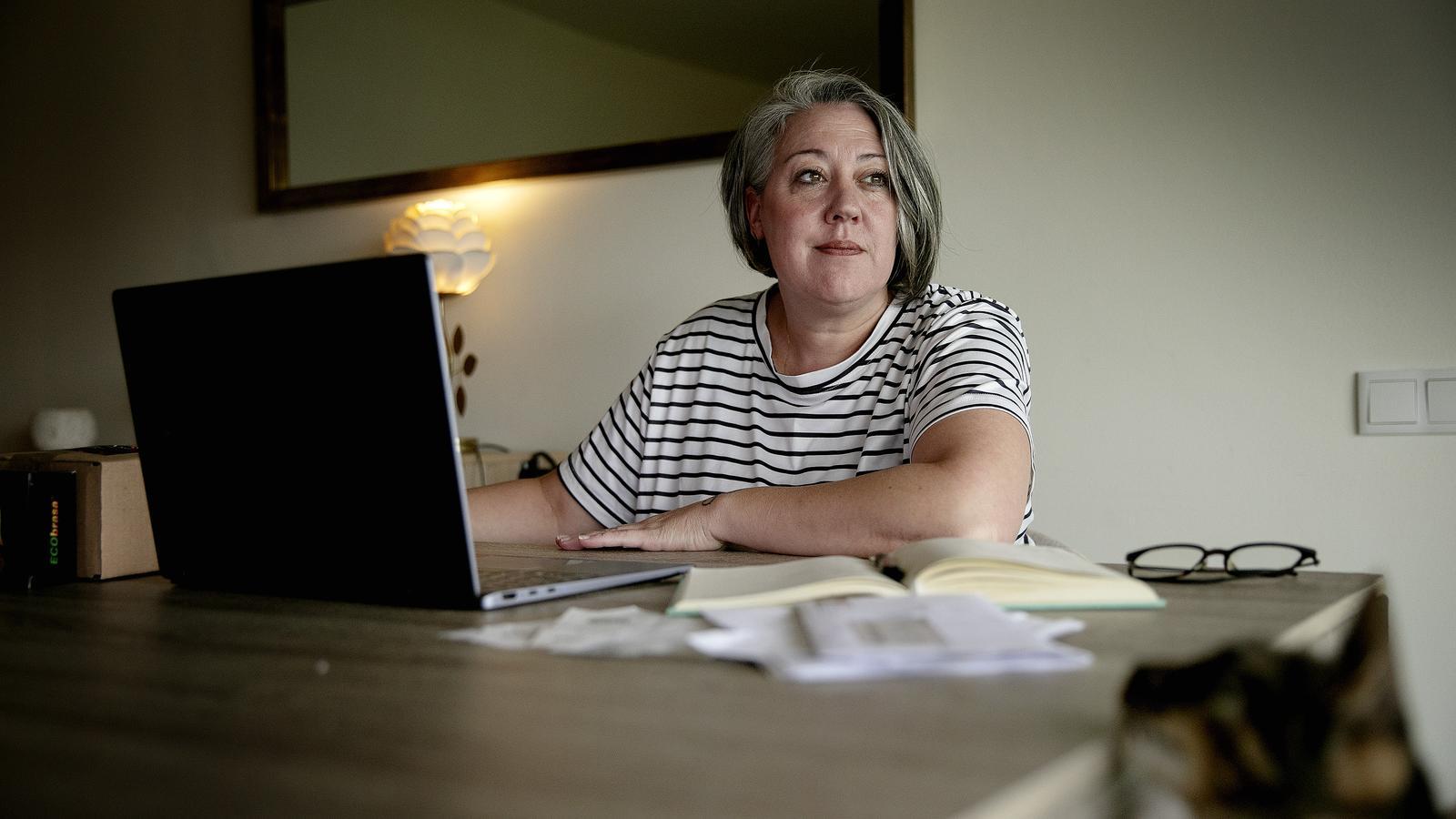
TorderaA phone call interrupts the conversation, but it no longer leaves her "desperate," as it did a few months ago. "They keep calling, but now I answer the phone calmly and tell them that I am exonerated," says Lisa Manresa. As she explains it, she breaks down the amounts that ended up becoming an unaffordable debt: 14,000 euros for her husband's dental work, 15,000 for the car, and 72,000 euros pending on the mortgage she shared with her ex-partner, the expenses associated with her eldest daughter's borderline personality disorder, who is 30... When she could no longer keep up with the payments, the accumulated debt had climbed to 208,000 euros.
Lisa is 49 years old, has three other children –aged 25, 22, and 7– and a 10-year-old grandson. She gets emotional when she remembers how far her desperation reached. "I was very aware that every time I had signed a loan, I had also signed a life insurance policy. I was at the point of thinking, 'How can I do it so I die and it looks like an accident, and the debts are covered?'" she admits.
She explains this to ARA from the apartment where she lives, in Tordera, in the Maresme, the town where she has lived all her life. Since she had to leave the home she had bought with her ex-partner –which ended up in the hands of the bank– she has had to move house several times. The anguish over the debts and the calls from debt collection agents, whom she describes as "bulldogs," ended four months ago. In the toughest moments, the calls reached more than 20 a day. Sometimes she wasn't the only one receiving them, but also her father and her partner, Miquel.
On June 5th, she received the notification that her debt exoneration had been accepted through the second chance mechanism, which allows insolvent people to renegotiate or cancel debts if they meet the established legal requirements, such as not having convictions for financial crimes. Now she works for her father's company, which sells charcoal, and she is convinced that she will not go into debt again "not even to finance a washing machine."
1,500 euros in loans per month
Lisa explains that after separating, she tried to negotiate the outstanding debt on the mortgage she shared with her ex-partner. "The bank manager told me, 'Don't worry, we will never claim it from you'." But her name remained on the list of debtors, and there was no way any bank would grant her access to a loan. It also took a great deal of effort to get a loan when she wanted to open a business with her new partner, Miquel, a painter by profession and with whom she had her youngest child.
"We wanted a place where we could have dinner together and where the child could run around without any danger," she explains. They opened an indoor playground where they also served homemade food, and for the first six months, they managed to get by. But they soon saw that the business was unsustainable. "The kitchen, in an indoor playground, is the last thing that is appreciated: they want nuggets with fries and that's it. Maybe we didn't manage it that well either," she admits.
The failure of the business further worsened her financial situation. "There was an ICO loan of 25,000 euros from BBVA, a loan of 30,000 euros from BBVA, one of 60,000 euros from Santander, and a Visa with 12,000 euros. I was paying 1,500 euros a month in loans. Add to that 2,000 for the local's rent, the salaries of three employees, and being able to live off it myself... Impossible." She remembers the last attempt to negotiate with the bank, without success: "I told them: 'You are forcing me to file for the [second chance] law'. And he told me: 'Do it, do you think the bank cares about you?'".
Lisa explains that she always tried to pay, even if she could only cover part of the installments. She continued like this, even against the advice of the bankruptcy mediator who advised her in 2016. In fact, this has been one of the arguments she has been able to use to finally request to file for the second chance.
The turning point in deciding to do it was the last no from a banker to negotiate the debts she had there. "I went prepared with a thousand possibilities, and before sitting down, he had already told me no." That was when she decided to look for a lawyer, and she found Xavier Batlle, for whom she only has words of gratitude. "I thought they wouldn't give it to me. It was so much money!".
