Secret journeys and an eternal mourning in Senegal: “We do not know if our children have died on the boat to the Canary Islands”
Hundreds of volunteers are looking for the missing migrants who try to reach Spain by the Atlantic route
-
CAT -
CAST
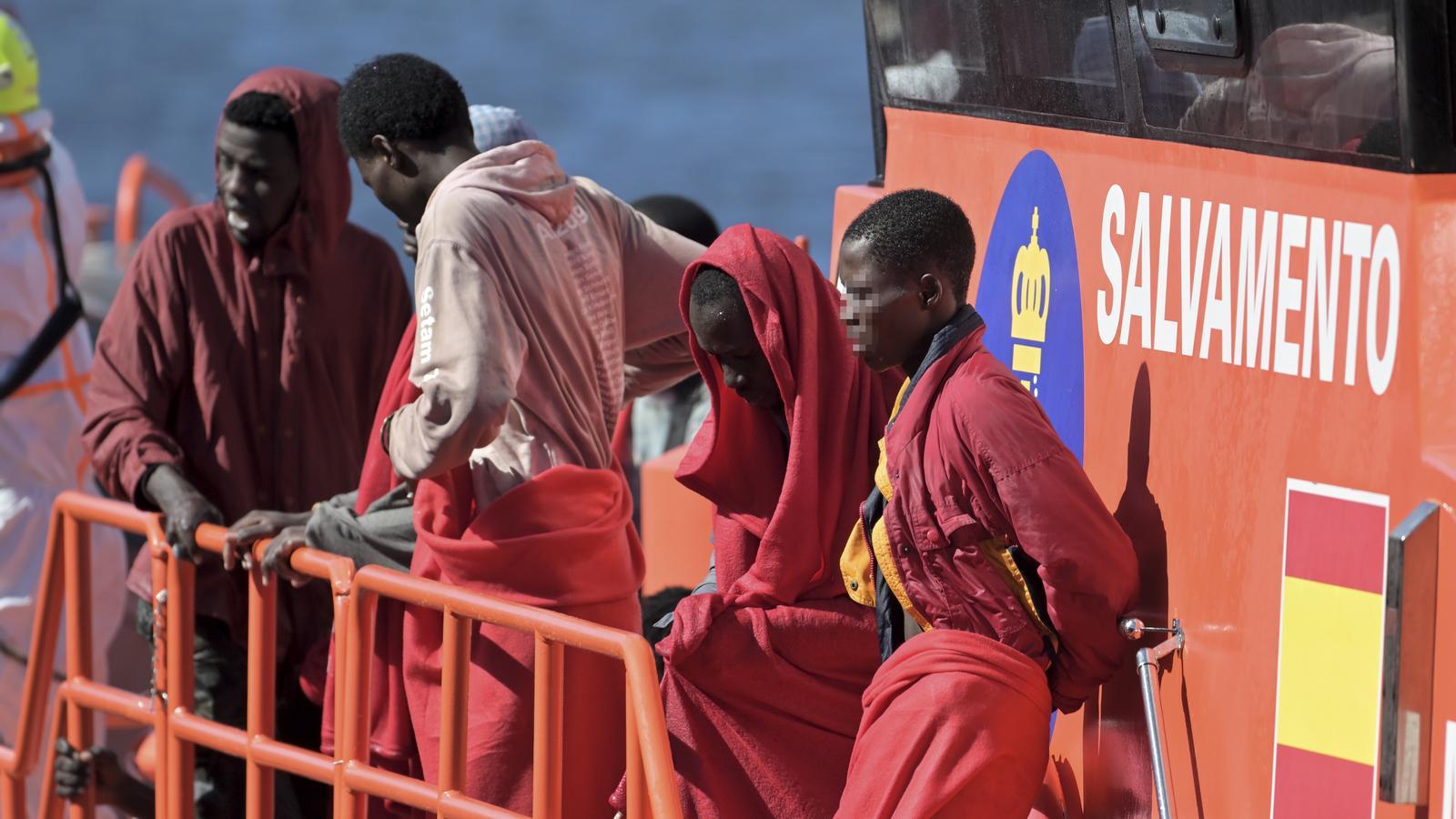
BarcelonaThere is an unwritten rule, which is repeated today in many towns and cities in Senegal: “If your relatives have been gone for more than fifteen days towards the Canary Islands and they haven’t told you they’ve arrived yet, start thinking that they are dead.” That is how bluntly Serigne Mor Mbaye explains it, a resident of the coastal town of Yenne and a clinical psychologist who has been receiving non-stop calls in recent weeks. They are mothers desperately looking for a way to find out if their children or grandchildren have survived the crossing of the Atlantic, in what is already the latest humanitarian emergency on the islands. Many Senegalese associations, on both sides of the border, have been dedicating themselves these last few weeks to searching for the bodies, alive or dead, of the missing. “The worst thing is not knowing if the children have died in the boat. And if they don’t see the body, the grief is never overcome, it becomes endless,” insists Mor.
Omar Diatts’s phone has also been running hot these days. The executive secretary of the coordinating body of Senegalese Associations of Catalonia is currently in Diembéreng, a coastal town in Senegal where it is common to see whole families at night waiting on the beach for the boat that is supposed to take them to Europe. This week he witnessed the police dispersing those waiting for the boat from the sand at midnight. “We have been looking for three boys from the village for three days who left about fifteen days ago and the family knows nothing about them,” he explains. One was located in the Canary Islands, but uncertainty persists for the other two. “It was difficult for them to tell us; the family experiences it as a secret, people suffer in silence, they are very afraid of saying it publicly, and that makes it even more difficult,” continues Diatts.
Aminata Samb, president of the association of Senegalese Women in Spain and of the federation of Senegalese Associations of the Canary Islands, is looking for a boat on which 175 people were traveling, including many mothers with children: “Some families from Dakar called me a few days ago. The only thing we know is that they left fifteen days ago, that they are from the Lebu ethnic group, and that some are fishermen.” She hopes that the vessel has reached the coasts of Mauritania. A while later, she receives a call from a woman who has been looking for her son for ten days. “She says he had a GPS and thinks he is alive.”
“Mothers are desperate, people go to look for the marabou [witch doctor or spiritual leader] to tell them if their children have survived by going to Spain,” says the psychologist. “The worst thing is the uncertainty of not knowing if the children have died. If they don't see the bodies and can't bury them, they cannot complete the mourning process or say goodbye. This leaves people traumatized, falling into depression, especially the mothers because they feel guilty: usually they are the ones who seek funding for the trip and help them organize it,” points out Mor. Diatts calculates that the mafias are charging about 3,000 euros per head to board a boat. If they find the corpses, repatriation from the Canary Islands costs about 3,000 euros more, which they pay through solidarity collections. “Most of the bodies we don't recover: either they throw them into the water or they end up buried here as anonymous,” laments Samb, from Tenerife.
Price hikes and frustration
All three see a change in the profile of people fleeing: there are more and more children, families, and women. In short, more vulnerable people. “People can't take it anymore, and they are the ones suffering the most,” points out Mor. Diatts explains that the reason for the resumption of the migration route may be the economic problems in the country. “The cost of living is rising tremendously: the price of a bag of rice and potatoes has doubled, construction products are 30% more expensive, and rents in Dakar are double the salaries,” he reveals.
Meanwhile, adds Diatts, the administration is not helping farmers and agricultural workers who see how climate change is drying up their crops. Mor adds to this the frustration of young people, after the change of government that gave them hope in 2024. “We continue the same or worse.” And he wonders if this month of November, unlike September or October, the country's police were exercising more control over the border. Samb also recalls that there are many families who seek in Spain the rights they do not have in Africa. “There is an entire family that came because they were looking for treatment for their son with cerebral palsy,” he recounts.
Both also agree in pointing out Spain's "dreadful" and "suffocating" visa policy. "There are no safe ways to come. Getting a visa is impossible: for starters, it is impossible to get an appointment, there is no transparency, and the waiting lists for family reunification are endless," says Diatts. "The problem is and will always be the visa," continues Samb. "African countries are responsible for this genocide, it is unacceptable that our young people die," opines Mor. One of the latest known deaths on a boat is a young man who had just graduated in humanities at the University of Thiam in Thiès. Last week, explains Mor, a boat with more than a hundred people on board shipwrecked off the coast of his village.
Those who manage to arrive usually receive, once on dry land, a look and a hug from Aminata Samb or some of her collaborators, who visit the State and Red Cross facilities on the islands. "They need to express themselves in their own language, to understand what is happening and what will happen," she explains. Now, for example, they are collecting baby clothes for the children who arrive at the coasts. They also bring them traditional clothing and fabrics so they can feel more at home. Samb explains how, for instance, she helped a mother who had lost her baby at sea. They also listen to the children, women, and adolescents who experience sexual assault on the boats or in the shelters. Despite all the pain, the most comforting thing, she says, is seeing how many of the families they help end up succeeding. "Now they work, they have found jobs, they speak better Spanish than my own children... they just need an opportunity. That is why it is necessary for Spain not to stop being a country of rights," she demands.
