Chandra Kala Clemente: "They told me: you can't say you are over 6 years old"
President of Apacat
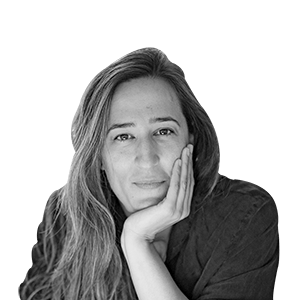
-
CAT -
CAST
Chandra was adopted in Nepal in 1998, the year in which a boom in international adoptions began in Catalonia, which lasted well into 2000. Today, those boys and girls are already of legal age and have been able to reflect on what happened to them. Some of them have created an association, Apacat, the first created by adopted boys and girls in Catalonia. And Chandra, who is now 33 years old, is its president.
What comes to mind if I say Nepal?
— Rediscovery. As a child I didn't want to know anything about it, but I have been getting closer to Nepalese culture and I have found a new way to relate to the country that saw me born.
Why were you adopted
— I don't know what happened exactly, but my parents died within a very short period of time. I lived in a small, modest village, and we came under the protection of an NGO that took care of me, my little brother, and my older brother. Some time later, they took me and the little one to an orphanage in Kathmandu.
What do you remember about the orphanage?
— My world was my little brother, and it's true that among us, with the children, we talked about families coming to get you and taking you away. Until one day they told me: a couple will come, and they will be your parents. And I remember very well that the director told me: you can't say you are over 6 years old.
And your brother?
— He dreamed of leaving, and to make him angry I always told him they would come for me first. But no, they took him two weeks before Christmas and I didn't see him.
But didn't you say goodbye?
— No, they simply told me they had come to look for me. But something incredible happened, by pure chance. My brother's adoptive family stayed two more weeks in Nepal and met my adoptive parents. They met him before they met me. And they were also Catalan.
Were you able to meet again?
— We met again a few months later in Catalonia. The two adoptive families did not know that we had a brother in the orphanage, I think if they had known, they would have gone through the procedures to adopt us both.
How do you remember your arrival in Catalonia?
— There is this bucolic image, of the people waiting for you at the airport, a family that loves and hugs you. But I didn't know those people. It was a bit...: who are you? But I adapted quickly, I think. To school and to the language. In fact, when we met up with my brother again, we both spoke to each other in Catalan.
When do you start calling someone mom?
— Do you know what I used to call my mother? I used to call her 'eh'. I used to call her like this: 'eh'. And after a while she told me: you don't have to call me mama, but call me by my name, no, eh. And in the end, I don't know how or when they became papa and mama. It's time.
What is your relationship with your brother?
— Good, but he lives outside of Barcelona, we don't see each other that much. But we love each other and we like to see each other.
Don't you think what life would have been like growing up together?
— We would have learned other things. And we also have different realities, he has no memories of the village, of the orphanage... In fact, he has never returned to the village.
Why did you decide to return?
— The first time I didn't decide it myself, it was more my family. I was 15 years old and I thought: why should I return? No one is waiting for me in Nepal. But in the end it was a way to have a bit of calm and internal reconnection, even if all I did was tread that land.
A few years later you returned
— I was already doing the thesis work, studying the research of origins and I went to the village to look for my older brother. He wasn't there, but I found the extended family.
How did it go?
— Intense. And also surreal, I arrived at a difficult time because they had just lost someone. I met my aunts, my cousins... I found girls who told me we had gone to class together and that we were friends…
Did they know what had happened to you?
— No. In fact, I was able to speak with the person who had brought us to the orphanage and they were reassured knowing that we were fine. We disappeared, people asked them what had happened and I think they had a bad time.
And your older brother?
— I had gone to work abroad: Arabia, Qatar… We contacted via WhatsApp and didn't meet again until two years later. We went with my parents and my little brother to Nepal. He came with his family and we were together for two weeks. It was beautiful.
Are painful things spoken?
— Not much. We made an attempt to talk about what happened. And he said he was small, that he couldn't do more... and he had no options to take care of us. He is also not a person who expresses himself much. After a while he met his wife and formed a family. But I was surprised that he had told them all about us.
What did it mean to meet them again?
— Being able to know, being able to ask questions. And also knowing that I was okay and am happy. And finding peace, for me it has been a way in the end to accept my story.
And how did your adoptive family experience the process?
— They are the first ones who wanted to go to Nepal. Without being therapists, or psychologists… They have always accompanied me, they have been present. I am lucky, because it is not always like that. There are families who live with pain that their child wants to search for their origins. We talk about the conflict of loyalty.
What does it mean?
— Adopted people are afraid of hurting ourselves because of the messages we receive from adoptive families. For example: we are your family, why do you have to search? And I understand the families, because many did an adoption with very good intentions but little prepared for the consequences. You are bringing a boy or girl into the family in a different way, and needs will arise that are also different. You have to be prepared. Today in the association we have cases of parents who do not want to give their children the adoption papers.
How?
— They have the documentation saved, and they don't want to give it. And they are the papers that are needed to pull the thread and search for the origins.
Is it difficult to find the family?
— A lot. You encounter many barriers when you do research. In the case of China, perhaps you only have a paper with a region, but that can be like two Spains. You have to have some document, have family names, travel there, ask at the orphanage or whoever… It's a very difficult journey.
And what do you recommend to do it?
— Let them take the process slowly and lower their expectations. They may not have all the answers they are looking for.
Why did you create an association?
— I was dedicating myself to research and wanted a more real impact. There were people with whom we always met at events organized by others, there are associations, but they are from families, and we said: why don't we start one ourselves? It is important to share experiences.
Would you adopt?
— Right now, no. And if I did, I would do it at the national level.
I started by asking about Nepal. What comes to mind if I say Catalonia?
— My home. At the time, no one asked me, but life has brought me here, it is part of my identity and who I am. And I define myself as Catalan, even though at the same time I can explain with less tension and shame that I was born in Nepal some time ago, and that there are things that strongly link me to my origin.
How many times have they told you: you speak Catalan well
— It is very common, they are all images of this racist gaze we have. At 20 years old I lived it very badly, but I have also learned to give answers and live it differently.
Chandra Kala, you have a Nepali name.
— And it's very beautiful, it means new moon or decorated moon. I like it a lot. And I thank my parents for it, because I was 5 years old and answered to a name, I can't imagine what it must be like for people who had it changed and suddenly had to be called something else.
