The third sector of Catalonia goes on strike to claim salary equalization
CCOO and UGT denounce that the employers' association allocates money to increase salaries to other services

-
CAT -
CAST
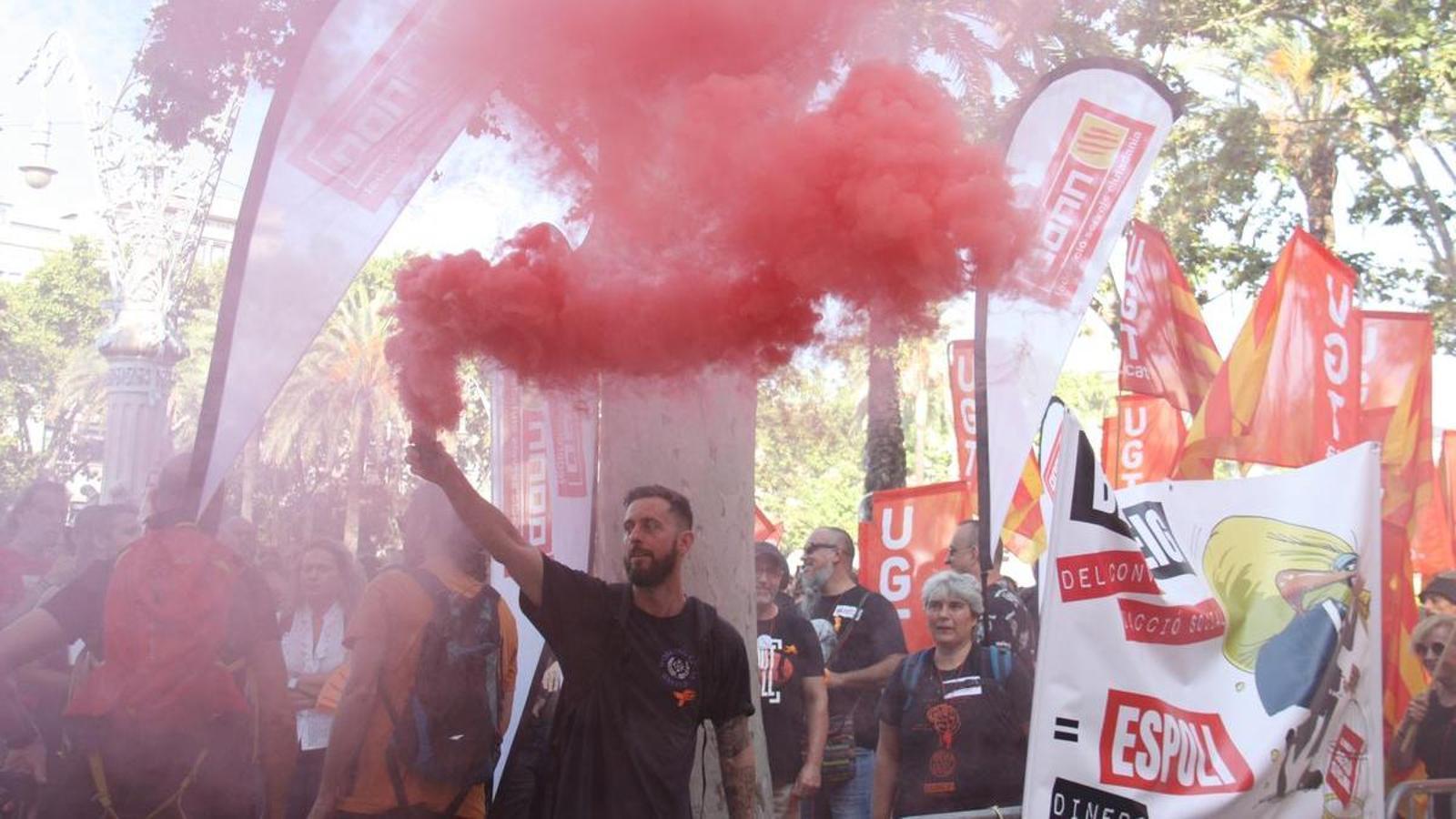
BarcelonaThe workers of the third social sector are called this Wednesday to a 24-hour strike –called by the majority unions CCOO and UGT– to demand that wage parity with staff hired by public administration be applied. The protest is the first act of mobilization, as 15-minute partial stoppages are planned at workplaces on Wednesdays, July 15 and 29.
At the center of the conflict is the sectoral agreement that the Department of Social Rights, the unions and the employers' association signed on May 6, which stipulates that the wage gap between both groups will be reduced in the next four years between both groups. The difference is on average 37% in favor of civil servants and labor personnel, although in areas such as residences it doubles to 66%, according to data from the Generalitat.
With this agreement, the Generalitat commits to ensuring the gradual equalization of salaries for 120,000 workers, hired by social enterprises and non-profit foundations subcontracted by the administration. For this, the Government will invest 150 million euros annually until 2030, on the condition that this extra money goes entirely to staff payrolls.
The protest has concentrated in front of the Superior Court of Justice of Catalonia (TSJC), where the unions have filed a lawsuit against the employers' association. The organizers denounce that the precariousness of the staff has reached "a point of no return", and have criticized that the employers' association intends to leave the possibility of applying or not the agreed salary increases in the hands of the companies. "They propose a collective agreement that cannot be signed, and that is why we are here today and we say enough is enough," declared the UGT delegate Luis Fernández. For her part, the CCOO representative, Maria Alba, indicated to the ACN that even though the sector has become professionalized, with the excuse of vocation they fall into labor "exploitation".

However, the unions accuse La Confederació (the employers' association of the third sector) of allocating the funds to finance other company services, thus breaking the agreement reached by both parties. Among the demands, therefore, is that 100% of the transferred budget for salary equalization reach salaries directly, without caps or double scales.
Male violence, excluded from the agreement
Within this framework of negotiations, the workers of the network against sexist violence denounce that they are left out of the agreement, as they depend on the Department of Equality and Feminism and not on Social Rights, which is the one that has signed the pact. Last May, the Generalitat calculated that the staff of these services would benefit from it, but when it comes down to it, they have not achieved any improvement, assure the professionals. "Equality of labor rights cannot depend on the administrative structure that manages each service," they complain, and they qualify their situation as "discrimination." At this point, they demand that the department led by Eva Menor take a public stance and get involved to include these services in the agreement.

