The migrants from El Trampolín beach: "There are many of us, it is normal that the neighbors are worried"
This Wednesday 20,000 people gathered in Ceuta to protest against the Spanish government and demand solutions

-
CAT -
CAST
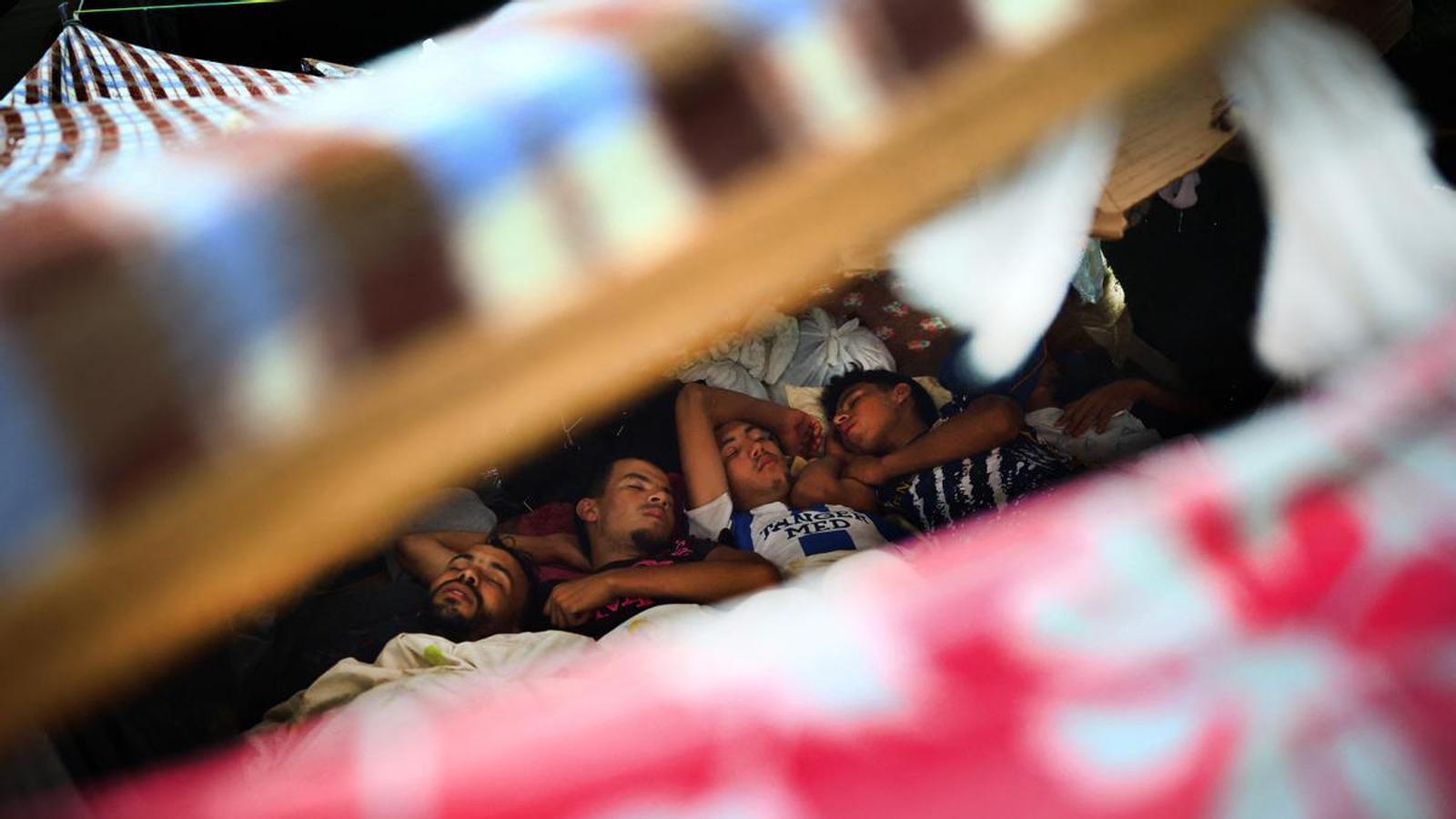
CeutaEl Trampolín beach is one of the hottest spots in Ceuta's migration crisis, having turned into a village of shacks and survival over the last month. Hundreds of migrants sleep in tents or structures they have invented from reeds, blankets, plastics, and waste collected from the street, under the watchful eye of police and military personnel, who constantly supervise the more than 800 meters occupied by the largest settlement in the city. Cleaning crews do not stop either: they collect the filth to ensure the camp's hygiene, even this Wednesday, Ceuta Day, when many people were off work and the vast majority of businesses were closed.
"The people of Ceuta have every right to protest; there are many of us, it is normal for them to be worried," explains Hamza, when asked about this Wednesday's protests and those that Ceuta residents have held every day for weeks. Hamza is a Moroccan man who has settled at the end of the El Trampolín beach settlement. He crossed the border with his wife, Chadia, and their son, Riad, who is 6 years old and plays among the shacks while his father speaks to ARA. One of the great concerns of the residents of Ceuta is the city's children, many of whom have not wanted to leave their homes out of fear for a month, and when they do go out, they are always accompanied by their father or mother. "I understand it, I am a father too," asserts this man, who says he decided to leave Morocco precisely to protect his son, since in Casablanca "they had tried to kidnap him" and the family "was very afraid," recalls Hamza.
This family settled on the mountain when they crossed the border, but the military kicked them out and asked them to go to the beach, where they have been living for weeks. Their shack is near Amine, a 46-year-old man who comes from Rabat. He also believes that the residents of Ceuta "are right" when they go out to protest. "So many people have come at once to their city, to their streets. I would be scared too," this man assesses. Although they criticize the racism of some of the city's residents, all the migrants with whom ARA has spoken say they understand the unease they have caused for the citizens of Ceuta, who are increasingly fed up with this situation.
Desire to claim their rights
These weeks it is common to see people with the flag of Spain tied around their necks or flying it out of car windows. In bars and restaurants, there is talk of nothing else, especially this Wednesday, when the celebration of Ceuta Day added fuel to the fire. The residents want to make their voices heard, to make it clear that they are tired and that they need solutions. At El Trampolín beach, some of the shacks in the camp also have the State flag hoisted, and many of them are wearing shirts from Barça, Madrid, and other clubs from the Spanish league.
A few meters from the settlement, a municipal cleaning service worker sweeps the promenade. He is Muslim and explains that his son, who wants to be a Civil Guard, was attacked by a group of neighbors because they mistook him for one of the migrants who entered the city illegally at the end of July. He has gone out to the street to demonstrate anyway, with him and his wife, to demand the expulsion of all migrants and to put an end, once and for all, to the worst migration crisis in recent years.
