State assessors see Catalonia's measures to control swine fever as "insufficient"
The committee asks other communities to prepare for a possible expansion and urges the Generalitat to increase sweeps
-
CAT -
CAST
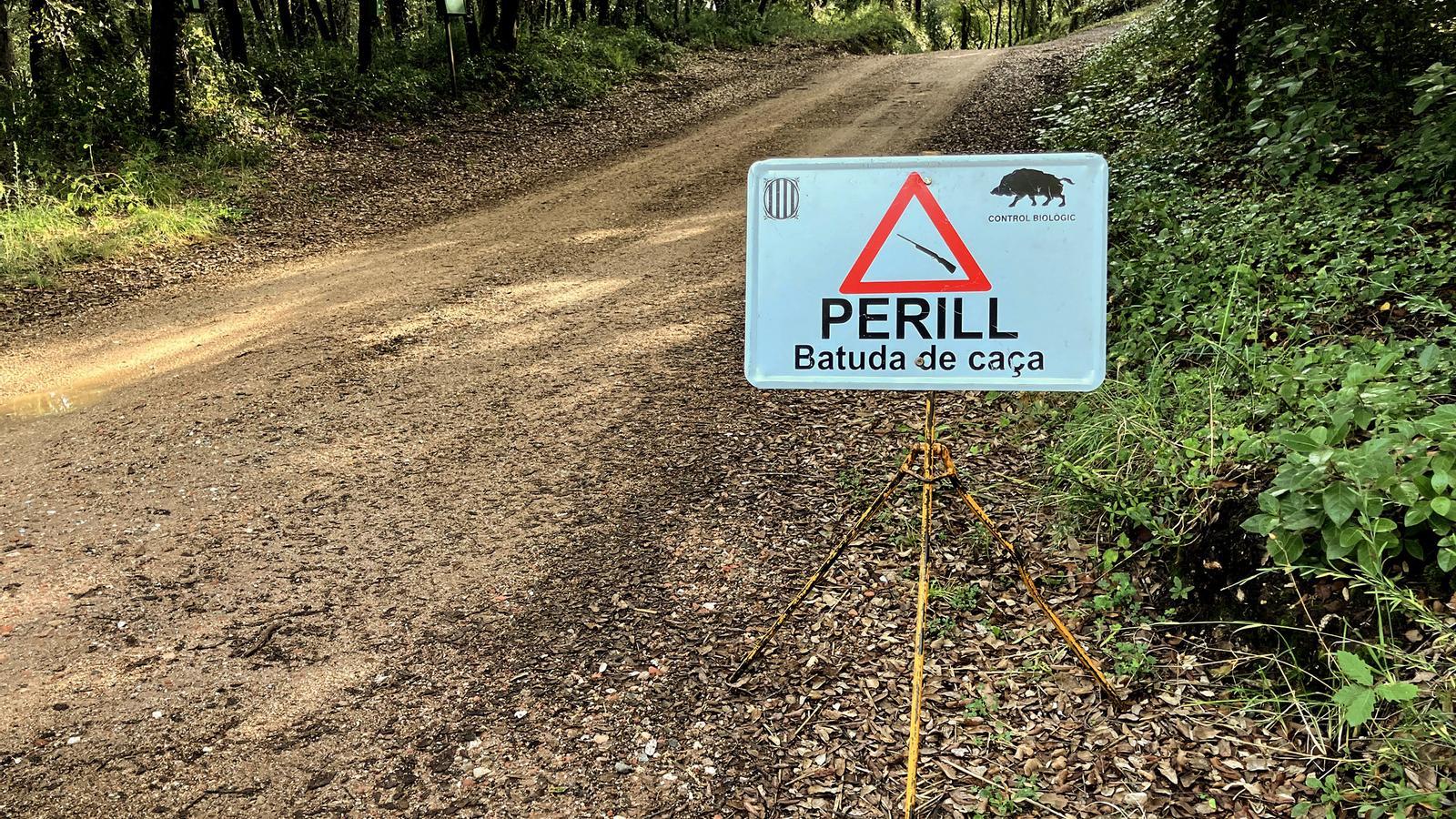
BarcelonaThe scientific committee advising the Spanish government on the management of the African swine fever (ASF) outbreak warns that the control measures taken so far are insufficient, and considers it necessary for all autonomous communities to prepare for a possible expansion of the virus. Specifically, in its monitoring report for this month of June, the State's advisors assess that the preventive actions – which are the responsibility of the Generalitat – have not been taken "with the desired intensity". Among the arguments is that an average of 363 wild boars have been hunted per week, when the estimated objective was 800 per week.
The experts value "the great effort" made by the administrations, "greatly conditioned by the difficulties and peculiarities of the outbreak", and acknowledge that an "important" number of wild boars have been captured. However, the committee warns that they are "far from the objective" and consider it necessary to reinforce actions. This means creating more barriers and intensifying epidemiological surveillance, wild boar population reduction, and carcass disposal. The scientific committee's report also advises continuing to limit the activity and mobility of both people and farm pigs within the affected area.
Regarding the precautions that all autonomous communities should take in the face of a possible expansion of the outbreak, the scientific committee requests the initiation of species management tasks with three priority areas: monitoring wild boars, reinforcing hunting, and acting on their habitat. In the field of animal health, experts urge to reinforce the biosecurity of pig farms and promote early detection of the disease in dead wild boars showing clinical signs compatible with the infection.
Following these recommendations, the Department of Agriculture has stated in a press release that "the Government is managing the African swine fever health crisis with rigor and professionalism, at all times following the guidelines of the expert committee", which meets weekly and is composed of scientists at national, state, and international levels, technicians from the department, and the Ministry of Agriculture. They added that "the response to this emergency is based on maximum coordination and institutional loyalty" and in accordance with European animal health regulations.
Without responding to the expert committee's assessments, the department has also recalled that since the start of the outbreak, 45,196 personnel have worked on it – 1,821 this week – and that all available specialized canine teams in the State have been mobilized. Since November 28, 6,964 wild boars have been captured in the restricted area and 26,587 in the rest of Catalonia, and emergency contracts have been made to add personnel to the operation and to include the services of companies specialized in wildlife control.
An "overly optimistic" objective
The report does not address the question of the origin of the outbreak on this occasion, and admits that the objective of capturing 800 animals per week "has proven to be too optimistic and its constant redefinition is convenient, based on more reliable data on wild boar density". Experts also point out that "the decrease in cases could reflect a real decrease in cases", and make a series of recommendations to contain the ASF outbreak.
The main proposal of the scientific committee is to create a "white zone" around the affected area, that is, an area without wild boars or with a very low density. To achieve this, they advise setting differentiated weekly wild boar extraction targets by zone and continuously monitoring the eliminated animals to evaluate the effectiveness of the actions.
The committee also recommends strengthening the systematic search for animal carcasses. In fact, this is considered one of the most important tools for controlling African swine fever. Thus, they call for extending the search to peripheral areas with a higher risk of virus spread and not limiting it to the closest areas where cases have been found. This is compatible with also prioritizing river corridors and areas with habitats favorable to the species, they emphasize in the report. In this regard, the group of experts proposes setting weekly prospecting targets per municipality, which should be measured in terms of inspected area, kilometers traveled, or carcasses expected to be found if the virus continues to circulate.
Maintain restrictions in Collserola
The scientific committee's report also advises maintaining restrictions on both people and farm pigs within the affected area. In fact, in nineteen municipalities, access restrictions to the natural environment remain in place, and the government has already announced that it will maintain the measures, which affect the Collserola Natural Park, at least until the end of the summer.
Similarly, experts also call for maintaining and reinforcing biosecurity measures in all pig farms, especially in farms located within restricted areas, and continuing to exercise extreme caution when handling and destroying materials and animal carcasses that may be contaminated.

