"The inclusion of people with disabilities begins when we stop taking for granted what they need"
Georgina Domínguez works with people with intellectual disabilities at Aura Fundació and has just published 'Lila y Lola, la sabana', a children's story where she wanted to convey the values she defends every day in her work
-
CAT -
CAST
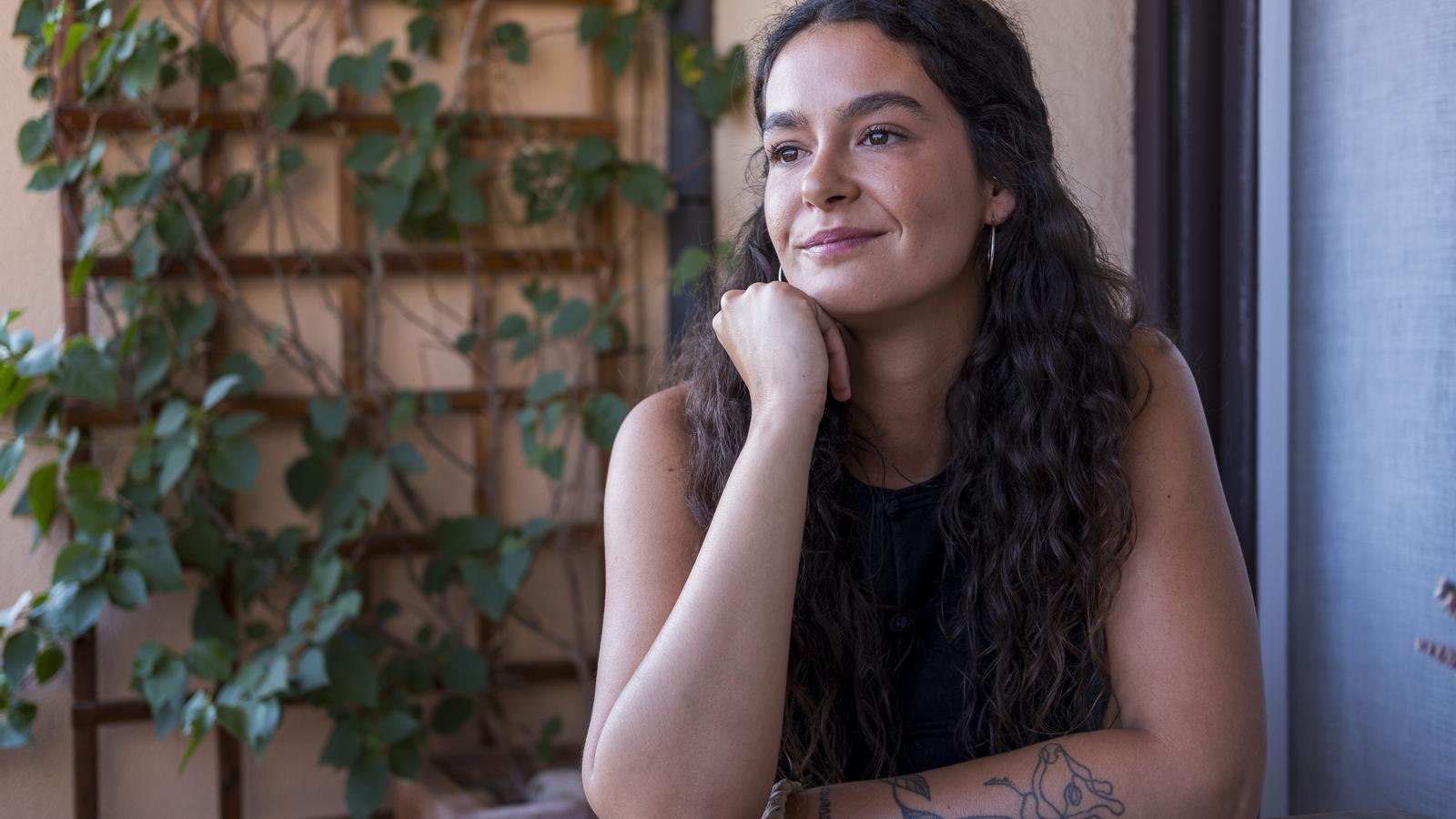
Georgina Domínguez (Sant Cugat del Vallès, 1999) began working with children and adolescents at risk of social exclusion in an open center in Barcelona, but soon realized that what really sparked her interest were people with special needs. First in Denmark, where she worked with two individuals with Autism Spectrum Disorder (ASD), and later in Catalonia, she grasped that it is often society that is not adapted to different paces and ways of being: "There are many people who are invisible," she states. Her professional – and also personal – experience has led her to Aura Foundation, where she supports people with intellectual disabilities in the process of social and labor inclusion and, in parallel, works in residential units with these individuals to prepare them for independent living.
A graduate in Social Education and specializing in learning difficulties and language disorders, Domínguez rejects the idea of treating people with disabilities as a homogeneous group. She insists that each person is different: "Age, gender, life experiences, each person's pace, and the type of disability influence this," she details. For this reason, she advocates that support must stem from listening and adaptation, never from prejudice.
What she has learned most as a trainer and professional at Aura Foundation is to "value and relativize." She explains that her work forces her to constantly self-regulate because "it has a very strong emotional impact on the lives of others." Despite the close bond she forms with the people she supports, she points out that clear professional goals must be established to maintain a healthy distance. Therefore, she believes that, beyond training, it is essential to have "common sense, a lot of vocation, and sensitivity."
When she talks about social inclusion, the Sant Cugat native is critical of institutional discourse. She believes that many people talk about inclusion without truly coexisting with those who experience exclusion. Therefore, she calls for giving more voice to people with disabilities and listening directly to what they need, without taking it for granted. "Real inclusion begins when we stop assuming what they need and ask them," she affirms, while also calling for more educational tools and awareness-raising from schools.
Embracing the Georgina of the past
Georgina Domínguez's career is not solely focused on supporting people with disabilities, but for a few months now, she has also ventured into writing. Last March, she published 'Lila y Lola, la sabana' (Apuleyo Ediciones, 2026), a children's story born from her personal childhood experiences. The author explains that she grew up as a very curious child, full of questions, and in a delicate family situation that meant she wasn't entirely happy. Writing the story, she assures, has been a way of "embracing little Gina".

The protagonists are two sisters who have an adventure in the savanna and, through this journey, the author has wanted to convey values such as family, empathy, listening, respect, and positive reinforcement. She acknowledges that her experience at Aura Foundation has made her understand even more the importance of natural supports – family, friends, and close environment – in any life process.
The publication of the book has pushed her to work on a new goal: to give more visibility to intellectual disability also from children's literature. In the future, she would like to accompany people with disabilities in the process of creating a book and for them to be able to write their own stories. For Domínguez, opening the doors of the publishing world to them would be another form of real inclusion: "They have so many hidden skills that we should give them the opportunity to enhance them".
