"She abandoned them": the case of the mother who killed her children reopens the debate on postpartum psychosis
Experts consider Lindsay Clancy to be as much an aggressor as a victim

-
CAT -
CAST
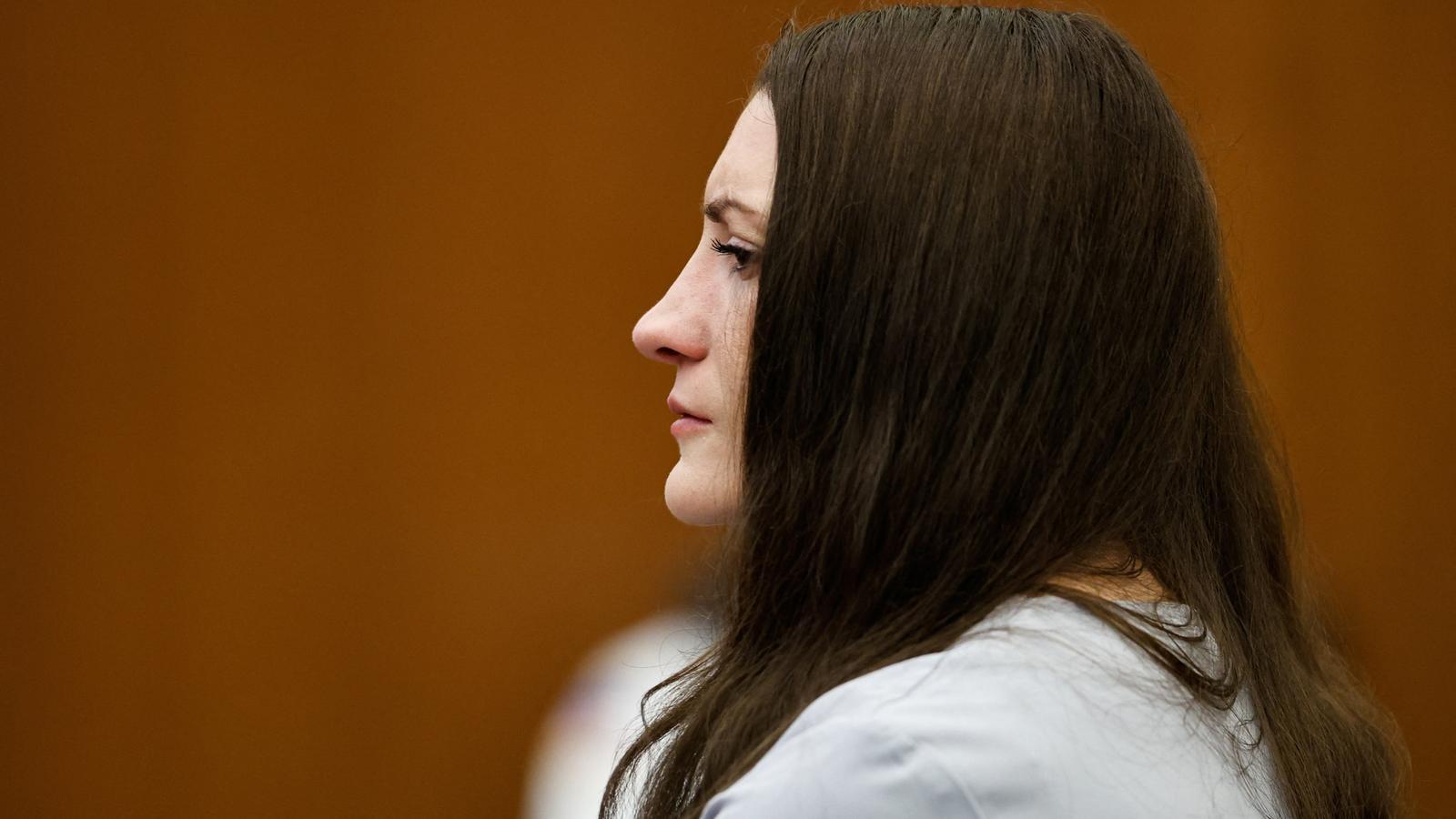
Lindsay Clancy, a 36-year-old woman from Duxbury, worked as an obstetrics nurse at Massachusetts General Hospital when, on January 24, 2023, she murdered her three children, aged 5, 3, and 8 months. Her case, particularly complex, has returned to the forefront of current events following the trial against her, which took place this July and August and concluded on Thursday. A trial that, having become a viral phenomenon on social media, has reopened the debate on postpartum psychosis.What are the keys to the case?
The trial, which has been heard for sentencing, must determine whether the accused was criminally responsible for her actions at the time of the murder. Clancy's defense argues that she was not aware of her actions at the time of the events and therefore cannot have criminal responsibility. Lindsay Clancy was diagnosed with postpartum psychosis, a mental pathology so rare that the doctors who treated her before the fatal episode occurred were not familiar with it. Despite asking for help multiple times from family and professionals, no one detected the severity of the illness in time. In the months leading up to the crime, the accused visited several psychiatrists, voluntarily admitted herself to a treatment center, and took medication. During the trial, evidence has been presented confirming that Clancy was medicated – she ended up taking 13 different psychiatric medications in the months before the crime – and that she suffered from a severe psychotic episode aggravated by undiagnosed postpartum depression. Jose Carlos Fuertes, a doctor specializing in psychiatry and forensic medicine with over 40 years of experience in the field, explains that psychotic disorders can act in a "silent" way: "We have the image of a severely psychotic mentally ill person as someone who is shouting, disguised, disorganized. It doesn't have to be. A person can have relatively normal behavior, except in one aspect of their life where the delusional idea appears, which usually arises because there are hallucinations." Fuertes argues that Lindsay was "acting in a very important psychotic state." According to the expert, she had the belief that life was a disaster and that the best way to not make those she loved most, her children, suffer was to take their lives and then commit suicide.What went wrong?
Fuertes, with her extensive experience and with the information available on the case, argues that the woman is both aggressor and victim: “This woman was ill. She was asking for treatment. She expressed delusional, absurd, and irrefutable ideas through logical reasoning. They abandoned her and she acted”.Carla Vall, a lawyer and criminologist specializing in criminal law and gender, also argues that the case cannot be interpreted solely from the story of a mother who killed her children, but rather forces us to ask what went wrong before the events and what responsibility the system bears. “We are faced with a woman who asked for help from her entire environment, both personal and professional, and who, partly due to bystander effect, no one individually took responsibility to say: ‘Something is happening here and it needs to be stopped.’” Vall points out the obvious shortcomings of the United States healthcare system, which was unable to adequately track Lindsay's mental health status: “This teaches us many things about the United States healthcare system and the psychiatric system: the lack of coordination between professionals, the lack of specialization, the lack of family support…”, he points out. José Carlos Fuertes agrees with the idea of the multiple neglects of the North American health system: “There are multiple problems here. She was not treated; when she asked for help, she was not given it adequately; an admission was not proceeded with. And she was allowed to act,” he denounces. In Spain, there is one case of postpartum psychosis per thousand births, according to Fuertes, who points out that once these women receive adequate treatment and become aware of their actions, they cannot bear the feeling of guilt and some end up committing suicide. "I have the conviction that the feeling of guilt she will have when she is treated and improves from her hallucinations, from her ideas, will make her realize what she has done."To be or not to be responsible
It is not only experts who exonerate the woman. Throughout the trial, hundreds of women dressed in pink have gathered in front of the courthouse to show their support for the accused and highlight the responsibility of the medical system and health professionals in the case. They maintain that Clancy was not adequately monitored and that medical neglect would have led to the tragic outcome. A campaign has also been launched to raise funds to help Lindsay's parents cover trial expenses; they have already raised over $1 million. It is true that not everyone sees it this way: the mobilizations have also generated a wave of reactions on social media arguing that a crime of this magnitude cannot be defended. In any case, the mobilization in defense of Lindsay does not intend to exonerate the triple homicide, but rather to highlight the neglect by the healthcare system of mothers with mental health problems. “There is a part of gender blindness that consists of this idea that the figure of the mother must be able to handle everything and that, in the end, she has extreme responsibility. We have a very important blind spot, which is the mental health support for mothers,” argues Vall. “Being or not being responsible is one of the central axes of any criminal proceeding, because what we are analyzing is whether the person, at the time of committing the acts, could have had awareness and control of their actions,” she explains. This should not be confused with being, or not being, the material perpetrator of the acts: “This does not mean that you are not equally responsible for the acts. It has to do with the consequences that the process will have for you. It is not a process of social irresponsibility. I believe that these two things must be separated,” details Carla Vall, who points out that there is a tendency to make this person a “scapegoat” and that there is a great social responsibility in this case: “The number of women who are gathering at the courthouse doors to support her are telling us about a social problem associated with the mental health of mothers in postpartum. I think there are public policies that must address this and that must be able to correct and accompany these dynamics of mental saturation, insomnia, psychosis, and severe depression.” The lawyer argues that the mental health care and attention of mothers is also essential for the protection of children, who in cases like this end up being the main victims. “What this scapegoat dynamic does is forget the central figure of all this, which are these three children who have been murdered. The way not to forget them and to put childhood at the center is to be able to identify where the system and the person fail at such a delicate moment as the postpartum period.”
