Returning to Morocco after a month living poorly in Ceuta: "There is no solution"
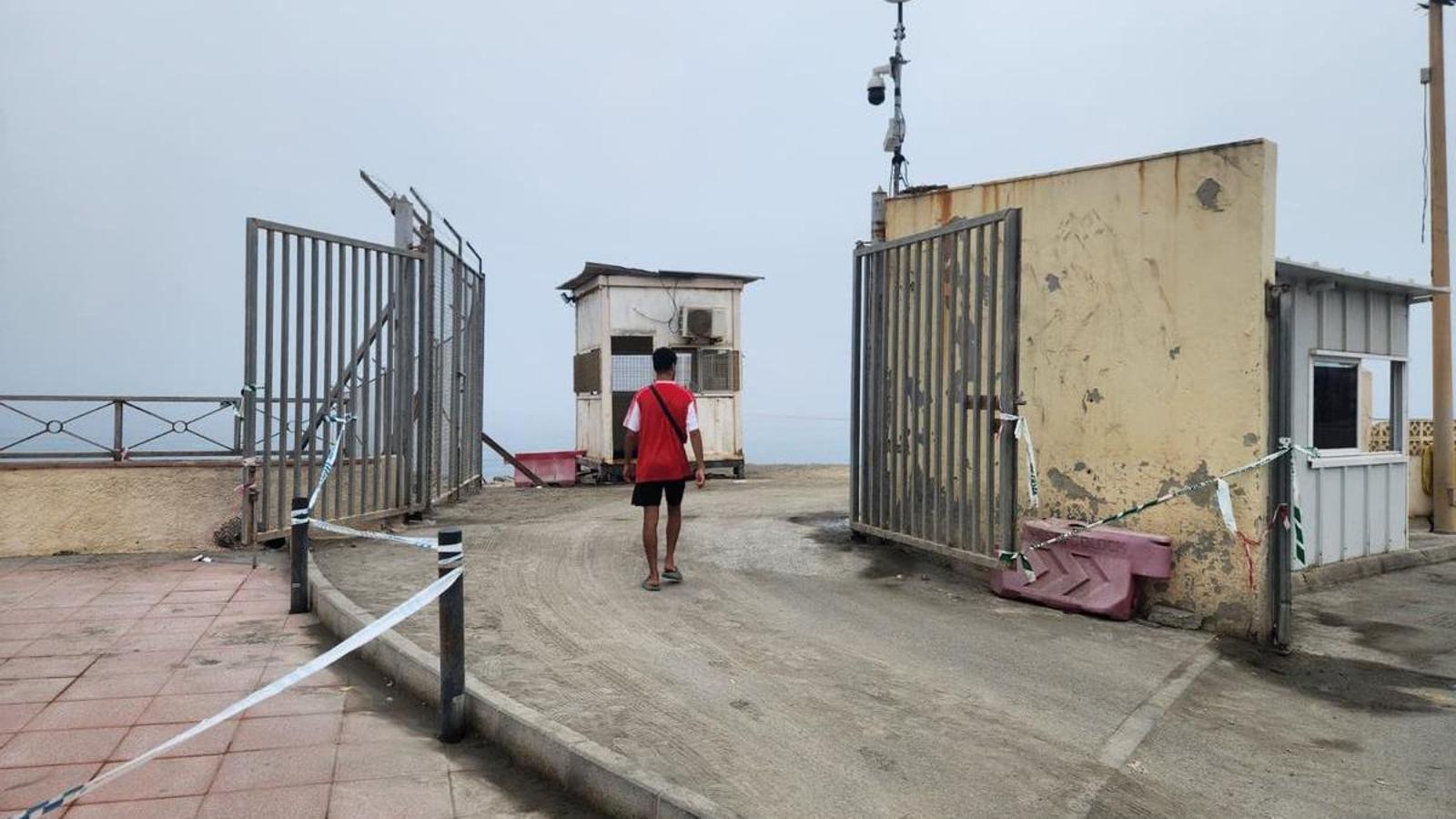
Visit to the border with the immigrants who go there to get money, clothes or, also, to say goodbye to friends who are returning
-
CAT -
CAST
CeutaAfter 35 days in Ceuta, Aiman is returning to Morocco. He crossed the border shortly before the massive entry of thousands of people in late July with the hope of achieving a better life, but he has not endured the blockade situation experienced in the city. He says he is exhausted after having spent a month sleeping on the street and this Thursday, finally, he decided to make the journey back. Like the majority of immigrants who remain trapped in the city, he is dirty, wears flip-flops, and carries a small bag where he keeps everything he owns. Although he tried, he did not manage to enter any of the temporary accommodation resources provided by the State, saturated by the high demand of people who are still in the city, and he has fed himself mainly on the food distributed by social organizations. On some occasions, he has even taken food from the trash.
"I am returning to Morocco because there is no solution here. They tell us that we will all go back, so I am leaving now," explains this 22-year-old youth. He does so in Darija –the Arabic dialect spoken in Morocco–, because he does not speak other languages. With a mobile translator, he explains that this month he has lived on the streets of the city he has done so fearfully because he has suffered "attacks by the military" that are in the city and, after a month of hardship, he has had enough, he prefers to return home and make a living in Morocco. Like him, hundreds of people who crossed the border in late July have returned to their country; the vast majority a few days after the massive entry. Since then, there has been a constant trickle of people, including entire families, who have given up upon seeing the complexity of the situation in Ceuta and the lack of opportunities to develop a life project.
Aiman is accompanied by his friend Abdenour, 31, who says goodbye to him at the border. He says he will stay as long as it takes, "one, two, three or four months," as he watches his friend cross the line that separates the two countries towards the jetty of El Tarajal beach, where he entered swimming a few weeks ago. "I have not lost hope," asserts Abdenour. Neither has Houssame, who claims he knows many people who have returned and regretted it: "They told me to have patience." He used to work at the Fez airport selling tobacco, alcohol, and perfumes, but decided to leave it to build a future in Europe. "I don't see myself in Morocco, I'm 28 years old and I have nothing there, no family, no partner. I only have myself and God," explains this young man, who is also accompanying a friend who had to go to the border because he is applying for asylum.
"I will enter illegally"
These young people are some of the immigrants who are in front of the border with Morocco. While it is true that some, like Aiman, decide to return, there are many others, like Abdenour and Houssame, who resist and prefer to hold out for a few more days with the hope that their situation will improve. Houssame does not hide the fact that he wants to sleep, shower, and eat like before, but for the moment he does not give up and takes advantage of being at the border to ask for money from the dozens of people who constantly arrive from Morocco via legal channels. Tarik is also waiting, but he is looking for someone who will enter Morocco and return to Ceuta the same day, so they can bring him clothes and shoes from his mother's house in Fnideq, right next to the border, a municipality that everyone knows as Castillejos due to its Spanish past.
He speaks Spanish very well because he lived in Marbella for many years, but he tried to bring in a large shipment of hashish and was deported. He took advantage of the mass entry to cross the border and is now looking for a way to return to Marbella, where he says his whole family lives. "I have a lot of hope of achieving it and, if not, I will enter illegally. I will pay someone to smuggle me onto the Peninsula," he says very convincingly. He now sleeps in a car because he does not want to go to any of the warehouses that the Spanish government has set up. "I would rather be in Alcatraz than at the El Tarajal industrial estate. I entered once and tears were falling; everyone there is in a terrible state," he asserts.
This Thursday morning there is a lot of fog in Ceuta, which is why Tarik predicts that many people will try to cross the border, as already happened at the end of July. While he is attending to ARA, a young man runs past. "Catch him, catch him," shouts a National Police agent from the border. He is a young boy and is moving fast, but he has not even advanced 100 meters before he is stopped by a group of soldiers who were patrolling near the boundary between Ceuta and Morocco. The young man cries in frustration and claims he is a minor.Minors, minors", he says, surrounded by agents who take him away the way he came. Police sources explain that he was entering via legal channels and, as soon as he saw a gap, he started running, but he did not succeed. Tarik watches it from afar; he is convinced that the boy will try again later.
In the taxi on the way back to the city, Salma is also traveling, a woman from Madrid who has spent a few days in Tetouan, where her mother lives. When she was young, she left "with only a smile" for France, where her brother still lives, and then she went to the Basque Country and then to Madrid. In the capital, she met her husband, an Egyptian, who has since passed away. She explains that they were granted subsidized housing in Vallecas and that they have had five children who are now living their own lives. She would like to live in Ceuta to be closer to her family; her grandmother is still alive, she is 104 years old.
The taxi driver, however, tells her that it is now impossible to rent, that there is nothing reasonably priced. He has lived in Ceuta for 27 years; his son was born in Spain when he had been there for a year after arriving from Tangier. He explains that this month has been horrible, and Salma says that now in Tetouan there is no misery on the streets, since "they are all here." They speak in Darija and Spanish, switching between them, about the situation the city is experiencing. Both look with pity at the dozens of immigrants who wander along the side of the road and who, like them, have crossed the border with the hope of achieving a better life.
