Put 'eyes' on neighborhoods to make them safer
Experts convened by Confavc state that insecurity is not combated solely with more police

-
CAT -
CAST
BarcelonaAre neighborhoods safe? Looking at crime data, one can conclude that they are. Or, at least, sufficiently so. However, there is an increase in the perception of insecurity and a feeling of fear when going out at night or walking down certain streets, especially among young women and the elderly. Marta Murrià, head of the urban coexistence and security area at the Institut Metròpoli, states that between 15% and 20% of residents in the Barcelona metropolitan area feel insecure, but, even so, more than 60% of the population does not change their behavior or routes, even if certain places or times may trigger alerts.“The feeling is not only related to the number of crimes or being a victim; there are other factors that explain it,” continues the expert, who gives the example of residents in the neighborhoods along the Besòs strip, who express the most insecurity, despite not always being areas with a high crime rate. Murrià was responding to the debate on security and coexistence in neighborhoods raised by Confavc (Confederation of Neighborhood Associations of Catalonia), during one of the conferences it periodically organizes to gauge the "malaise" of the neighborhoods. “Things are starting to happen in the neighborhood,” summarized one of the attendees to warn that far-right discourses are taking root, fueled by difficulties in paying for housing and an economic and social crisis that ultimately generates coexistence problems. Some of these factors were pointed out by sociologist Murrià, and that Anna Almécija, a criminologist, also related to poor urban planning.Almécija is a member of the Catalan Association for the Prevention of Insecurity through Environmental Design, which analyzes whether the design of spaces facilitates crime. The expert points out that it is more than proven that there are elements that favor "natural surveillance" of the neighborhood. These
eyes are good lighting, areas without corners, controlled vegetation, and transparent elements. At the same time, they are also the eyes of residents with a high sense of belonging, care for the furniture, cleanliness, and collective coexistence.
The danger is that these eyes begin to suffer from blurred vision because the exorbitant housing prices prevent residents from settling in the territory, a phenomenon aggravated by tourist pressure or the disappearance of lifelong shops. However, filling the streets with streetlights does not mean that fears will disappear if "there is no one to look," says the criminologist. One solution is to fill dead spaces with activity, creating climate shelters, parks with shaded areas or street markets, maintaining common spaces and creating community. "We must foster a positive sense of belonging," she affirms, recalling the classic neighborhood slogan: "Bellvitge is an ugly neighborhood, but it is ours."
Citizen responsibility
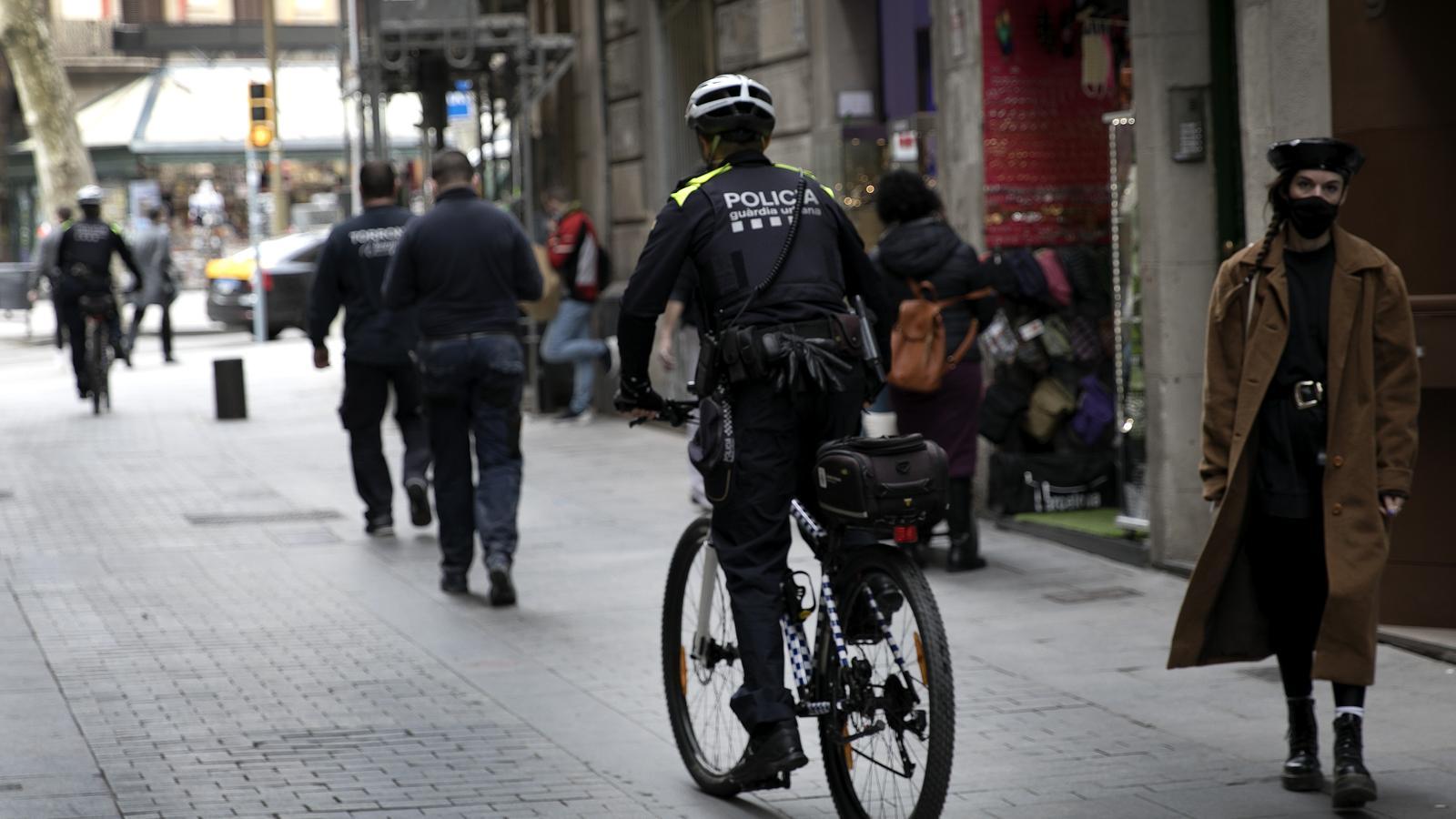
In this debate, where does the police fit in? The residents present in the room highlight the lack of "prevention" and long for the figure of the "community police officer" in contrast to the "reactive police." Both Almécija and Amadeu Recasens, an expert in public security and former director of the School of Public Security of Catalonia, agree that security is not simply achieved by deploying more officers. However, they point to community policing as a model to be exploited. Recasens indicates that it is necessary for residents to have a "reference officer" who can refer community problems to the different municipal services: "It doesn't necessarily have to be a police officer, but for now, it is the only body that is on the street 24 hours a day."
Recasens further argues that neither the police nor politicians can solely set security policy, but rather that an educated citizenry must take responsibility, given that administrations do not move beyond "doing the same thing" despite it being a "failed strategy." "I'm not saying we shouldn't crack down, but a paradigm shift is needed," argues Recasens, adding that citizens must have a say in policy decisions, as they know what the real problems are: "Participation cannot be just about paying for the gate and the home alarm."
In this security debate, there is the threat of "fascism" or "supremacism" spreading through neighborhoods, warns the researcher of social movements and author ofEl nostre feixisme (Ara Llibres). On the eve of a long electoral cycle, Mir points out that the extreme right repeats its usual pattern of "creating a scapegoat for all evils" by focusing its attacks on the migrant population. "Fascism is clear that people must be afraid," reflects this UPF professor, who says that these forces grant themselves the power to "impose order" in the neighborhood and offer "simple solutions to complex problems that they have helped to create."
