"It is not like a prison; here in the end we are girls": this is how it is lived in the only center for girls interned for committing crimes
Els Til·lers hosts the 15 adolescent girls who are serving time internally in a closed regime in Catalonia, a very minority part of juvenile justice
-
CAT -
CAST
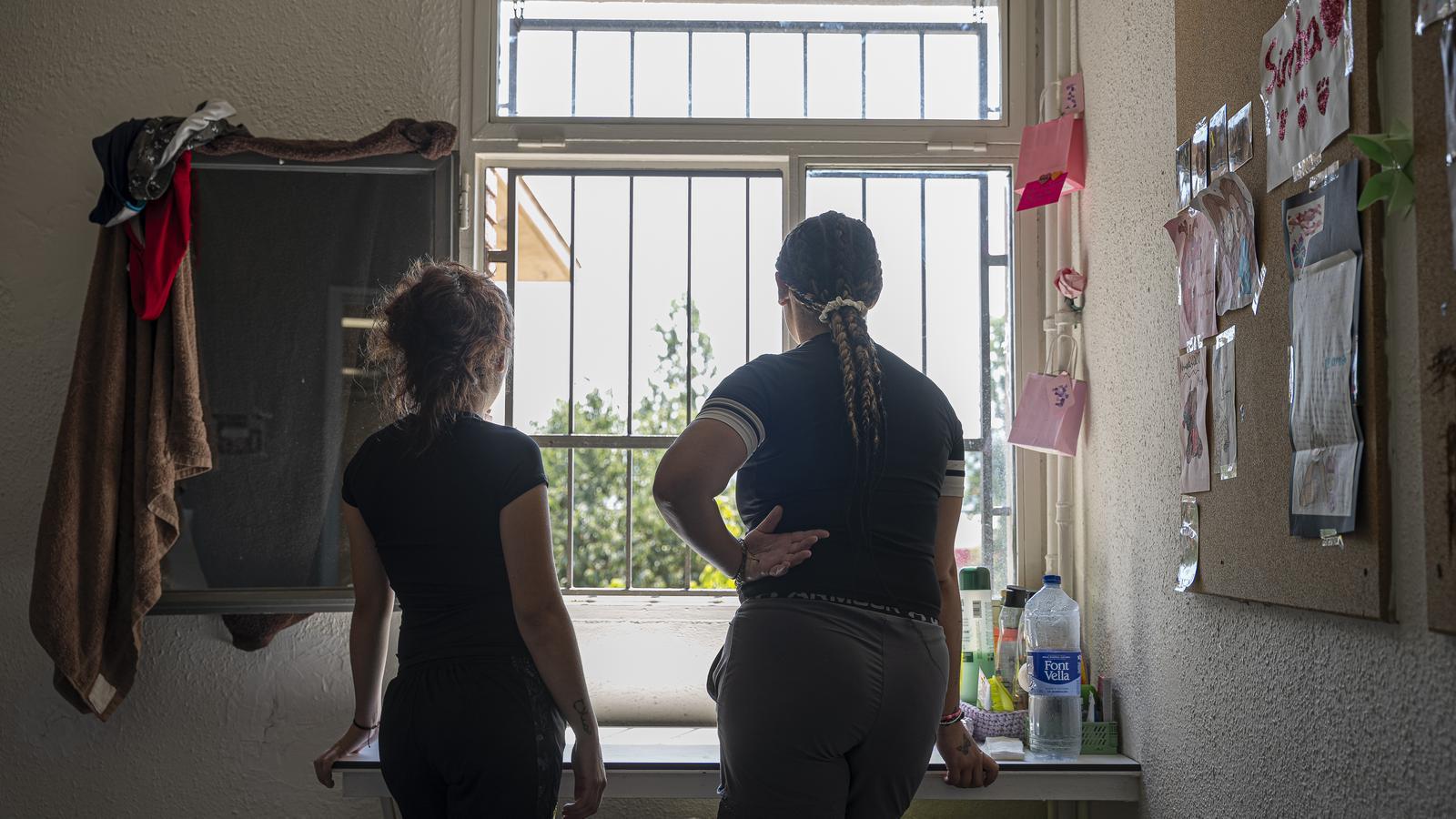
Mollet del VallèsLucía has been at the Els Til·lers juvenile center for nine months, the only facility in the juvenile justice system for girls in Catalonia. She turned 18 in January, but she will finish at the center the internment that was imposed on her when she was still a minor. She asserts that living at the center "is not as bad as they paint it": "It is not like a prison, here at the end of the day we are girls".
In this center in Mollet del Vallès, 15 girls live together in a closed internment regime. They are the only girls who are currently fulfilling the strictest measure for those who have committed crimes between the ages of 14 and 17. Under the age of 14 there is no criminal responsibility and, from the age of majority, crimes committed are governed, in general, by the Penal Code for adults. Els Til·lers, furthermore, is also the only juvenile center in Catalonia with a therapeutic mental health unit, where there are also boys.

Minors living in an internment regime are a very small part of the juvenile justice system. Currently, more than 2,200 adolescents are serving some type of measure, but only 8.5% are deprived of liberty. The most common scenario is that the measures—with minors, the justice system does not speak of sentences, but of measures—are programs in an open regime. Furthermore, girls are a minority in the system—right now, 334 girls for nearly 2,000 boys—and even fewer are in internment.
At Els Til·lers they all live together, the fifteen that there are, both when they are accomplices and when they are rivals. "If there were a tumultuous brawl now and an internment was proposed for some of the girls who participated in it, they would all come to Els Til·lers," explains the director of the center, Elisenda Camps, to ARA. In fact, something similar has happened to them: "Not long ago, a girl was admitted because she had committed a crime, while at the same time she was a victim of another girl who was already at the center," explains Camps.
Salma, 14, explains that even before entering the center she knew many of those who are now her peers, and that this, at times, can be "uncomfortable". For her, however, the internment is also an opportunity to stop and try to set a new course. That said, with strict rules and a daily routine.
"Every day is the same"
"Every day is the same –Lucía agrees–. You wake up, tidy up the rooms, go down for breakfast, smoke. Then you go to the classroom or the workshop, depending on what you have to do," she explains. She is studying to obtain her secondary education graduate degree (GES), which is the equivalent of ESO for adults. After class, it's time to smoke again: here, cigarettes per person are counted –maximum 6 per day, with judicial and parental authorization– and they always smoke all together and at the same time. After lunch, they can have another cigarette, and when they finish, it's time for the room count. "In the afternoon you do sports, take a shower, smoke again, do the chores you're assigned, have dinner, and go to sleep," she summarizes.
Lucía speaks with maturity about the "baggage" carried by everyone who ends up living here. Before entering this center, she had lived in a CRAE —a residential educational action center, where children under the guardianship of the Generalitat live— and when she was already at Els Til·lers, she lost the partner with whom she had shared a three-year relationship. "He died, and I am mourning. Here I have realized how hard life is when you have this shitty life and the people around you have it too. You see that sooner or later you have to change your life," she explains.
Lucía says she is trying, and that after the nine months she has left of internment, she would like to get a job, be able to save up –"rent a room, have something"– and study social education, like Alèxia, the CRAE educator who has been her "second mother."
Gender work is key
Today, the girls from Els Til·lers and the only trans boy resident at this center are dedicating a good part of the morning to a workshop on gender perspective. The educator, Cintia, encourages them to explain what things they did as little girls that were not considered feminine or, on the contrary, the ones they did because they were what was expected of them for being girls. On the first list appear, among many others, having short hair, wearing dark colors, stealing, fighting, shouting, doing drugs, having boy friends, playing soccer, wanting to be a bus driver... In contrast, on the second one appeared ideas such as "not getting angry, marrying whoever they tell me to, knowing how to clean, taking charge of the house when the mother is not there, getting good grades, not being out on the street..."
"I build a strong bond with them through sport; I believe it is a tool for integrating into society and for self-discovery. In sport, everything is valid: I can get angry, I can be happy, motivated, work on collaboration, discipline, perseverance, effort...", explains Cintia after the activity. She always tries to work on values and for the girls to connect with themselves: "There are some very tough situations where, had there been prevention, they surely wouldn't have ended up here. When they arrive, it is already too late", she laments.
At Els Til·lers, like in all juvenile justice centers, there is a gender and sexist violence representative. The work is done both through one-off workshops like today's and through longer-term programs. In fact, this unit for girls was a pioneer in transversally incorporating a feminist perspective so that the girls avoid dependency or control-based relationships. "There are girls who commit crimes, even very serious ones, because of this dependency they have on their partners", explains Camps. The director recalls the case of a girl who had had problematic relationships even before entering the center and told them that her new boyfriend was spying on her mobile phone. "It might be difficult, but in the end, they adopt the discourse of saying 'this is not what is appropriate'", she concludes.
Cintia emphasizes that the context in which these girls live is very important. "When they are here, it doesn't exist, but afterwards they return to it and the problem hasn't gone away. Here, at least, we can fill their backpack with tools to face it and so they can decide for themselves", she adds. But the end of the internment must not be the end of a process, but rather the beginning of a new stage. For example, Lucía wants to study, work, and have a place of her own to live when she leaves Els Til·lers.
