Linda Darling-Hammond: "If students with special needs are separated, it is because teachers are not trained enough"
Former President of the American Educational Research Association

-
CAT -
CAST
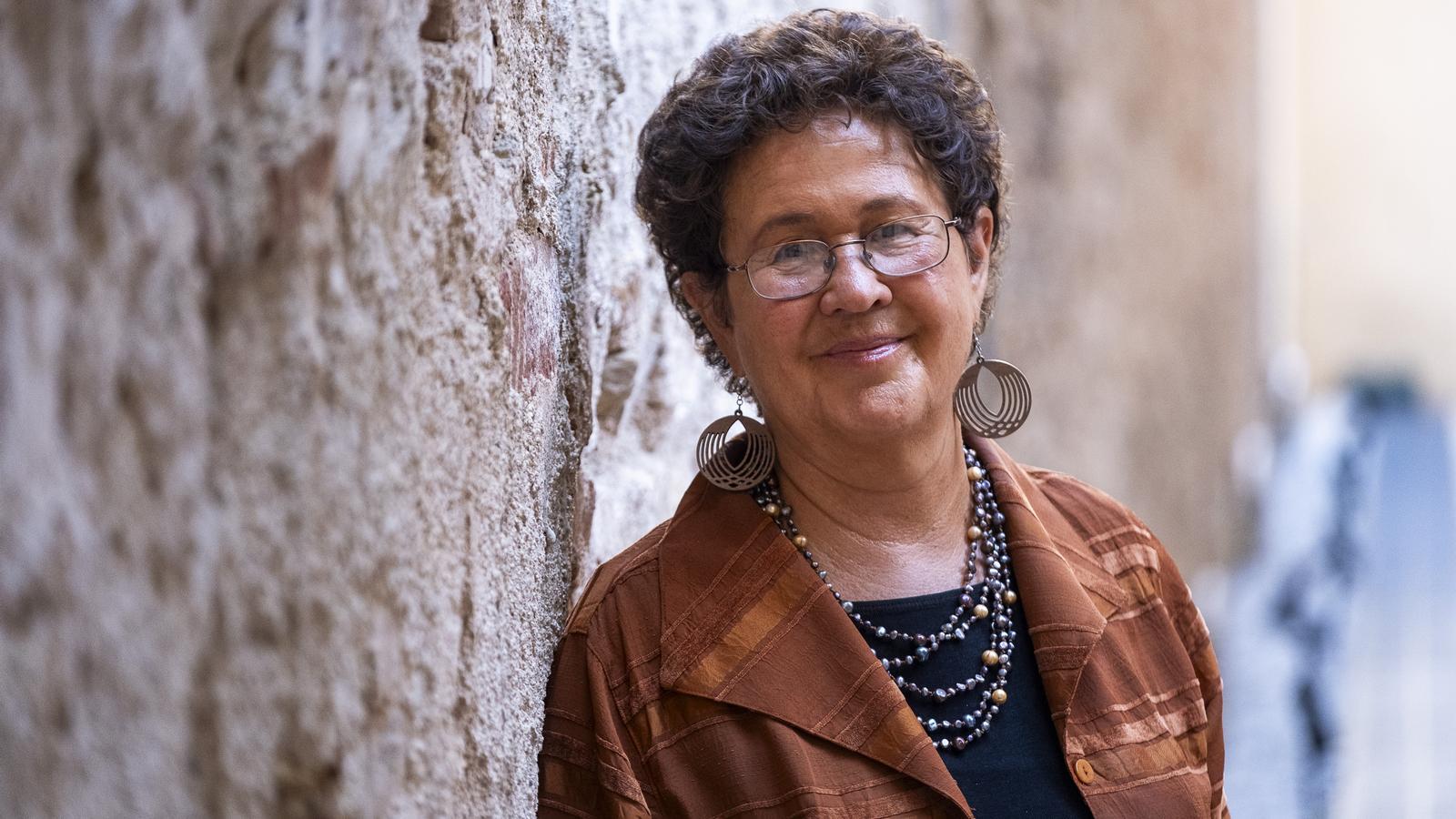
BarcelonaLinda Darling-Hammond is one of the most influential education researchers and policy leaders in the United States. She was president of the American Educational Research Association and led Barack Obama's education transition team in 2008 and Joe Biden's in 2020. She has also directly participated in the educational reform that has revived California's educational results. She is visiting Barcelona for the Equitat.org yearbook conference.
Catalonia has an open debate to rethink the education system. To what extent can such a broad commitment yield results?
— Sometimes the things you have to do are not easy. I think it is useful if you get to the root of what is happening, but people have many different ideas about why there are poor results and they are often not based on research... Therefore, I think it will be very important for the government to really examine some of the key factors and develop a plan that addresses those factors. In California, for example, we periodically create a strategic plan.
Which key factors do you think we should put on the table?
— One of the things I observed when examining Spain's results in PISA was the fact that there is a shortage of teachers, and I have heard about it here, in Catalonia. I have also heard about the difficulties in retaining teachers in the profession and the opinions regarding their preparation. This is a very broad area of work that should be at the center of a ten-year plan, because one of the things we know about performance improvement is that the teacher is the most important factor in the classroom. School principals are as well. Therefore, I believe there is an area of work that Catalonia should probably incorporate into this plan, which would consist of examining some of the advancements that have been made around the world in teacher preparation.
How about California?
— In California, we have seen excellent results with some of the teacher training reforms, and also with the principal preparation reforms, so that they are more based on learning the practices related to the science of how children learn, the needs they have in literacy and mathematics, and what we know about how to teach these subjects intensively. Another key piece would be funding, and I have heard that in Catalonia it is not designed in a way that allocates more money based on students with greater needs.
Is it so necessary to apply this type of financing?
— In the United States, we have observed that all states that have refined their school funding system to allocate more money based on student needs have experienced a significant increase in academic performance. Massachusetts is the state with the highest performance. It has been for thirty years, and they were the first to do so, along with Connecticut. We also see this in the countries that participate in PISA. Those that have made this type of investment have seen results.
Training, financing... what else?
— The curriculum. We find ourselves at a moment when a good part of the current curriculum of most countries in the world comes from a hundred years ago. There was a movement that considered that a good part of learning consisted of transmitting information so that students would remember it and reproduce it in the exam. Now we find ourselves in a world where knowledge is expanding and there is no way to grasp it all and divide it into the twelve years of schooling, memorize it, and reproduce it. Obviously, we need to learn facts and information, but we must learn them in a way that allows children to use knowledge, critically question what they are learning, and learn for themselves. Also to master the use of artificial intelligence (AI).
Part of the debate in Catalonia focuses on whether students with special needs should go to mainstream school or to special education centers.
— In general terms, the best way to obtain results is to have trained teachers able to apply inclusive practices and keep students together during primary school and the first years of secondary school. However, sometimes it is also necessary to differentiate strategies. One of the things we are observing in the United States is that two or three years of academic performance can be gained in six months if the student receives very specific tutoring. This does not mean that a differentiated system is necessary; they can be in the same classrooms, but receive additional support during a specific time slot.
Do you rule out the option of separate schooling?
— Each case must be assessed, but the systems that separate these students have generally arisen because teachers have not received the necessary training to manage this complexity. However, it is necessary to prepare to offer additional support and teach teachers how to teach in a heterogeneous classroom if an inclusive approach is applied. Children will progress more if this can be done.

In their education reform, what level of freedom was given to each school to implement their plans?
— All schools are different from each other. They all have the same services, but they develop their own plan based on what they need in their center and their community. Therefore, they are unique. The principal, teachers, community members, and families meet to analyze the needs and resources they have and decide what they will incorporate into their school and how they will do it.
And what about the methodologies and the material to be used?
— There is a very rigorous process for this. We carried out a very extensive process to approve the recommended textbooks and then we approved fifty different programs. We have fifty of them, but they have all passed this process. I think it is useful to provide some guidance to schools on what meets the established standards.
In California, they launched a teacher residency program. What changes have they noticed with its implementation?
— We created something called theteacher residency model for teacher training that has extraordinarily positive effects. It consists of extending practical experience for a whole year, under the supervision of a highly experienced mentor teacher. You cannot simply say: "Go do some teaching practice with just anyone." Here, a lot of emphasis is placed on preparation for teaching special education students and students with specific needs, in a way very similar to the Finnish system. In Finland, they decided that if you learned to teach students with specific needs, you could teach any student, and that was part of their success.

