Examination of the parties: what does each one propose in technological matters?
The programs of 29-N are filled with artificial intelligence and social networks for minors, but the spectrum, fiber, or the digital divide are already talked about less

-
CAT -
CAST
BarcelonaThe election campaign is packed with rallies, debates, and video clips for TikTok in which candidates seek the headline that will sway a few votes. But where every political party expresses its true intentions, the measures it will apply if it reaches government, is in the election manifesto. That is why I have reviewed the documents of ERC, the Front Ampli, Junts, the PP, the PSOE and Vox, in addition to the programmatic pages of Alhora, which has not published any complete document. I have looked there for the proposals on telecommunications, platforms, artificial intelligence, and digital administration, and also on the electric car and solar panels, which are both energy and technology.
The age of having networks
All parties talk about minors on social networks, but they do not propose the same thing. The PP is the most restrictive: no minor under 14 years old could have an account on a social network, with mandatory age verification, limits on infinite scroll and a digital night rest. The PSOE and the Broad Front set the threshold at 16 years old. The socialists add a public age verification tool within the digital wallet and want to restrict the use of AI chatbots to minors under 16 without parental permission.
ERC and Junts do not set any minimum age and act on the design of the applications. ERC wants to ban practices that exploit the vulnerabilities of minors. Junts wants to force platforms to perform algorithmic audits and to use an age verification "respectful of privacy", and demands that the Generalitat, and not the ministry, manages the protection of minors on the internet. Vox makes the most analog proposal of all: removing mobile phones from classrooms.
The spectrum, that unknown
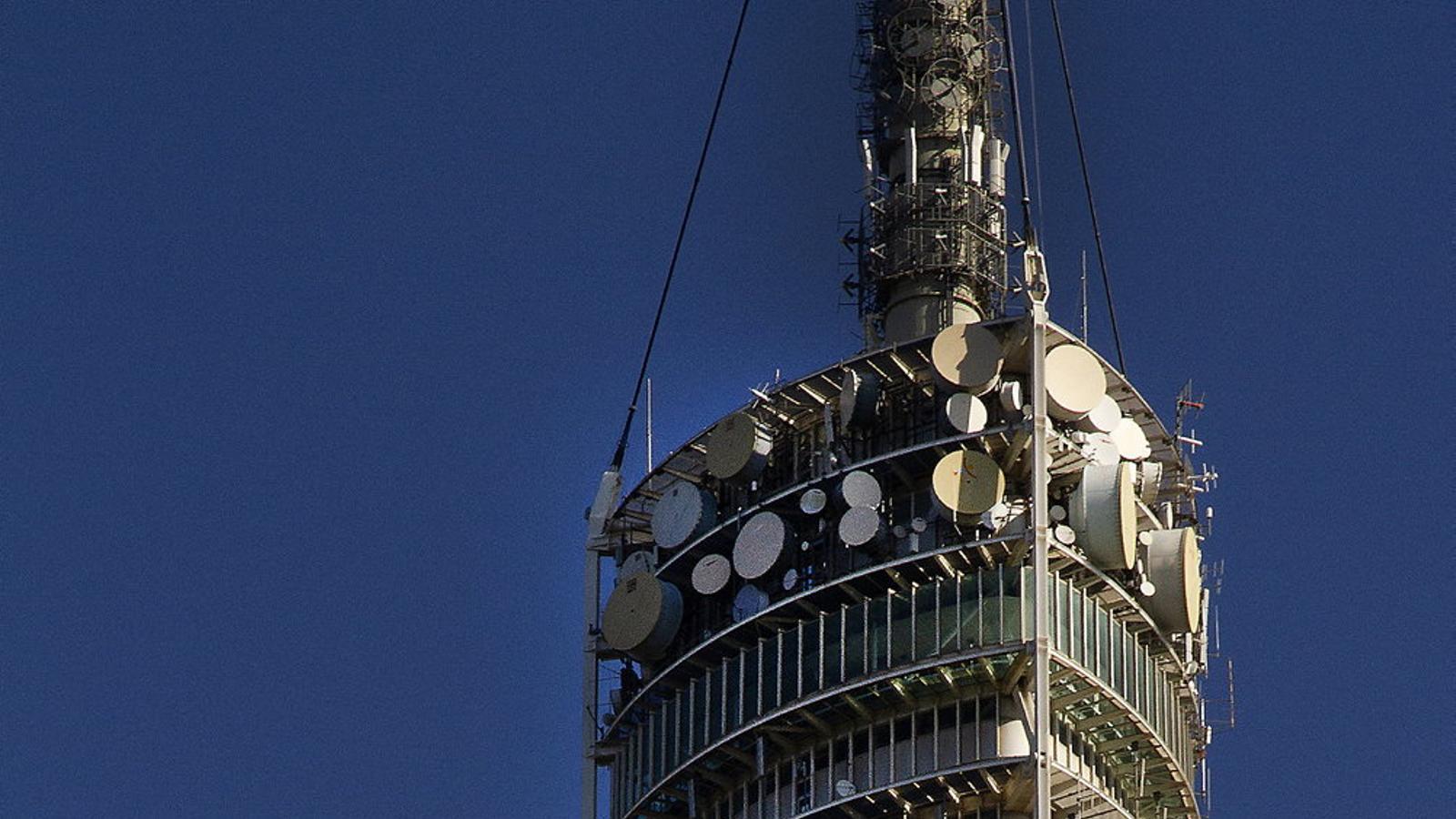
For a teenager to be able to watch videos on a mobile phone, frequencies, antennas, and fiber are needed. The radioelectric spectrum appears twice in seven manifestos.
The PSOE dedicates one sentence to it: the 6G roadmap would include pilot tests and “actions regarding the spectrum”. It does not specify bands or an auction calendar. The same document claims that 5G already reaches 99% of the population.
Junts is the only one that makes its own proposal, although it is about competencies and not industrial policy. It wants a bill to modify the general telecommunications law to transfer the regulation of the sector to the Generalitat, “the regional management of the radioelectric spectrum” and control over the deployment of 5G and 6G. The goal is to be able to force operators to cover 100% of the territory. The program does not explain how it would fit with a competency that is currently state-run and depends heavily on Brussels, which harmonizes the bands for the entire Union.
No other party mentions it. No one mentions the renewal of licenses, which worries operators so much, nor the future of DTT or the consolidation of the mobile market through mergers between operators. It should be remembered that this sector complains every year about the lack of regulatory predictability.
Connectivity in the territory appears a little more. The PSOE promises connectivity vouchers and social telecommunications rates within the single social bonus, a measure that in fact the government already approved last Tuesday; the Front Ampli wants 5G SA, “real 5G”, in every rural industrial estate, and the PP promises 5G on high-capacity roads. The only concrete figure is from Junts: fiber optics in all settlements with more than 50 inhabitants.
Regarding satellites, only the Front Ampli expresses support for IRIS², the European secure communications constellation that is to be the alternative to Starlink, and Junts defends the Generalitat’s NewSpace strategy.
AI, between the law and the language
With artificial intelligence, it is the other way around: there are proposals in every program. The PSOE proposes an AI governance law, with sanctions of up to 35 million euros and a ban on deepfakes made without consent, and wants platform executives who do not remove illegal content to be held criminally liable. The Broad Front goes further: fines of up to 6% of global turnover, prison sentences for executives who disobey the order to remove content, and a ban on companion chatbots that simulate emotional bonds.
The PP focuses AI on business, with an applications center for SMEs and innovation zones with seven years of favorable tax treatment. Vox settles for an ambiguous “join Spain to the AI race”.
AI also reaches the workplace. The Broad Front wants companies that lay off staff to implement AI to pay an additional contribution and for the works council to be able to veto systems. Junts wants authors to know when their works are used to train an AI and to get paid for it.
ERC and Junts add language to it. ERC wants quotas for Catalan, Occitan, and sign language on platforms. Junts proposes forcing by law large platforms and AI model developers to offer Catalan as a native language in interfaces, voice assistants, and recommendation algorithms, subject to administrative sanction. We will have to see how it is explained to a company in California that its algorithm must recommend in Catalan.
The parties are also divided on whether big tech companies should be made to pay more. The PSOE wants to tax “techno-oligarchs” more, the Broad Front proposes a tax on cloud services and a levy on data center water, and ERC, a European digital tax. The PP, Vox, and Junts do not propose any specific levy.
Data, cyberattacks and censorship
Other digital topics have less space. In cybersecurity, Junts wants the Cybersecurity Agency of Catalonia to be the authority for the European NIS2 directive and to function "like the SEM", and the PSOE proposes a state service for victims of cyber scams. Regarding privacy, ERC is the only one that defends encryption and rejects mass surveillance; the PP and Vox say nothing about it. With disinformation, the debate turns into a discussion about who is censoring whom: the PSOE wants a hate and polarization index for each platform, and Vox denounces a "censorship drift". In research, Junts and the Broad Front want to reach 3% of GDP, while the PSOE, the party in government, is settling for 1.5% by 2035.
Prior appointments and forgotten citizens
Vox and Junts agree on wanting to end the mandatory prior appointment system at state offices; Junts would do so with a law guaranteeing in-person attention. Both also defend the digital file and that the administration should not request documents it already possesses. They promise to digitize and, in the same program, the right not to have to go through digitalization, which says a lot about how it has gone so far.
Three parties want to use AI to make the administration more efficient: the PP, for repetitive procedures; the PSOE, to free civil servants from mechanical work, and Junts, taking advantage of the fact that a large part of public employees will retire in ten years. The Front Ampli sees it more as a risk and proposes a law on the use of AI in the administration.
The digital divide is barely mentioned anywhere. The PP speaks of it to offer 24-hour telephone assistance; the PSOE, regarding the gender gap and that of the elderly, and Junts, to guarantee training and in-person attention to the elderly. Always in passing. ERC, Vox, the Front Ampli, and Alhora do not mention it.
Plugs and rooftops
In energy, the differences are clearer. Regarding the electric car, the Broad Front is the only one that puts a price on aid: a social rental of 100 euros per month for an urban car and up to 8,000 euros in subsidies for self-employed workers and farmers. ERC is the only one that quantifies charging, with 4,000 points of over 350 kW before 2030. Junts supports it, but warns that the climate bill should not always be paid by the same people, such as “the family that cannot afford to change cars”. Vox wants to reverse the ban on combustion engines and the deployment of low-emission zones.
In shared self-consumption, the discussion is about the maximum distance at which a neighbor can share the energy from their solar panels. The current limit is 5 km. ERC wants to expand it to 10 km, and to 20 km in rural areas. The Broad Front proposes a minimum of 20 km, and Junts, 100 km. None of the three specifies what would happen with grid tolls.
Large solar plants in the countryside divide the right: the PP wants to unblock grid connections and Vox wants to prevent macro-plants that it considers “uncontrolled”. Junts also wants to unblock the connection points that the State currently reserves for itself, but proposes reviewing the shutdown calendar for Catalan nuclear plants if renewables do not arrive on time.
In summary
The programs are concerned about what algorithms do to adolescents, but not much about who sets up the antennas, who manages the frequencies, and who gets left behind when the administration goes digital. And yet, the 5G that everyone takes for granted, the fiber that does not reach the farmhouse, and the DTT that will one day have to retire will also be decided during this legislative term.
