Has the fallen rain been taken advantage of? This is how the reservoirs are after the downpours
The storm of the last few days has left more than 300 l/m² in some parts of the country

-
CAT -
CAST
BarcelonaThe rains that have fallen during the few days we have had in the month of October have been exceptional in some regions, with records of more than 200 or 300 l/m² in some cases and torrential downpours that have caused serious consequences, such as floods. Some exceptional figures that might make one think that we have the reservoirs well filled again. But it is not exactly like that.
The storm has mainly affected the coast and the pre-coastal area. Therefore, the bulk of the rainfall has avoided the main headwaters of the internal basin reservoirs. Even so, it has rained a little or a lot in these areas as well, located mainly in the Pyrenees and the Pre-Pyrenees. This has caused reserves to rise three points compared to the end of September, breaking the trend of slow but continuous decline of the last two months.

Right now the reservoirs are at 75%. They haven't shot up as much as if the more than 300 l/m² had fallen at the headwaters, but this figure is slightly above what it was just a year ago, and is higher than the average of the last 5 and 10 years. Therefore, water reserves remain in a very good state in our country.
As sources consulted at the Catalan Water Agency (ACA) have explained to ARA, with current volumes and desalinated and new resource water, "we will reach after the summer of 2027 without having to apply consumption limitations".
But beyond watering the vegetation in the area, could it be said that the large amount of water that fell on the coast and pre-coastal areas has been completely lost? According to the ACA, no. "Even though the most abundant rains have been in coastal areas where there are no reservoirs, the water contributions in these points will serve to recharge coastal aquifers," they assure. In fact, even now there are aquifers that have not fully recovered from the water deficit suffered during the historic drought that ended more than a year and a half ago.
"We are just at the beginning of autumn and new episodes of rain can still occur at the headwaters," they remind from the ACA. Currently, the reservoirs of the internal basins have space to be able to assume 170 hm² more. Therefore, if a large storm of general rain were to arrive – such as an eastern storm – the reserves could return to nearly full, as happened at the beginning of the year thanks to the exceptional winter rain. It must be remembered that under normal conditions, autumn is the rainiest time of the year in more than half of the country.
"The capacity of the internal basin reservoirs is limited, and that is why we manage these volumes in a balanced way with the goal of maximizing the available water," they explain from the ACA.

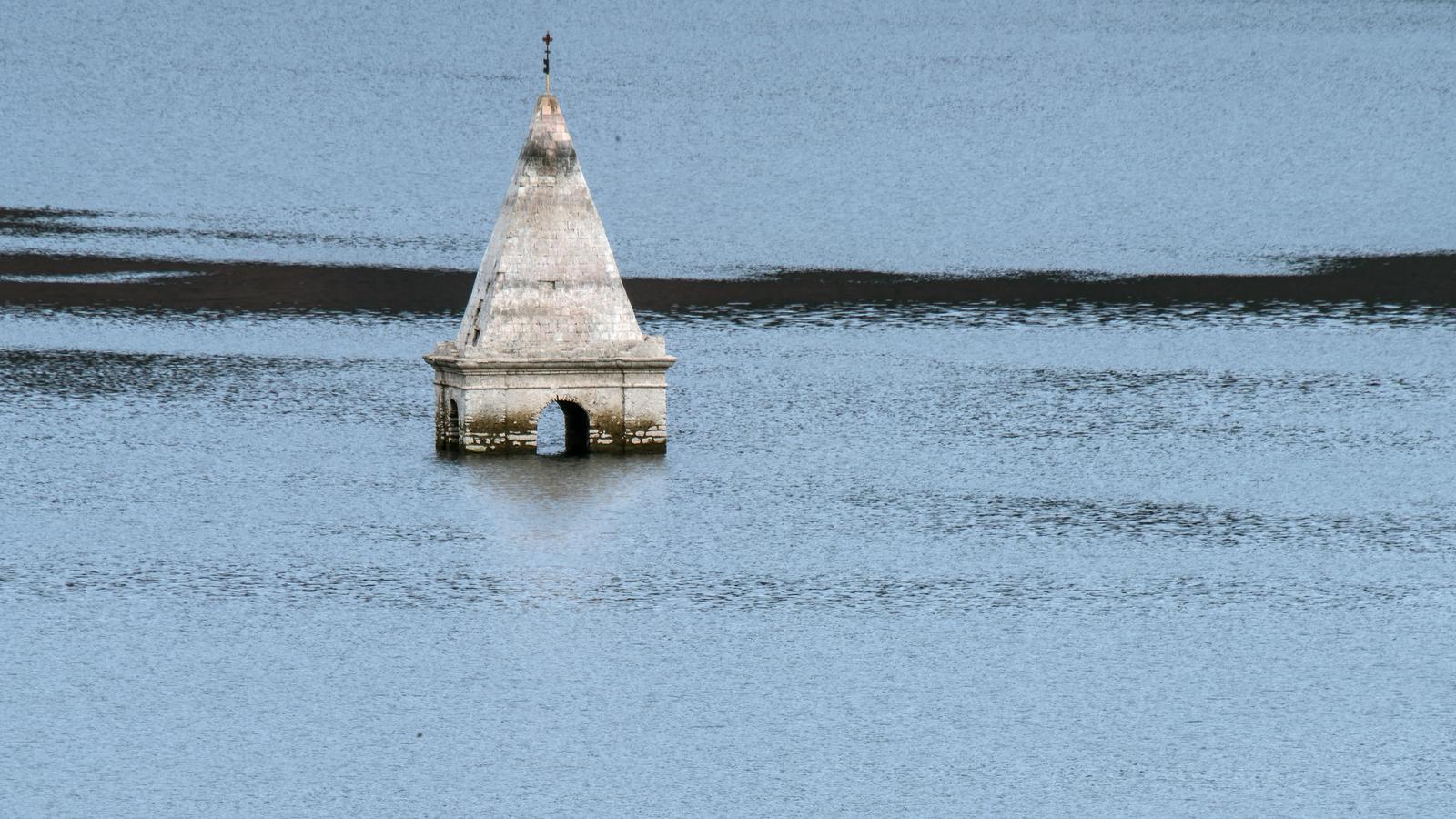
Regarding the state of the reservoirs, the Llosa del Cavall stands out, which is at 83%, and those of Susqueda and Sant Ponç, at a healthy 82% despite the little rain and the extreme summer heat. Those of Siurana and La Baells are at 71%, and Sau does not reach 70%. The rest are situated below that, with the Riudecanyes one at the tail end, with 28%. For its part, the Catalan reservoirs of the Ebro Hydrographic Confederation (CHE) are at 53%.
Mitigate the effects of climate change
In recent years, the effects of global warming and the climate crisis are becoming very evident here at home, with more extreme weather phenomena and droughts that will be increasingly longer and harsher. All of this has forced the start of a point of no return so as not to depend on rain in the future.
"Climate change is altering the usual periods of rainfall, and we must be adapted to this situation, with a deployment of measures that do not depend on rain. More and more new resources are being incorporated to complement the water we use from natural resources," state the ACA.
Currently, desalination plants are operating at 50% of their capacity, and this year must end with the activation of new infrastructure, which will provide up to 33 cubic hectometers (hm³) of new resources each year. For example, they highlight the Estrella water treatment plant (already in service), the expansion of the Besòs water treatment plant, and the water regeneration station (ERA) in Sant Feliu de Llobregat. Thus, the government's forecast of reaching 2030 with 70% of water consumption guaranteed thanks to desalination and regeneration remains intact.
