Health attends 450 ophthalmological emergencies due to the eclipse: which symptoms should worry you?
Consultations for eye conditions have accounted for between 2% and 3% of emergency room activity
-
CAT -
CAST
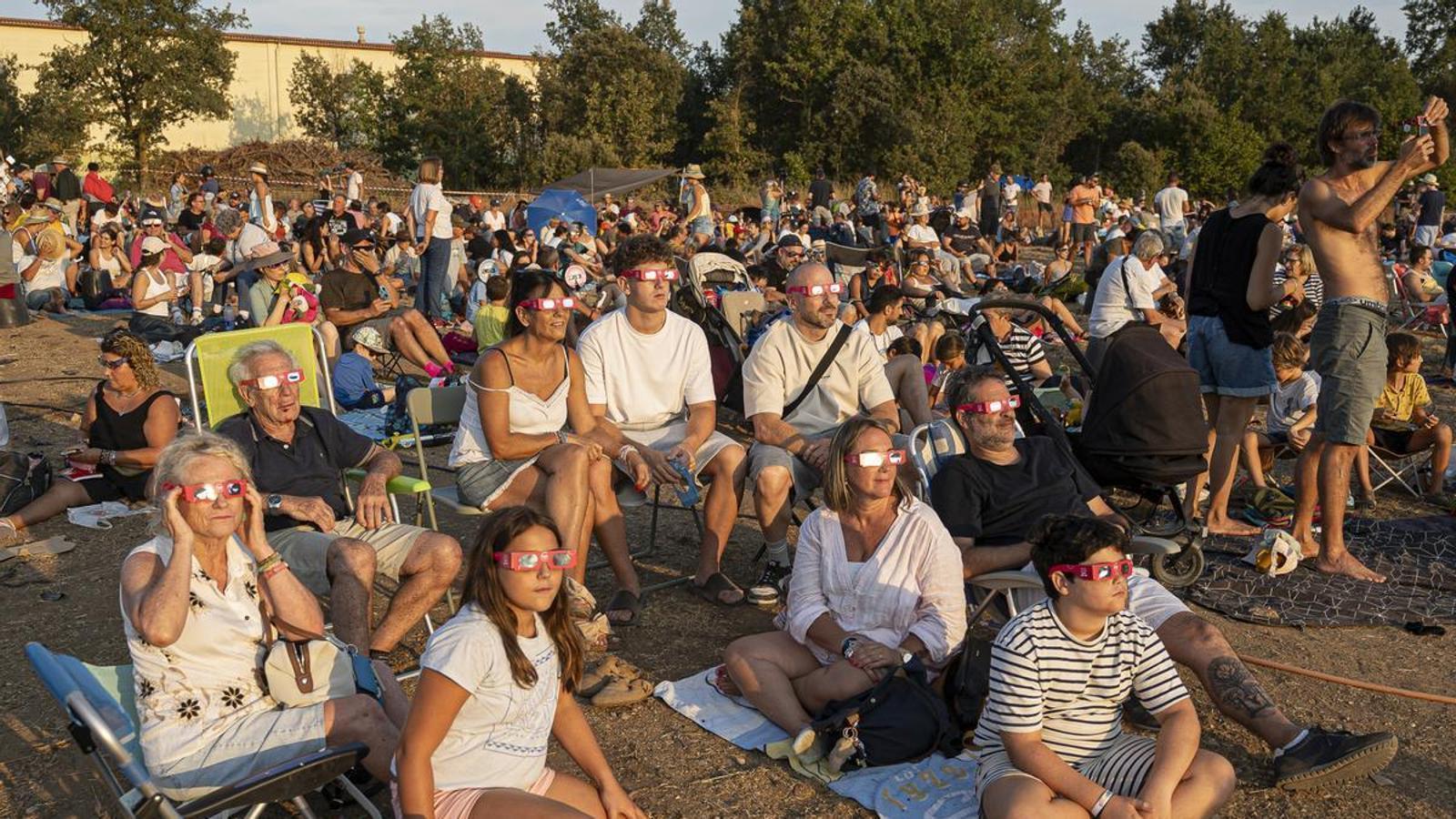
BarcelonaThe day after the total solar eclipse that captivated thousands of people across Catalonia, some people might start experiencing eye discomfort or minor ocular alterations, such as blurred vision. In the last two days, the healthcare system has attended to nearly 450 ophthalmological emergencies coinciding with the solar eclipse.
A large part of the people attended for eye conditions went to the doctor on Wednesday itself, with 239 hospital emergencies and 165 at CAPs. Consultations for eye conditions increased, but they only accounted for between 2% and 3% of the total hospital emergency activity. Additionally, on Wednesday, the Medical Emergency System (SEM) handled 115 calls and 109 people for incidents related to the solar eclipse. Ten of these required the mobilization of ambulances. In total, six people had to be transferred to healthcare centers: one in critical condition with trauma, one in serious condition, three in less serious condition, and one in mild condition. The rest, 101 people, were attended to by phone.
Despite the nearly 450 ophthalmological emergencies attended, the Department of Health warns that some ocular symptoms may appear hours or days after observing the eclipse. Thus, the question is inevitable: If symptoms appear, should one worry? Could they really be a consequence of the astronomical phenomenon, or can worry or hypervigilance intensify them?
The data available so far do not indicate that there has been a wave of serious eye injuries. This was corroborated by the manager of the Terres de l'Ebre health region, Ferran Roche, who explained this Thursday on Catalunya Ràdio that, in general, it had been a calm day and that many of the calls corresponded to discomfort that could be resolved without problems. Health authorities indicate in their online recommendations that, if hours or days after observation difficulties focusing, spots in the visual field, or blurred vision appear, an ophthalmologist should be consulted.
However, not everyone who observed the eclipse and notices eye discomfort today needs to rush to the emergency room. But, at the same time, eye injuries in these circumstances can take hours (or even days) to appear, so direct damage cannot be ruled out. How do we know, then, if the eclipse has caused us damage? We need to be attentive to changes in vision.
The problem is in the retina
The most important element is the sun protection used during the eclipse. Looking directly at the Sun without specific and approved protective glasses can cause an injury known as solar retinopathy, which occurs when intense sunlight causes photochemical damage to the retina, especially in the central area, the macula. The damage can affect photoreceptors and produce alterations in central vision. And here is one of the keys to understanding what can happen after the eclipse: the symptoms do not necessarily appear at the moment of exposure, and the lesions are not painful, because the retina has no pain receptors.
In the hours following exposure, among the most characteristic signs of eye damage are blurred vision and the appearance of a spot or dark area in the center or near the center of the visual field. Alterations in color perception or distortions of straight lines can also occur. Studies of cases of exposure during eclipses have described symptoms that typically appear between one and four hours after looking at the Sun, although there are also cases where alterations become evident later.
According to the manager of the Terres de l'Ebre health region, Ferran Roche, if discomfort or a visual spot appears, one should go to the reference health center.
"Satisfactory" system response
The Department of Health has assured that the public health system has responded "satisfactorily" to the slight increase in healthcare demand associated with the solar eclipse, thanks to the specific preventive device deployed throughout the territory. The activity has been mostly mild in nature and attended in proximity devices, concentrated especially in the regions of Lleida, Camp de Tarragona, and Terres de l'Ebre.
On the day of the eclipse, 17,216 emergencies were recorded, between hospitals and urgent primary care devices. This is a figure that represents an increase of 12.2% compared to the same day of the previous week. The most significant increases occurred in Terres de l'Ebre (+27.9%) and Camp de Tarragona (+24.2%). Despite this increase, the activity remained within the expected margins and did not compromise the care capacity of the centers.
