A 24-year-old young woman creates a system to report Renfe and Adif delays more quickly
The methodology of this mathematical engineering student at the UPF warns of incidents up to 45 minutes before the official channels
-
CAT -
CAST
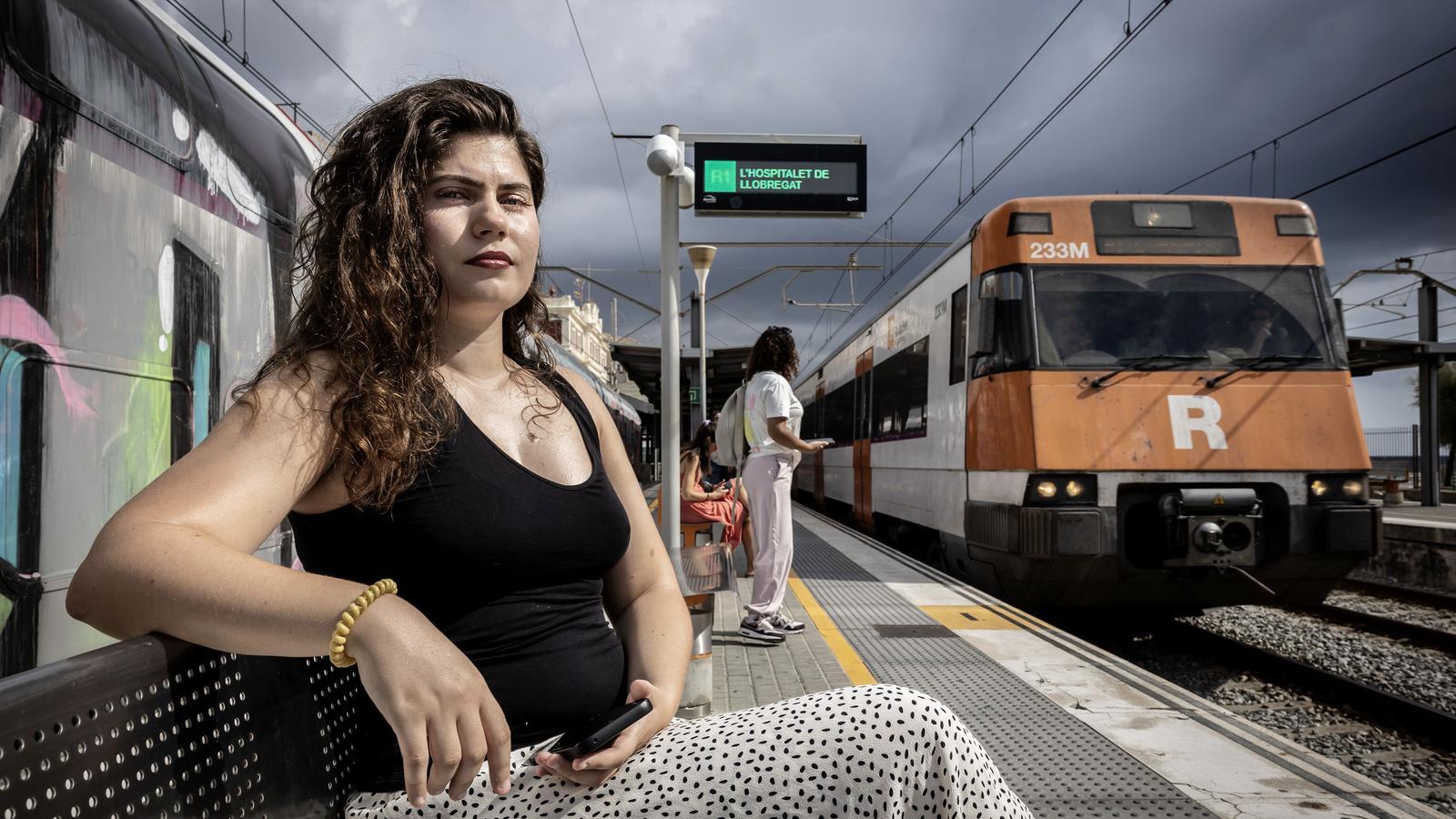
BarcelonaImproving communication and information for travelers and making it "excellent" is one of the priorities that the Government has been demanding from Renfe and Adif for years. When a train is late, users often express that getting information and alternatives – or often simply knowing what is happening – is practically an impossible mission. Marina Castellano knows this well. She is from Badalona, has just turned 24, and is a user of Rodalies. She is also a student of mathematical engineering in data science at Pompeu Fabra University. For this reason, when she had to approach her final degree project (TFG), the idea of improving information for Rodalies immediately came to mind "to make life a little easier for users".
A year later, Castellano has designed what she calls a "data extraction and analysis system" capable of detecting an incident on Rodalies and reporting it on average "about 45 minutes earlier than current official channels do". In this way, the student explains, "the system can become a very useful tool". "For users it is obvious, because they are waiting there on the tracks for information to organize themselves and decide which means of transport they will finally take, to plan their journey. But I also think it can be very useful for operators and the service provider, to be able to improve communication and offer it in a faster way", the young woman argues.
And how does she achieve it? The system allows for the automatic detection, verification, and processing of thousands of messages shared on social media about incidents on Rodalies, extracting reliable and quick information and contrasting it with the actual breakdown. "The time, the station mentioned, which line it belongs to are extracted, and, with different elements of computer language – parameters, indices, and AI –, it is clarified what kind of incident it might be", explains Castellano, who spent nine months testing and comparing more than 65,000 messages from the social network X. Thus, the system identifies and contrasts whether a message refers to a real incident and classifies the type of impact.
The methodology used by this young engineer in her final project has been guided and endorsed by the director of the NeTS (Network Technologies and Strategies) research group at UPF, Miquel Oliver, and the team of thestart-up Mobility Data Nets SL, linked to the Rodalinets project of the UPF to articulate an information system for the public transport network based on citizen collaboration.
Waiting for a call
The project, both Castellano and the UPF assure, aims to "complement and improve" existing channels and they are already considering integrating the system into an app or a digital platform. For the moment, however, the engineer explains that they have not yet received any call or formal interest from the operators, the management company, or the Government – as the service holder – regarding her new information system. "We are open to everything, both I and the research center," asserts Castellano.
Hers is not the first initiative born from users to improve the information that passengers receive. Only a year and a half ago, another 27-year-old young software programmer, David Cortés, presented Transporta'm, a new application that details in real time all the delays that exist on the railway network and the new passage schedules by cross-referencing all available open data. Linked to the Dignitat a les Vies platform, it has already managed to have tens of thousands of users check the status of the network with the app daily.
Now Castellano is waiting for the repercussions her system might have while she works "with data stuff" at a consultancy, far from the railway sector. "It seemed interesting to be able to help users like me, but I don't have a special preference for the railway sector," she explains. "What I do really like is everything related to data processing and research," the young woman explains. For now, her Bachelor's Thesis (TFG) has already earned her the highest qualification, a 10.
