NASA launches telescope that can observe 100 times more space than Hubble
The Nancy Grace Roman is already traveling aboard SpaceX's Falcon Heavy
-
CAT -
CAST
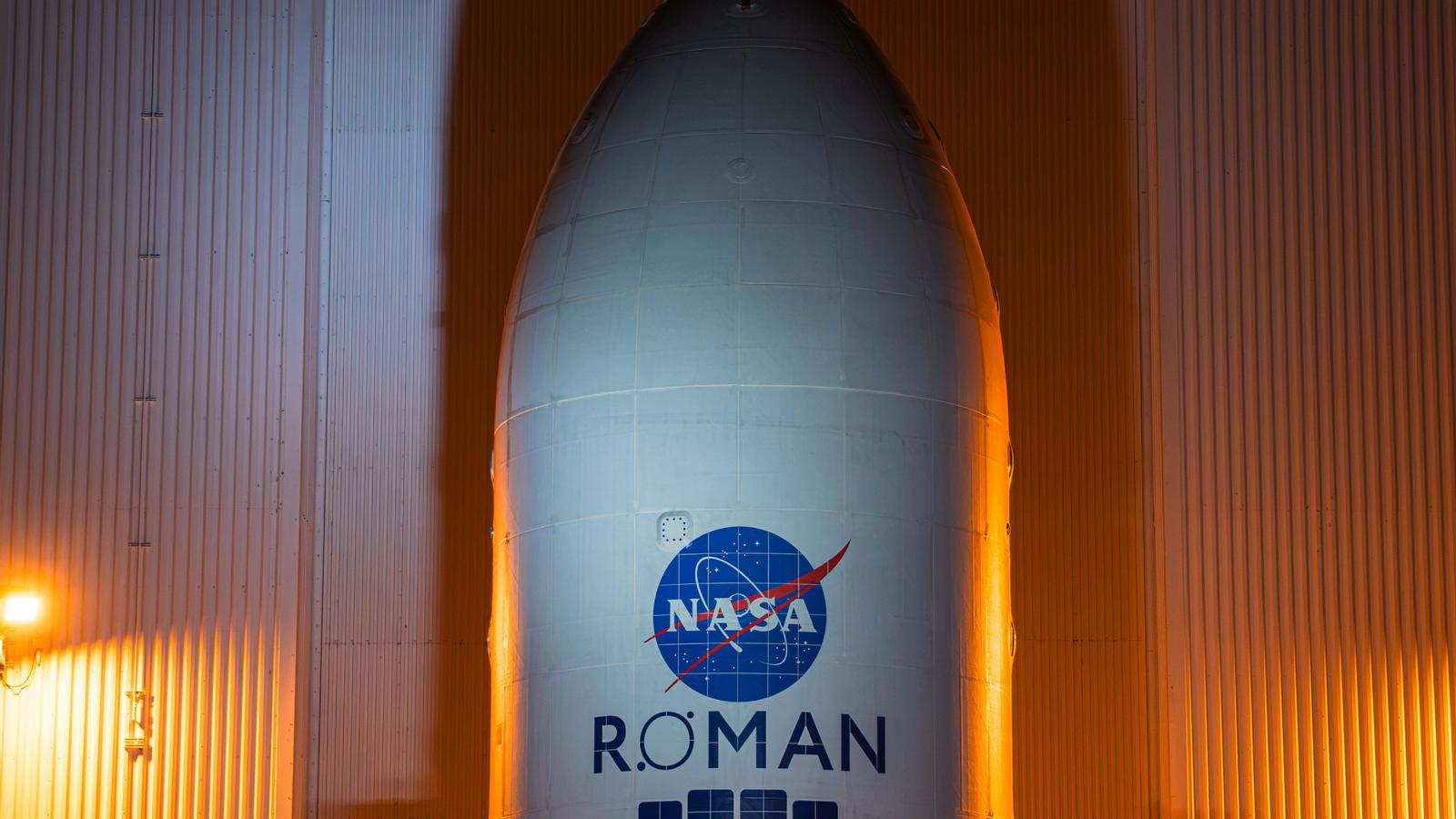
BarcelonaIt is the largest observatory ever built, it will have a field of view a hundred times larger than that of the already mythical Hubble telescope and it has already left Earth. This Sunday morning –at 11:26 a.m., Catalan time and 7:26 a.m. in the United States–, NASA launched the Nancy Grace Roman telescope aboard SpaceX's Falcon Heavy rocket, the company led by Elon Musk. The rocket took off from NASA's John F. Kennedy Space Center in Cape Canaveral, Florida, in an operation that has already been considered a success.
The objective of the mission with this immense telescope will be to explore the universe and seek answers about dark energy, exoplanets, and infrared astrophysics. Information that could change current physics models. Now, however, we will still have to wait a hundred days until the rocket reaches its final destination: a gravitationally stable area between the Sun and the Earth known as the Lagrange point L2.
350 movies in 4K
NASA has also released various data to understand how much the observation capacity of the Nancy Grace Roman is radically greater than the telescopes we knew until now. For example, in just one month this telescope will be able to scan the Milky Way and detect up to half of its stars. Another way to understand the dimension of the new observatory is to compare it with the Hubble telescope: the space that Hubble took thirty years to capture in images, Roman will be able to record in just thirty days. And one last piece of data. The new telescope will generate 11 terabytes of data per day, the equivalent of 350 movies in 4K UHD resolution.
The telescope's name is a tribute to Nancy Grace Roman, NASA's first chief astronomer, who was one of the architects of the North American agency's space program during the 1960s and 1970s.
