Jurassic Park Generation: the last farewell to the movie paleontologist who inspired us
From Sam Neill to the new heroines of paleontology, cinema has awakened scientific vocations and has evolved at the pace of discoveries about dinosaurs

-
CAT -
CAST
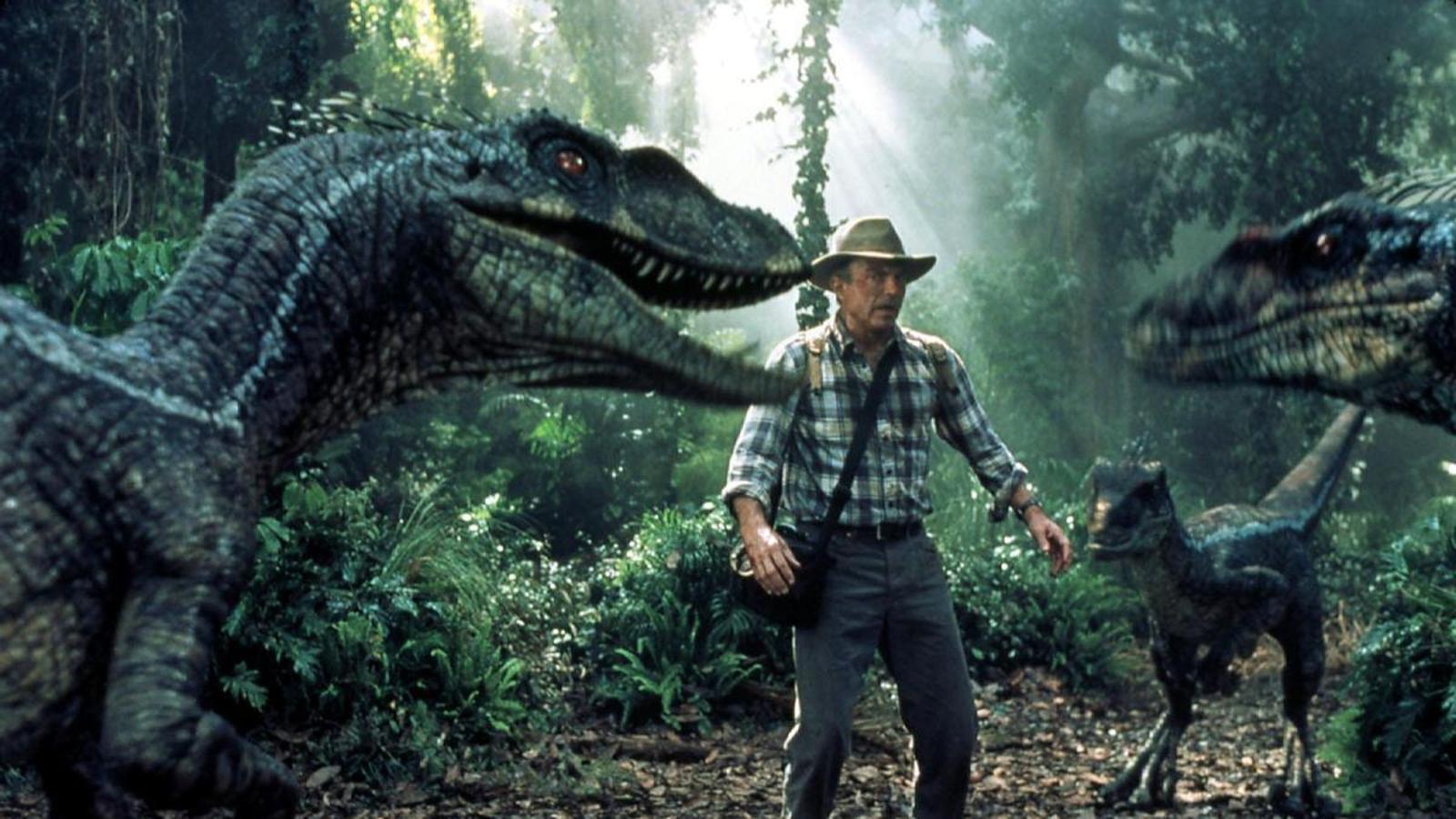
One of the most iconic scenes in cinema from the signature of Steven Spielberg. In Jurassic Park (1993) paleobotanist Ellie Sattler –Laura Dern– and paleontologist Alan Grant –Sam Neill– observe, for the first time, a colossal living brachiosaurus. In the background, the music of John Williams. If we add to this the friendly face of Sir Richard Attenborough, and his "Welcome to Jurassic Park!", the epic of the moment is unparalleled. Rarely had the seventh art turned scientists into heroines and heroes – into cult characters.It is not surprising that on July 13th, sad news struck not only the film industry, but millions of people who love dinosaurs. We lost actor Sam Neill and, with him, our cinematic paleontologist. In the three films he appeared in – the "Jurassic Park" and "Jurassic World" sagas – we accompany him as he excavates with a brush and ground-penetrating radar, seeks funding for research in Montana, or speaks knowledgeably about his subject of study. Furthermore, he conveys passion. "He was always my favorite since I was a child," he confesses to Dr. Sattler when they care for a sick triceratops. Thanks to these characters, other children, and adults, joined the large legions of dinomania. Some even decided to dedicate themselves to paleontology as a profession. And, we insist, we owe a large part of the credit to the now mourned Sam Neill, who knew how to distance himself from the mere muscular adventurer to embody a hero capable of uniting science and humanity, Dr. Alan Grant.Other scientists in celluloid
Are there other celluloid paleontologists who have sparked scientific vocations? Besides Professor Challenger in The Lost World (Hoyt, 1925), it is obligatory to mention Kyohei Yamane in Godzilla (Honda, 1954). Far from wanting to exterminate Godzilla – a dinosaur mutated by nuclear radiation – he fights to protect him from human stupidity, the same stupidity that has created powerful self-destruction weapons. It was seeing this film, and Yamane's personality, that marked the career of José Luis Sanz, today professor emeritus at the Autonomous University of Madrid and one of the world's leading dinosaur experts. In a documentary premiered at the Sitges International Fantastic Film Festival of Catalonia, The Valley of Concavenator (2022), Sanz acknowledges the strong link between cinema and the genesis of his career in the field of paleontology. For example, in 2010 he and his team published the discovery of a new dinosaur species: Concavenator corcovatus, the co-star creature of the documentary directed by Víctor Matellano; the other star is a reptile, also carnivorous and bipedal, but fictional: Gwangi.The Valley of Gwangi (O'Connelly, 1969) was filmed, for the most part, in Cuenca. And the Concavenator was excavated, precisely, at the Conca de Las Hoyas site, and is called the Cuenca hunter. Who would have told Ray Harryhausen, the master of special effects who brought Gwangi to life (a kind of hybrid between a tyrannosaur and an allosaur), that a similar predator existed in this very habitat: the Concavenator, which would end up landing in Hollywood at the hands of Barcelona director J.A. Bayona. It appears in a diorama in the Lockwood Museum in the footage of Jurassic World. Fallen Kingdom (2018).Harryhausen was also the author of the prehistoric creatures that parade through the film A million years ago (Chaffey, 1966). Raquel Welch's image, in her antediluvian bikini, next to John Richardson's loincloth, steals the spotlight from the dinosaurs, which serves to remind us that the association of humans and these fossil reptiles has never existed. Nor has there been the de-extinction that, with the help of genetic engineering, ventured the writer Michael Crichton in his novels. Dinosaurs – with the exception of birds – became extinct 66 million years ago, and the first hominins appeared in Africa between 7 and 6 million years ago (the Homo sapiens, only 350,000 years ago).
Are current birds dinosaurs? Yes. They descend from bipedal dinosaurs: the theropods. In fact, the velociraptor had its body covered in feathers. Despite this, in addition to exaggerating the real size of these predators, Spielberg dispensed with the feathers – were they more terrifying like this? –. And it is that dinosaur means "terrible lizard" (Richard Owen, 1841). But recent movies like Primitive War (Sparke, 2025), a film that mixes dinosaurs and soldiers in the Vietnam War, have opted for the feathered look, even for the idolized T-rex. At the same time, they opt for gender equality and conservationism. We've talked about Ellie Sattler, but Claire Dearing – in Jurassic World. Fallen Kingdom– evolves from CEO to founder of the Dinosaur Protection Group, where Zia Rodriguez, a young paleo-veterinarian and environmental activist, works.
Science and cinema are paving their way, and new dinosaur films blend fantasy with advances in paleontology.
