A global warming turned Europe into a hell of fires for thousands of years
A study reveals that ferns fed giant fires after a mass extinction 201 million years ago

-
CAT -
CAST
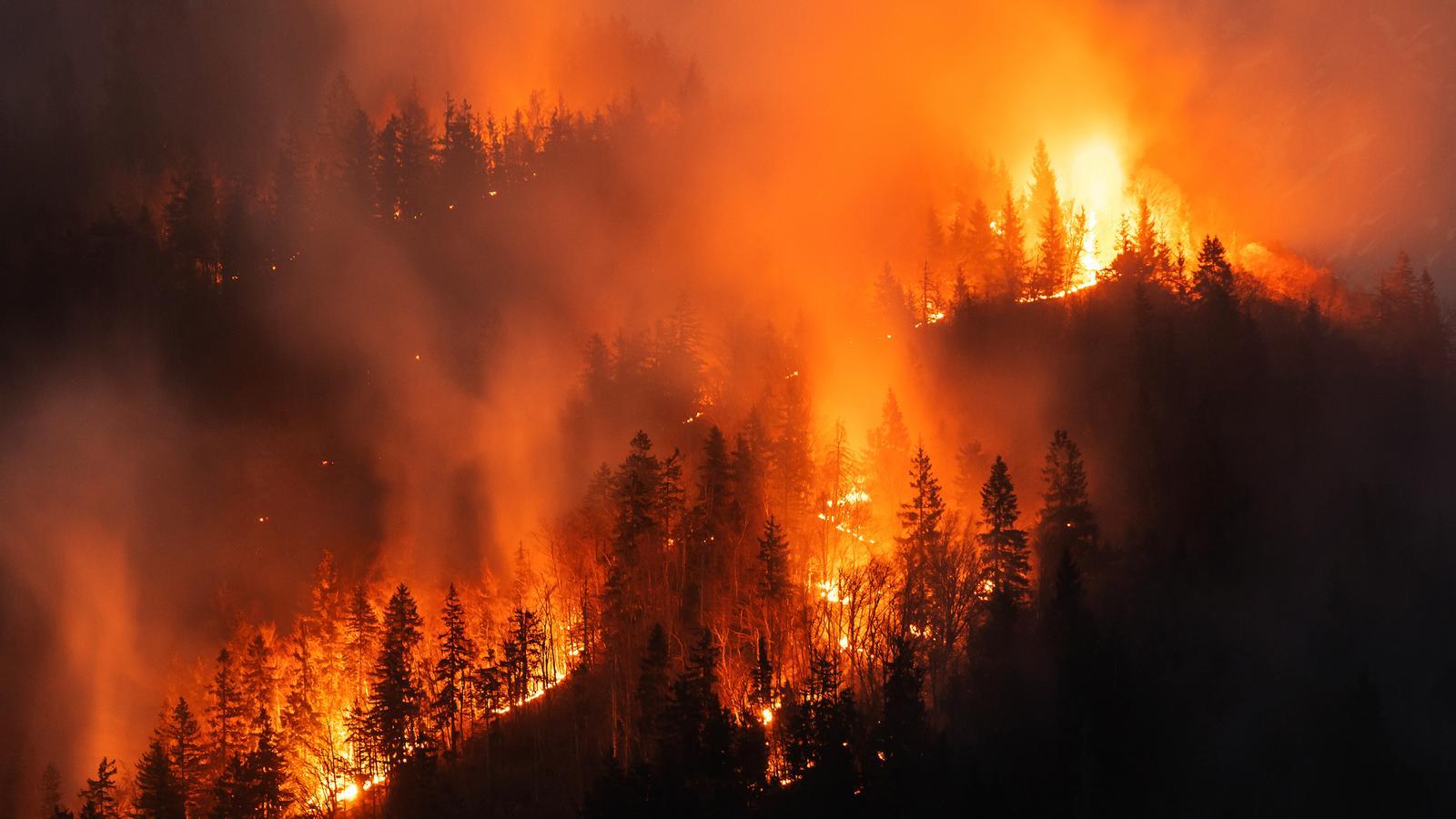
Europe lived through a true "hell" of forest fires 201 million years ago, during the mass extinction that ended the Triassic period. This is the conclusion of a study led by Utrecht University and published this Tuesday in Nature Geoscience, which links these persistent fires to an episode of extreme global warming caused by intense volcanism associated with the fragmentation of the supercontinent Pangea. According to the researchers, the fires were not only a consequence of this climate change, but also contributed to accelerating the collapse of terrestrial ecosystems.
The researchers explain that the intense volcanism associated with the fragmentation of the supercontinent Pangea released enormous quantities of carbon dioxide into the atmosphere, which raised the global temperature by 5 to 10 degrees. The warming caused the collapse of forests and their replacement by extensive fern savannas in what is now northwestern Europe. Many of these plants quickly regrew after fires and, when they dried out, acted as ideal fuel that fed new large fires, thus perpetuating a vicious cycle of fire and regeneration.
To reach this conclusion, scientists analyzed sedimentary material from four boreholes from Germany, Luxembourg, Denmark, and the United Kingdom, including one 640-meter core recently extracted in the latter country. In addition to usual indicators, such as fossil charcoal and chemical compounds present in fire smoke, they applied a new technique based on the darkening of fossilized pollen and spores. This analysis allowed them to identify a long period of intense fires and conclude that the fires spread on a continental scale.
According to the authors, this fire-dominated landscape persisted for between 40,000 and possibly 300,000 years. The study concludes that the combination of climate change, deforestation, and the expansion of opportunistic species can create a "perfect storm." In the case of the end of the Triassic, global warming, the disappearance of forests, the proliferation of ferns, and conditions more favorable to fires – with an increase in storms and lightning – would have fueled the repetition of large fires for tens of thousands of years and contributed to exacerbating one of the great mass extinctions in Earth's history.
