Against pseudoscience: the humility and provisionality of good science
ARA and the IEC organize the event 'The keys to pseudoscience' to seek answers to the crisis of authority that science is suffering
-
CAT -
CAST
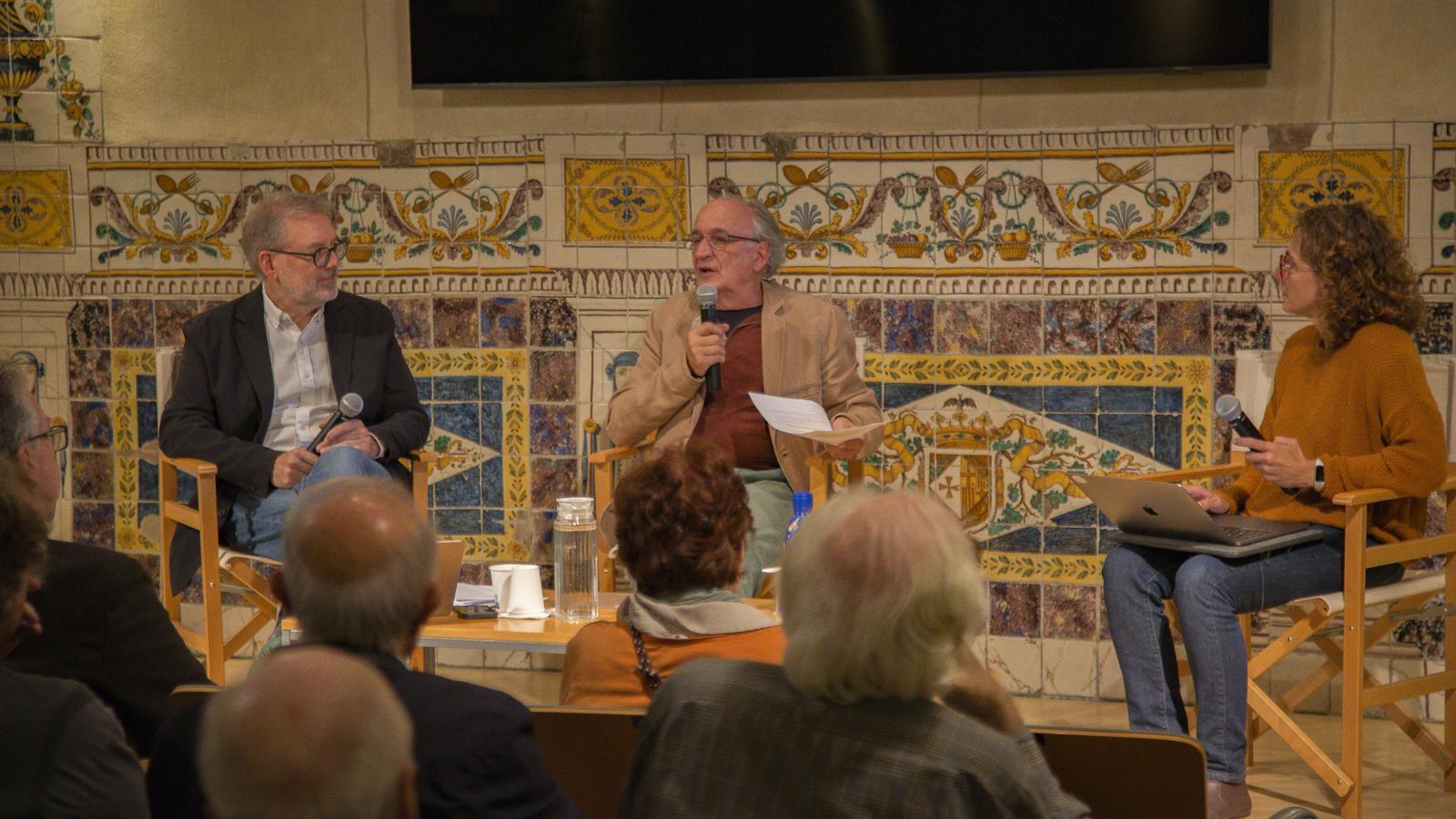
BarcelonaVaccines that cause autism, stars that decide characters and destinies, sugar pills that alleviate incurable diseases, and an Earth as flat as a plate. Pseudoscience has left behind the time of fake diplomas hanging on the walls of invented clinics. Now it is more subtle: it has appropriated scientific language, speaks from the loudspeakers of power, and, often, makes money. Where is the border between science and pseudoscience, why even educated people end up believing falsehoods, and how they can be fought are some of the questions addressed by biologist Jaume Bertranpetit and physicist and historian of science Xavier Roqué at the debate The keys to pseudoscience, organized by the newspaper ARA and the Institute for Catalan Studies (IEC) and moderated by the director of the ARA science supplement, Cristina Sáez.
“Science and pseudoscience are not distinguished because one is right and the other is not, nor because one is better and the other worse,” stated Bertranpetit. What separates them is the method: science produces knowledge that is reviewed following rational and demanding criteria, and it does so periodically, while pseudosciences “have no way of reviewing their claims.” Starting from the history of science, Roqué recalled that many of the great scientific theories – such as Einstein's theory of relativity – arose from heterodoxy, but insisted that this should not be confused with either anti-science or fraud.
The moderator recalled some cases of scientific malpractice, such as the article in The Lancet that linked vaccines and autism, and insisted on the risk that these errors entail: when science contradicts itself, it is easy for the public to conclude that scientists do not know what they are saying. Both members of the IEC agreed on the importance of disseminating the provisional condition of scientific knowledge: “Recognizing the provisional nature of knowledge strengthens science,” Roqué stated.
How can disinformation be fought? Bertranpetit cited former minister Josep Maria Argimon: if we wanted to dedicate money to health, the best thing would be to invest it in education. Roqué adds history, philosophy, sociology; the humanities, in general, because, he insisted, communicating the uncertainties of science can reinforce the public's trust in it.
