From knowing the worst face of HIV up close to searching for the secret code of human immunity
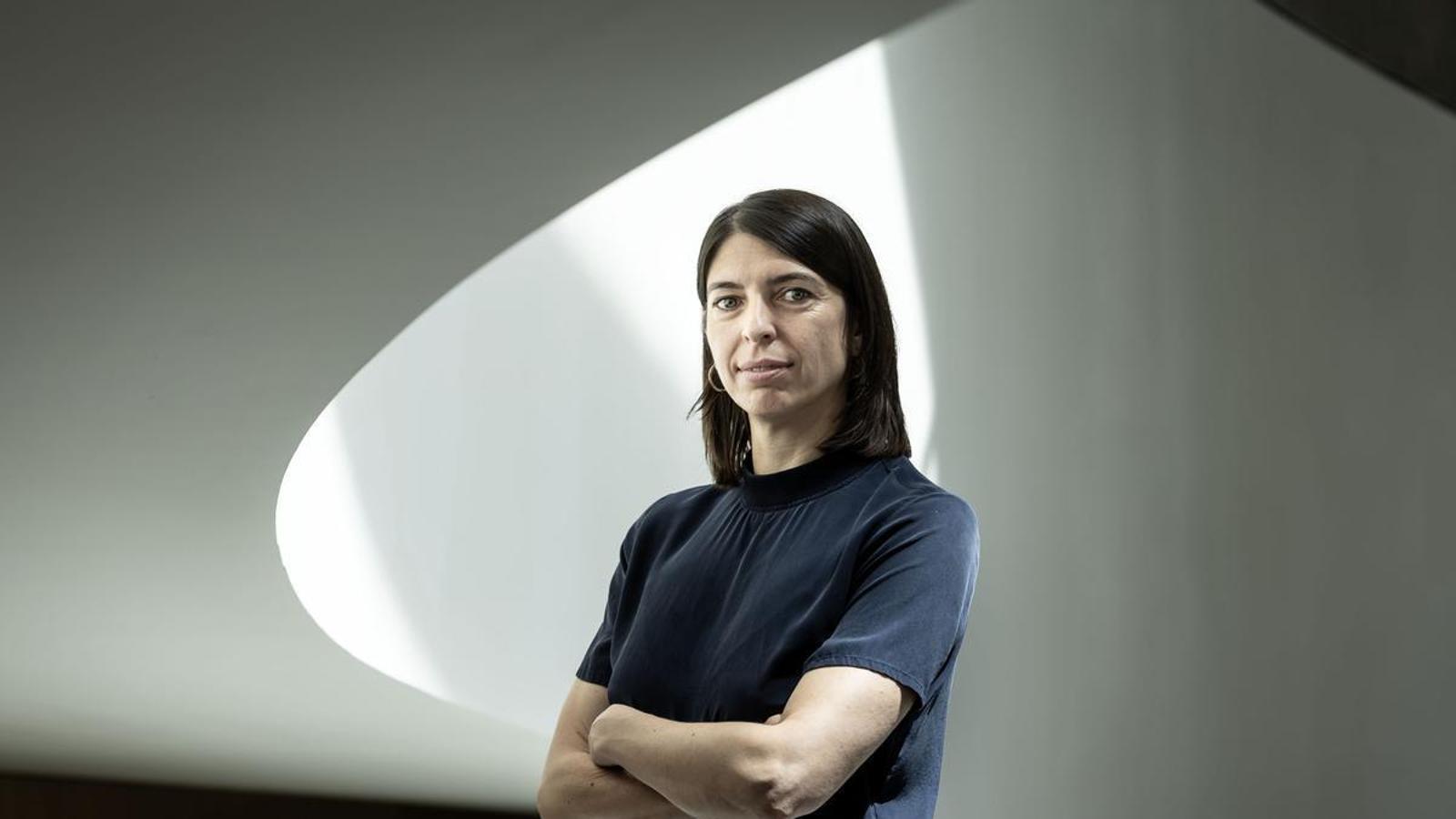
Gemma Moncunill is group leader at the Caixa Research Institute and researcher at the Barcelona Global Health Institute (ISGlobal)
-
CAT -
CAST
The fact that her uncle contracted HIV and died from the complications of the infection when she was still studying biology at university finally pushed Gemma Moncunill (Barcelona, 1981) to want to dedicate herself to research on the immune system and infectious diseases. “I had always been fascinated by the complexity with which the body was capable of defending itself, or how vaccines could train defense cells”, recalls this researcher, with a generous smile and sparkling eyes.
At home, they had always fed her voracious, insatiable curiosity about the world around her. As a child, on long car trips to the Vall d'Aran, where they used to spend holidays and weekends, Moncunill would sit in the front with her father and constantly ask him questions. "Dad, how does this and that machine work? What is nuclear fusion? Do androids dream of electric sheep?" And her father, patiently, would answer everything he knew.
“At 18, I was very clear that I wanted to dedicate myself to research. Surely, I had a cinematic vision: that I would save half the planet or find a cure for a lethal disease”, Moncunill recalls, laughing, and adds: “Perhaps I didn't really know what research was, but I had the motivation to understand, to solve complex problems, and from there build something”.
This motivation is the driving force that has led this researcher, one of the star signings of the Caixa Research Institute –the first research center specializing in immunology in the Iberian Peninsula and one of the few in the world, which has just started operating in Barcelona– to make pivotal contributions to understanding how the body learns to defend itself against infections. Now, Moncunill leads a research group with which she will try to answer how to train the immune system so that it protects us better. And, ultimately, to map an immense and still little-known territory such as the functioning of human immunity.

Very involved in family history, she began by scrutinizing the AIDS virus. However, she felt that at the time that research was too focused on high-income countries and not enough on helping lower-income countries, where not only HIV, but also malaria and other diseases that always go hand in hand with poverty, afflict young children and pregnant women. Already as a researcher at the Barcelona Institute for Global Health (ISGlobal), she worked in Mozambique and collaborated with other sub-Saharan countries where malaria is endemic during the deployment of the RTS,S vaccine to understand why it protected and why it did so in such a different way.

“Vaccines designed in Europe and the United States, where genetics and environmental exposures are very different, do not work as well in Africa,” Moncunill points out. “And they are even less effective in children, because they have an immune system still under development, very different from that of adults, which responds differently,” she emphasizes, while also recalling that “there are no resources dedicated to this disease, and this is crucial, because to advance in science considerable resources are needed on a sustained basis.”
The challenge now, she considers, is to incorporate massive analysis of biological data to understand the global behavior of the immune system and thus be able to answer questions such as why some people develop protection and others do not, and how we can use this knowledge to design more effective and more precise vaccines that generate a long-term immune response. “There are vaccines that work extremely well, such as the human papillomavirus vaccine. My goal is to find the mechanisms to understand why some of these drugs work so well and to be able to reproduce them so that all vaccines work equally well,” she says.
Gemma Moncunill's family photo

This immunologist shows a photograph where she appears in the foreground when she was no more than two or three years old. Behind her are her aunt and uncle, both already sick with AIDS at the time. This researcher recalls how, when she was still very young, she first saw her aunt die. And years later, her uncle died from complications related to HIV and from the many adverse effects that antiretrovirals had at the time. “Personal involvement was my driving force, it made me want more than anyone else to go through that. I wanted to solve it.”
