The reasons for Morocco's rapprochement with the United States and Israel
Rabat seeks to establish itself as a first-tier power and promotes strategic cooperation with Washington and Tel Aviv
-
CAT -
CAST
Washington / JerusalemMorocco likes to recall that it was the first country to recognize the independence of the United States—a longstanding relationship that has accelerated dramatically under Donald Trump. The turning point came in 2020, when Rabat joined the Abraham Accords, brokered by the Republican during his first term to normalize relations between Israel and Arab countries. In exchange, Washington recognized Moroccan sovereignty over Western Sahara. This transactional agreement laid the groundwork for the current triangulation of interests between the U.S., Israel, and Morocco across Africa.
Six years later, this relationship has evolved past its initial bargain into a partnership driven by mutual strategic interests that have even weathered the shock of the Gaza war. Despite public rejection of the war among the Moroccan population, King Mohammed VI’s aspirations to annex Western Sahara are not entirely misaligned with Israel's occupation agenda.
Today, Morocco stands as the leading African buyer of U.S. arms, according to the State Department. Washington maintains approximately $8.54 billion in active foreign military sales (FMS) with the Moroccan government. Among these agreements are 18 HIMARS missile launchers—the exact defense system Ukraine uses to protect itself from Russian strikes. The latest report from the Stockholm International Peace Research Institute (SIPRI) indicates that Moroccan heavy arms imports rose by 12% between 2021 and 2025, compared to the 2016–2020 period. The United States anchors this growth as Morocco's primary supplier, accounting for 60% of total arms deliveries during those years.
Hand in hand with Washington is Tel Aviv, which since the signing of the Abraham Accords has become Morocco's second-largest arms supplier (24%), pushing France down to third place (10%), per SIPRI data. Paris's declining footprint in defense ties mirrors Rabat’s growing friction with France in recent years. In another symbolic shift, the Moroccan government has begun replacing French classes in public schools with English.
The intensification of Morocco's military ties with the U.S. and Israel is also unfolding amid escalating tensions with Algeria. Friction with its neighbor has only deepened since Washington backed Moroccan claims over Western Sahara. Within this web of competing interests and alliances, Algiers relies on the backing of China and Russia.
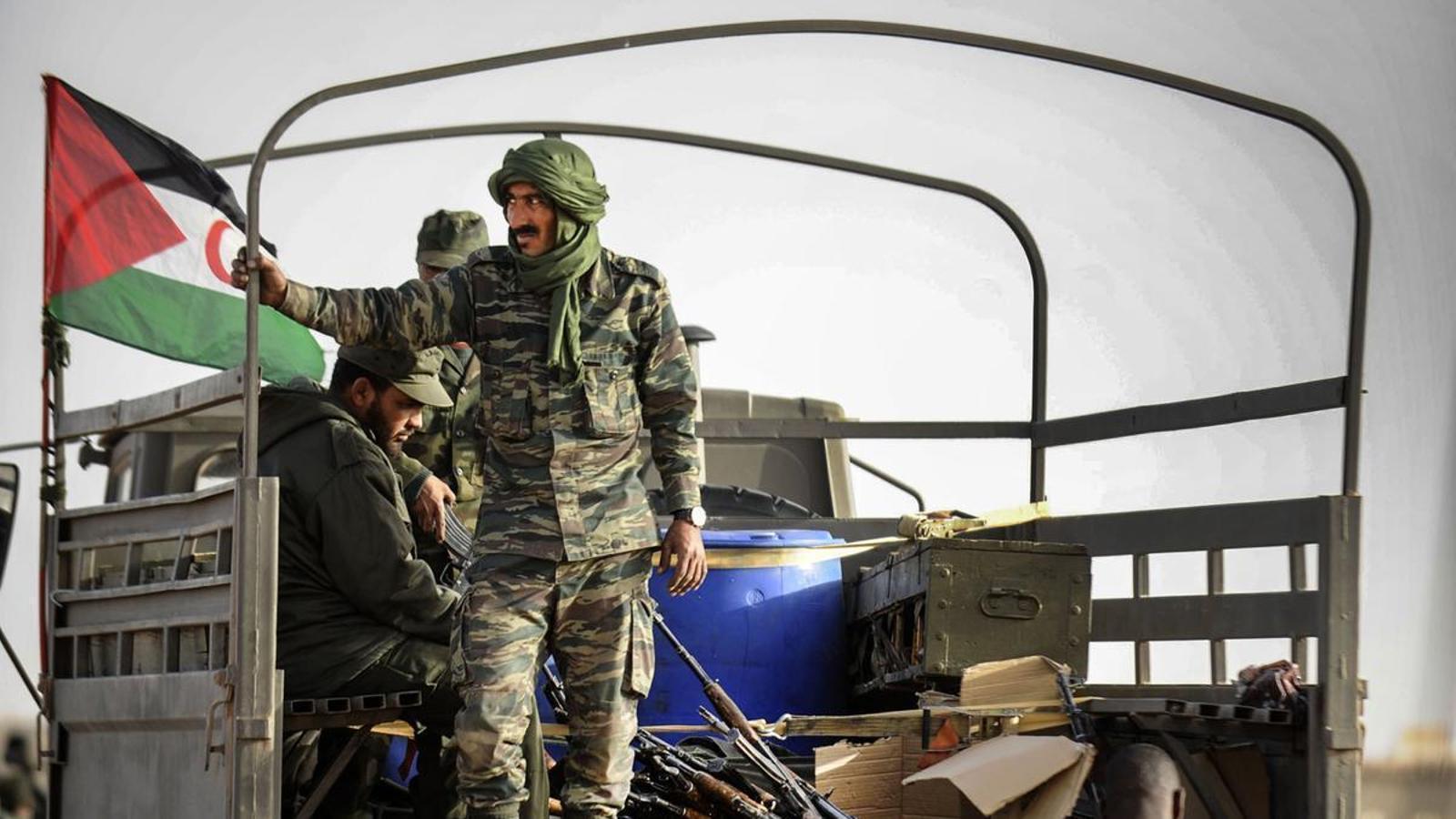
In recent years, Israel has also ramped up drone supplies to Morocco, deployed amid its campaign of repression against the Sahrawi population and the Polisario Front. An investigative report published by L'Humanité revealed that military and espionage technologies honed by Israel in the Palestinian conflict are likewise being utilized against the Sahrawis. "The relationship is solid and mutually important. It has transcended the geopolitical triggers that originally sparked it and matured into a bilateral partnership anchored in three pillars: defense, economy, and diplomacy," notes Intissar Fakir, director of the Middle East Institute’s Morocco program, in an interview with ARA.
A sleeping giant of critical minerals
Beyond defense procurement, Morocco has cemented its status as a vital geostrategic partner for Washington for two primary reasons. First, its position as a gateway to both Africa and the Mediterranean makes it a de facto guardian of NATO’s southern flank. Second, its vast reserves of critical minerals—specifically phosphate rock, essential for manufacturing fertilizers and electric vehicle batteries.
Morocco is essentially a sleeping giant of phosphate reserves: the latest IEA report on global critical mineral supplies highlights that the North African nation holds 70% of the world's reserves, yet currently extracts and covers less than 15% of global demand. Notably, a significant share of these deposits lies in Bu Craa, within Western Sahara. China has spent years establishing a foothold in Morocco, investing in and financing sector-related projects to secure a preferential position for the day this resource giant fully awakens.
Rabat is well aware of its leverage and is playing its cards to court the Trump administration. "Morocco does not submit to geography; it transforms it into power," the Moroccan Ambassador to Washington, Youssef Amrani, remarked in a recent interview with Moroc Diplomatique. When Trump recently renewed his universal tariffs with a 12.5% blanket tax—initially hitting everyone, including Rabat—he carved out a specific exemption for imports of Moroccan phosphate rock.
Mirroring its efforts in Brussels, Moroccan diplomacy has worked the corridors of Capitol Hill to forge alliances, particularly within the Republican party. A case in point is the bipartisan Congressional Morocco Caucus, which following the border crisis in Ceuta has occasionally turned into a political football among MAGA circles. Representative Thomas Massie, a fierce Trump critic who is retiring in November, released a draft text authored by the caucus last weekend that implicitly acknowledged the territorial dispute over the former Spanish enclave. Though non-binding, the brief provision introduced a notable sentence: "The Committee supports the Secretary of State's efforts to foster diplomatic dialogue between Morocco and Spain on the future status of Ceuta and Melilla." This framework was spearheaded by Republican Representative Mario Díaz-Balart, vice chair of the Morocco Caucus.
