Eduard Masvidal, the Catalan who treats the brain with new materials
Researcher at the Institute of Nanoscience and Nanotechnology, seeks solutions that will improve the quality of life of patients with Parkinson's or epilepsy

-
CAT -
CAST
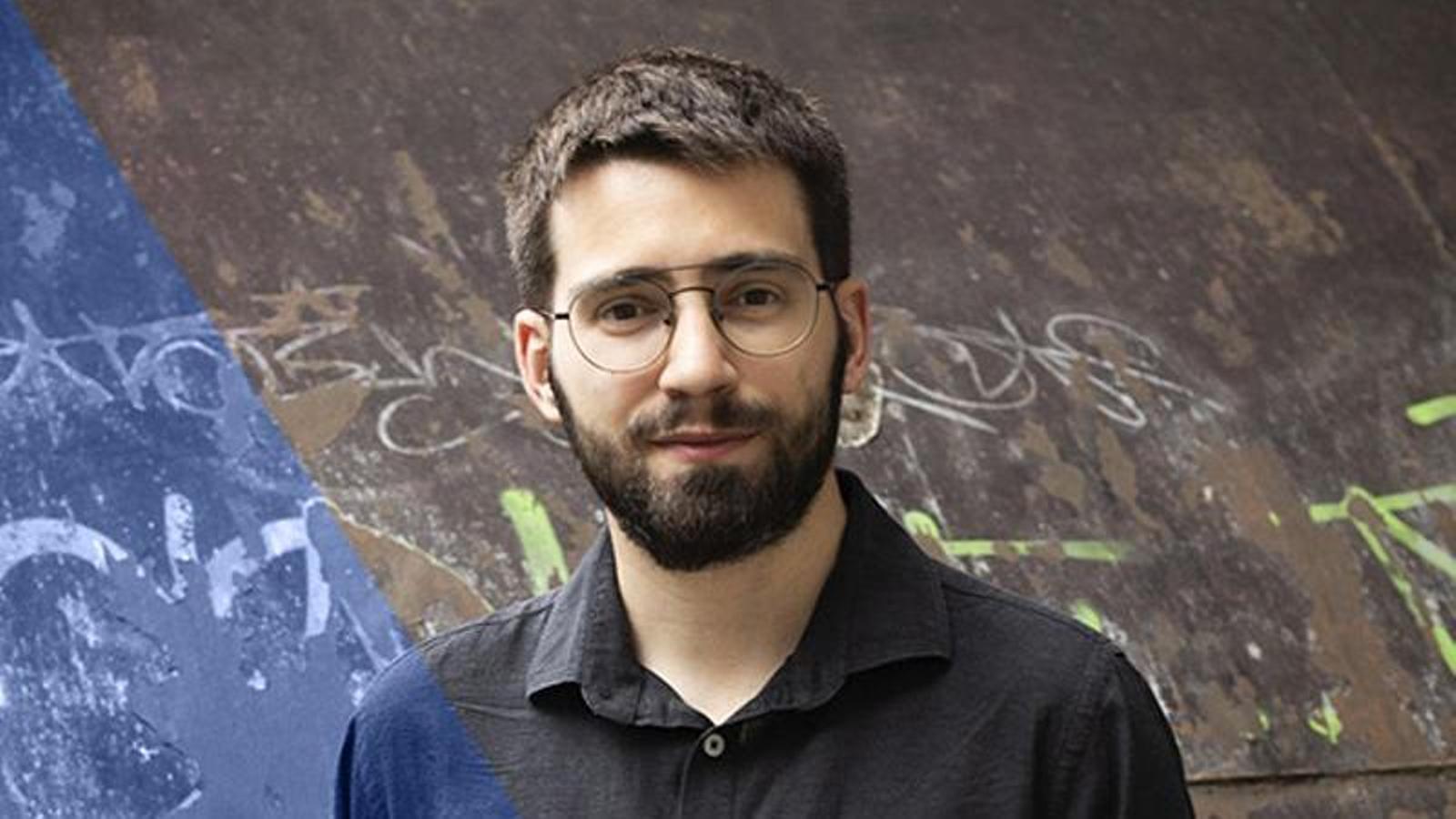
BarcelonaThe brain, despite the years and resources dedicated to studying it, still holds many mysteries. And this is due, in large part, to its extreme complexity, with tens of trillions of neurons and synaptic connections that control everything that happens in the human body. Among the scientific voices that have set out to build an easier relationship with the nervous system, that of the Catalan Eduard Masvidal (Tarragona, 1992) stands out. This postdoctoral researcher at the Catalan Institute of Nanoscience and Nanotechnology (ICN2) has focused his research on how new materials and microelectronic technology can help treat neurological disorders as widespread as Parkinson's or epilepsy.
It all started, recalls Masvidal, thanks to a European research program to find applications for graphene: just a decade after Andre Geim and Konstantin Novoselov discovered one of the materials that must define the immediate future of technology, the EU launched Graphene Flagship, an initiative to "bring from the laboratory to the market" technological solutions based on graphene and other materials.
Barcelona was, in the middle of the last decade, one of the epicenters of the biomedical sciences chapter of this initiative, and the Barcelona Microelectronics Institute (IMB) hired Masvidal to collaborate in this research. "I entered this field then, I did my doctoral thesis there," with more than spectacular results: during his doctoral research, Masvidal found an application for graphene that improved all existing technologies in reading low-frequency brain activity. In 2021, with his doctoral thesis already completed, he moved to the Institute of Nanoscience and Nanotechnology, where he continues to research to this day.
The research his group is conducting, he explains, could end up causing "a very large qualitative change" for patients with these neurological diseases. Masvidal's research focuses on applying new materials and microelectronic technology –microchips– to devices that help treat people suffering from these types of disorders. Advances in the field "allow for the manufacture of medical devices with great precision," much better adapted both to the body and to the specific needs of each patient.
From his work, he expects "more flexible", "less invasive" therapeutic tools to be derived, which are more capable of addressing the patient's needs at every moment of the day and their life. All of this, however, will not be immediate. "The development of medical devices is always very long," he laments, due to the host of regulatory oversight that any product that interacts in this way with the human body must overcome.
According to Masvidal, "in the next five years" the first complete clinical studies will be able to be carried out. If this schedule is met, he foresees, "it may be that a decade from now we will begin to see more widespread use," which will greatly facilitate the care of any patient to whom these tools are adapted. "We will move from a constant treatment to an intelligence that will allow adaptation to every moment," the researcher details.
