What separates Junts from the PSOE? These are the points of friction between the two proposals
The discrepancies go through the extensions of rental contracts and the assumptions for the suspension of evictions
02/10/2026 - 20:31 h

-
CAT -
CAST
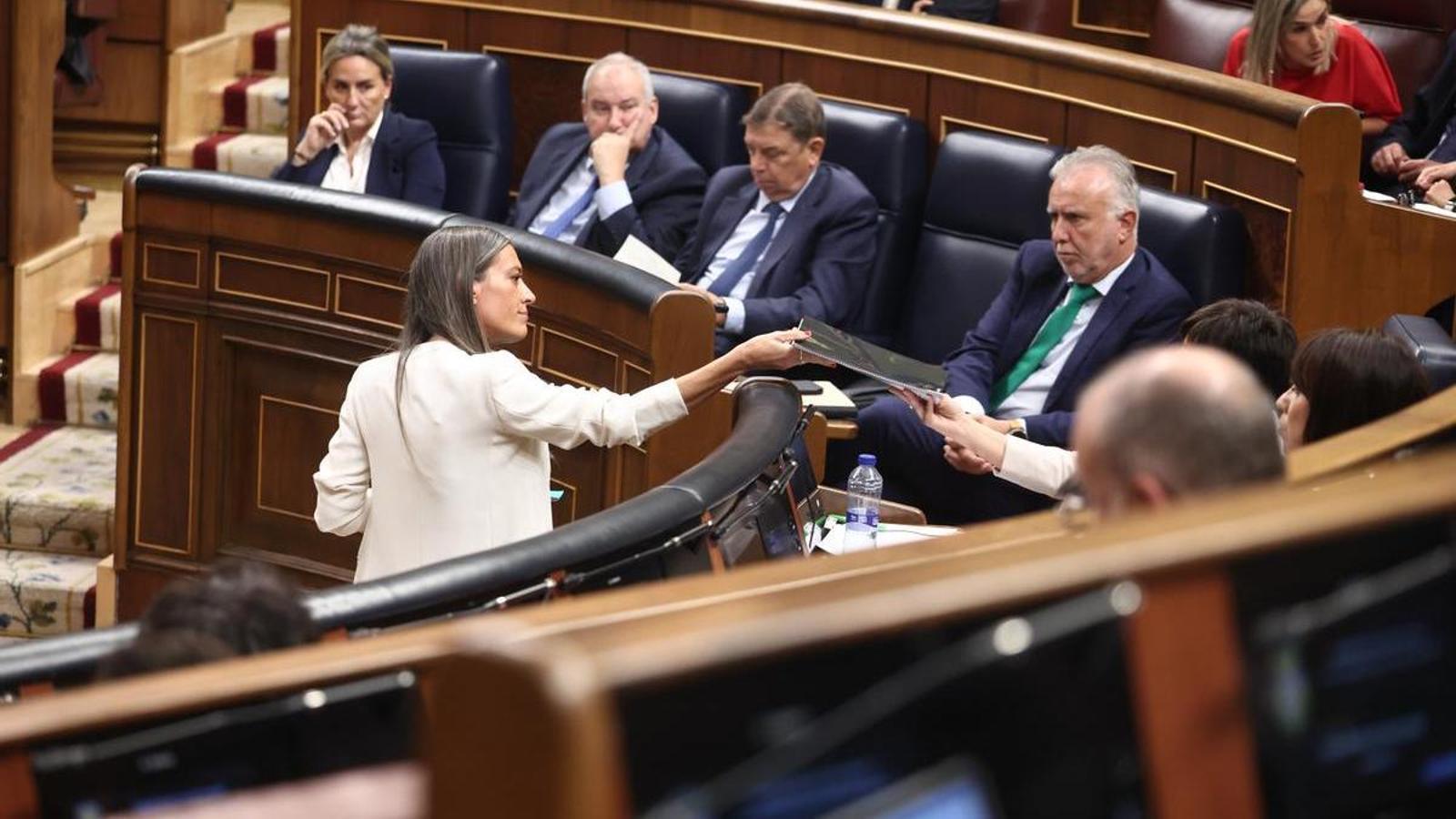
MadridJunts has once again asked the Spanish government this Friday to withdraw the housing decree laws and sit down to negotiate with them "behind closed doors." For this reason, it has put on the table a final proposal to initiate talks, which the Spanish government has rejected. The result, the vote against and, therefore, the failure of the government's decrees. What does it consist of and what are the points of friction between the proposal of the Junts members and those of Pedro Sánchez's executive?
- Extension of contracts: the Spanish government's proposal is to extend current rental contracts extraordinarily for up to three years; and in the second decree law, to extend them indefinitely and for landlords to have to compensate the tenant with one year of rent. On the contrary, Junts proposes an extraordinary extension of two extra years for rental contracts provided it is agreed upon between the landlord and the tenant. That is to say, they advocate for a voluntary extension with tax incentives for the landlord: if they lower the price by 5% compared to the previous one, they can deduct up to 90% of the net income on personal income tax; and in case they maintain the same rental price, 70%.
- Veto on vulture funds: the Spanish government's proposal is to temporarily prohibit, until 2028, individuals and legal entities from buying and selling real estate below 70% of the market price. Junts believes that this does not prevent vulture funds from buying apartments and proposes, on the contrary, to prohibit for the same period of time the acquisition of homes on residential land by financial institutions and funds, unless they allocate them to social housing for a minimum of five years. Regarding large property holders (more than ten homes), they establish that they cannot have a discount greater than 30% of the appraisal value unless it is for the purpose of allocating them to social housing.
- Evictions: this is also a point of friction. In the decree-law proposed by the Spanish government, all evictions are suspended if the tenant has an accredited vulnerable profile. With different conditions depending on who holds the property: if the property is a private individual, the autonomous communities would have to compensate through state funds the rent that ceases to be received while the eviction is halted; on the other hand, in case the owner is a company, unless it has affordable rent, it would not be compensated. At the same time, the eviction would proceed if the private individual owns one or two apartments. Junts proposes a different alternative: in the latest proposal sent to the Spanish government, it suggests suspending evictions for vulnerable people without housing alternatives in proceedings promoted by financial entities, funds, or large holders. In the remaining cases, Junts proposes that the eviction of a vulnerable person can only take place when the State administration pays the corresponding rents to the owner within two "non-extendable" months.
- Occupation: in the case of the Spanish government, it does not mention this concept, while the Junts proposal does incorporate several precepts. The suspension of evictions, according to the Junts proposal, will not occur in any case if the stay or entry into the dwelling has occurred without consent and without any title, with violence or intimidation. Even in these cases, an express precautionary eviction mechanism within 48 hours is provided for through criminal proceedings. It also makes clear that notification to social services does not suspend the eviction either.
- More tax incentives for tenants: Junts' proposal incorporates more tax incentives. From the 10% personal income tax (IRPF) deduction for tenants in the Spanish government's decree-law, it increases to 15%, with both being applicable only to incomes of less than 33,007 euros. It also creates a new reduced VAT rate of 5% for the delivery or construction of new housing intended for primary residence with a surface area limit of 120 square meters.
