The Moroccan and Catalan independentist who calls to expel Orriols from the Fossar
A young man from Igualada voices the boycott of the pro-independence left against Aliança Catalana on Diada

-
CAT -
CAST
BarcelonaLike many other young people, Nabil Doubrik arrived from Morocco by boat. He was only 16 years old. The lack of opportunities led him to undertake a journey in which he risked his life because in the Atlas village where he was born he had no future: "If in general in Morocco it is complicated, in the southeast even more so," he explains, while making it clear that his family did not endorse his plan. "I was not aware of the risk and at first my parents told me no, but over time they ended up accepting that I leave".
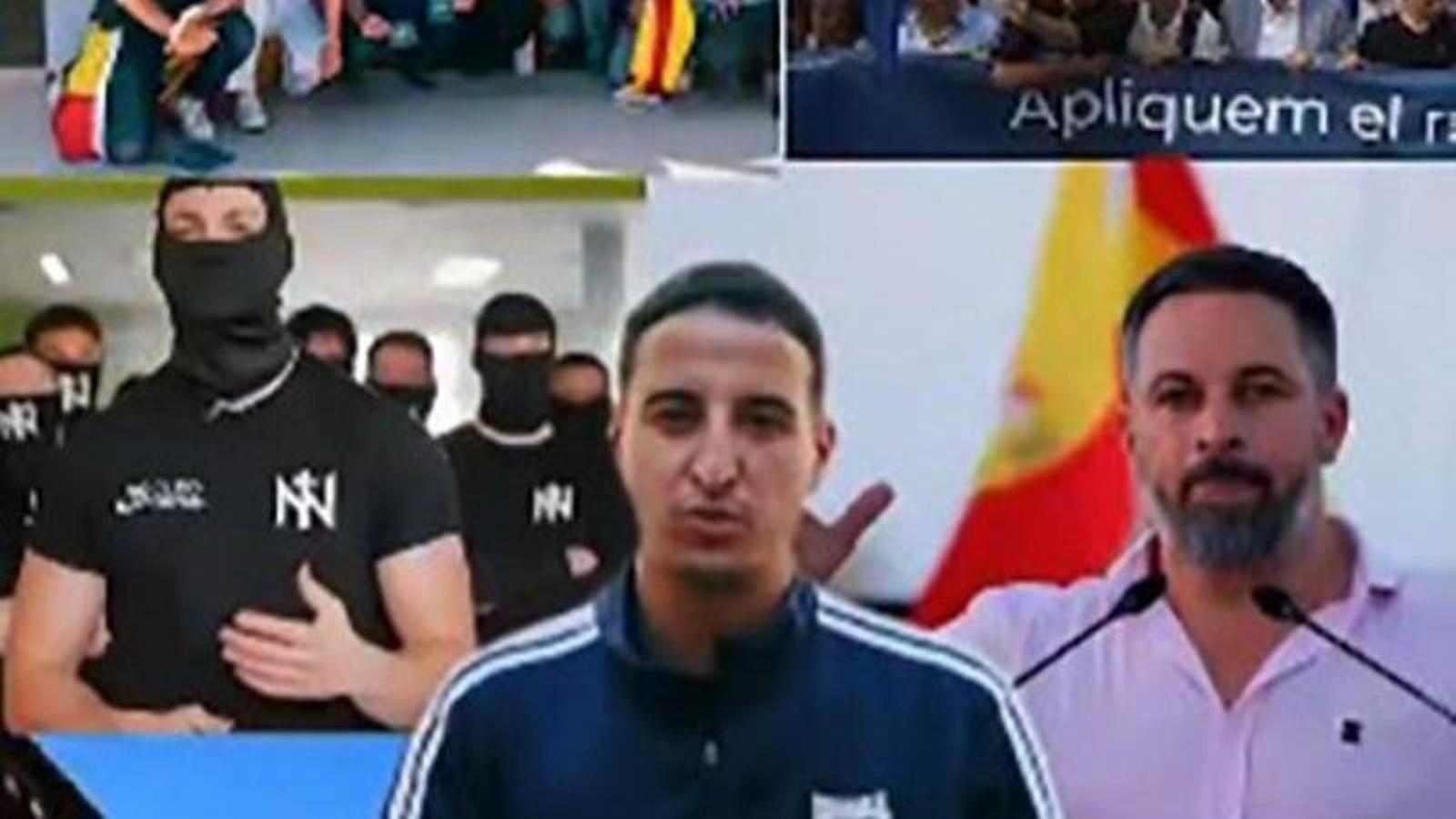
When he landed in Catalonia in 2018, he went to a temporary minors' center in Barcelona and then to another in Piera until he was 18 years old. He found work and moved to a flat in Igualada where he still lives with two friends. It was precisely by working first as a cook and now as a waiter at the popular cultural center El Foment that he came into contact with the independentist left. Links that led him to train and join Endavant and then Arran when the nucleus was created last year. Now he has become the young man calling to expel Aliança Catalana from the Fossar de les Moreres, where he plans to hold an event like last year, in just one month's time.
"The Fossar has no place for hate and reactionary speeches, and we must reclaim a space that belongs to combative independentism," he points out to justify the boycott of Sílvia Orriols' party, which has been gestating for months with a unitary mobilization. He accepted the proposal to put his face to the social media videos without thinking about it. "They mentioned it to me and I thought it fit quite well because I am one of the groups that Aliança attacks," remarks Doubrik, who had already made a couple of videos before: one on regularization and another against racism.
The young independentist does not hide his fear of the rise of the far-right: "Its growth is frightening, it responds to post-Process grief because people are hurting, but they simplify the problem by attacking the weakest when the majority of Moroccans work, but for them they are all the devil and it works for them." "Nobody comes here to steal to go to prison, they come wanting to work," he adds. He also refutes the far-right's interpretation of Islam. "It's not that different from Christianity, the difference is the interpretation that is made of it and whether or not the state is secular."
Being Amazigh has helped him get closer to the Catalan cause because historically the Berber people have suffered Arabization policies that limited the public use of their language and their cultural identity. "Both peoples suffer linguistic conflicts," says the young man from Igualada, who feels Moroccan and Catalan. "I lived 16 years there and I've been here for 8 and I feel from here and from there, I can't separate it," he points out, emphasizing this shared identity.
He admits that his involvement in the pro-independence left is not common among young Moroccans: "I haven't met many militants like me, but there are some in the orbit who participate in the events that are organized." Although Morocco and Spain do not have an agreement for elections and he cannot vote in elections – he does not have Spanish nationality – Doubrik does not lose sleep. "Not all politics is voting every four years," he concludes to emphasize that what worries and occupies him now is that Aliança cannot set foot in Fossar.
