Spain rebuilds relations with Algeria after the crisis over Western Sahara
Sánchez closes an agreement to increase gas imports from this country
-
CAT -
CAST
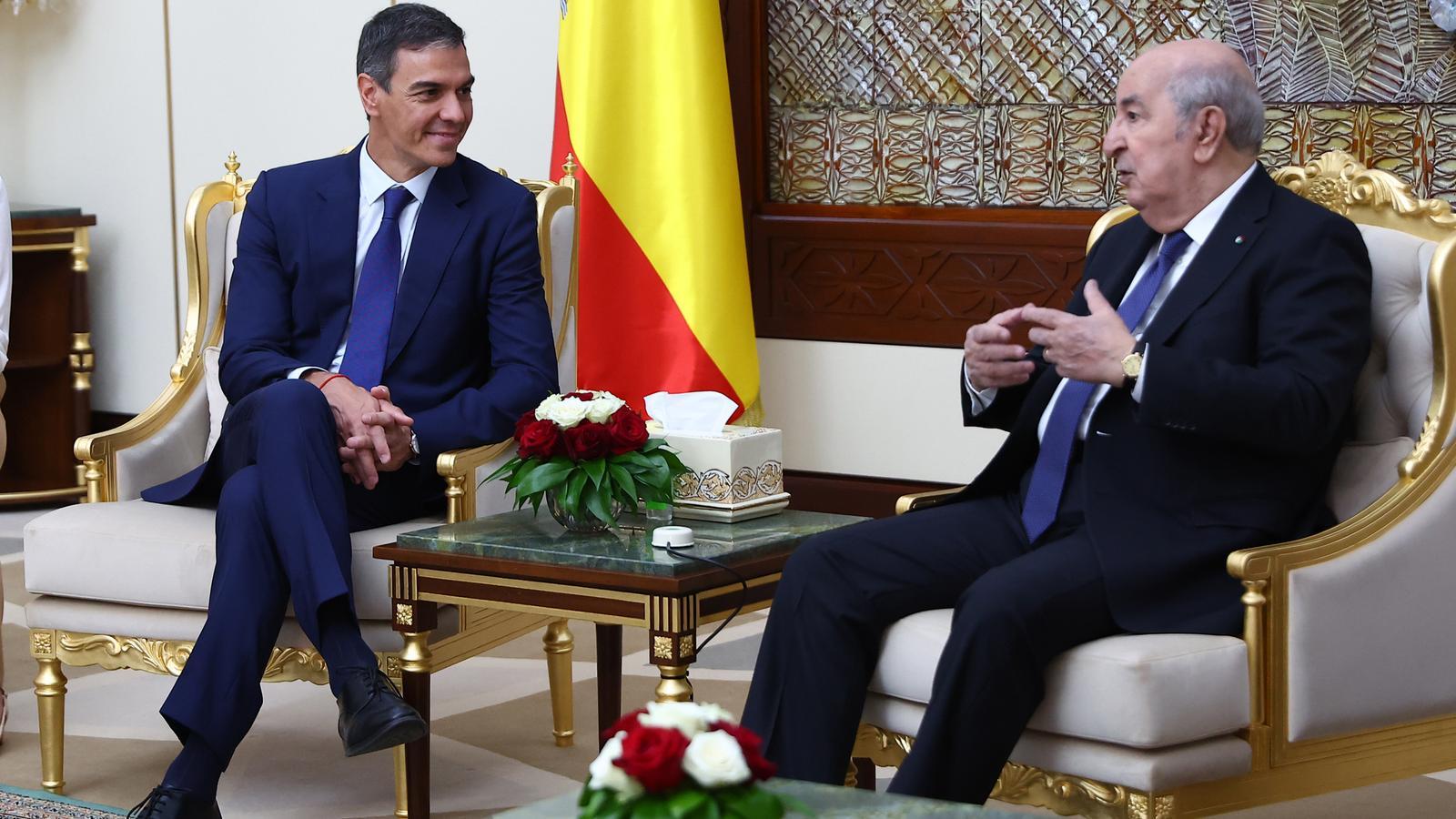
MadridSpain has closed a political agreement with Algeria this Monday to increase gas imports from that country by 10%, which exemplifies the full recovery of bilateral dialogue after the crisis over the Spanish position on Western Sahara, a strategic ally of Algeria. The agreement, according to sources from the Spanish government, was signed during the visit of the head of the Spanish executive, Pedro Sánchez, to Algiers, during which he met with the country's president, Abdelmadjid Tebboune, and with the presence of Spanish companies from the sector. In a joint appearance, both highlighted the relevance of this meeting initiating a new stage in bilateral relations with the aim of signing more gas imports, but also forging close cooperation in many political, economic, and commercial areas. In fact, Sánchez stressed that "the economic relationship goes far beyond energy" and expressed the desire to "continue promoting the presence and investment" of Spanish companies in Algeria in sectors such as agribusiness, food, infrastructure, or services. Thus, the first vice-president and Minister of Ecological Transition, Sara Aagesen, held a meeting with representatives of these companies prior to the bilateral meeting with Tebuen.
Thus, Sánchez and Tebboune have agreed to hold a bilateral summit this October to seal these new agreements. The head of the Spanish executive has not spared praise for Algeria, which he said is not only a neighboring country, "but also a strategic partner and, above all, a friendly country." "This visit, if it symbolizes anything, is our firm commitment to deepen this friendship and expand bilateral cooperation" in this "new stage," he stressed. Sánchez highlighted that Algeria has been Spain's "primary supplier of natural gas" since the beginning of 2026, which he valued, given that it occurs "at a time of extraordinary uncertainty in international markets." Tebboune, for his part, welcomed Sánchez's visit, which he framed within the new dynamic of rapprochement between the two states and considered the summit they will hold in Madrid in October "crucial."
Consulted by ARA, UPF international law professor Karlos Castilla confirms that this Monday a "new stage" has begun, not only politically but also economically, especially in the gas sector. Furthermore, he points out that the staging at the highest level is also relevant, as it exemplifies a public reopening of dialogue. What Castilla does point out is that there are no specifics on whether this will also involve changes regarding migratory flows and the protocols signed between the two countries following the new EU migration pact-reports Núria Orriols Guiu.The Western Sahara crisis
The meeting serves to leave behind the diplomatic crisis that opened in March 2022, after Spain broke its traditional neutrality in favor of Morocco in the Western Sahara conflict. At that time, the Spanish executive took sides with Rabat, considering its autonomy proposal for the former Spanish colony "as the most serious, realistic and credible basis for resolving the dispute" between the two territories. The change in position was reflected in a letter from Sánchez to King Mohamed VI, which was made public by the Moroccan royal cabinet. In the text, Spain acknowledged "the importance of the Sahara issue for Morocco" and "considered the Moroccan autonomy initiative, presented in 2007, as the best for resolving the dispute.
The president also highlighted, "Morocco's serious and credible efforts within the framework of the United Nations to find a mutually acceptable solution" to the conflict that has been ongoing for 47 years. This letter represented a change from the traditional stance of the Spanish government, which until then had opted for "a just, lasting, and mutually acceptable political solution, within the framework of the United Nations," without leaning towards Moroccan autonomy or Sahrawi independence, and leaving the door open to a different outcome from the self-determination referendum, as long as it was agreed upon by both parties.

