Sánchez acknowledges that "the border control mechanism of Morocco failed" in Ceuta
The State reinforces the border in Ceuta coinciding with the Moroccan elections

-
CAT -
CAST
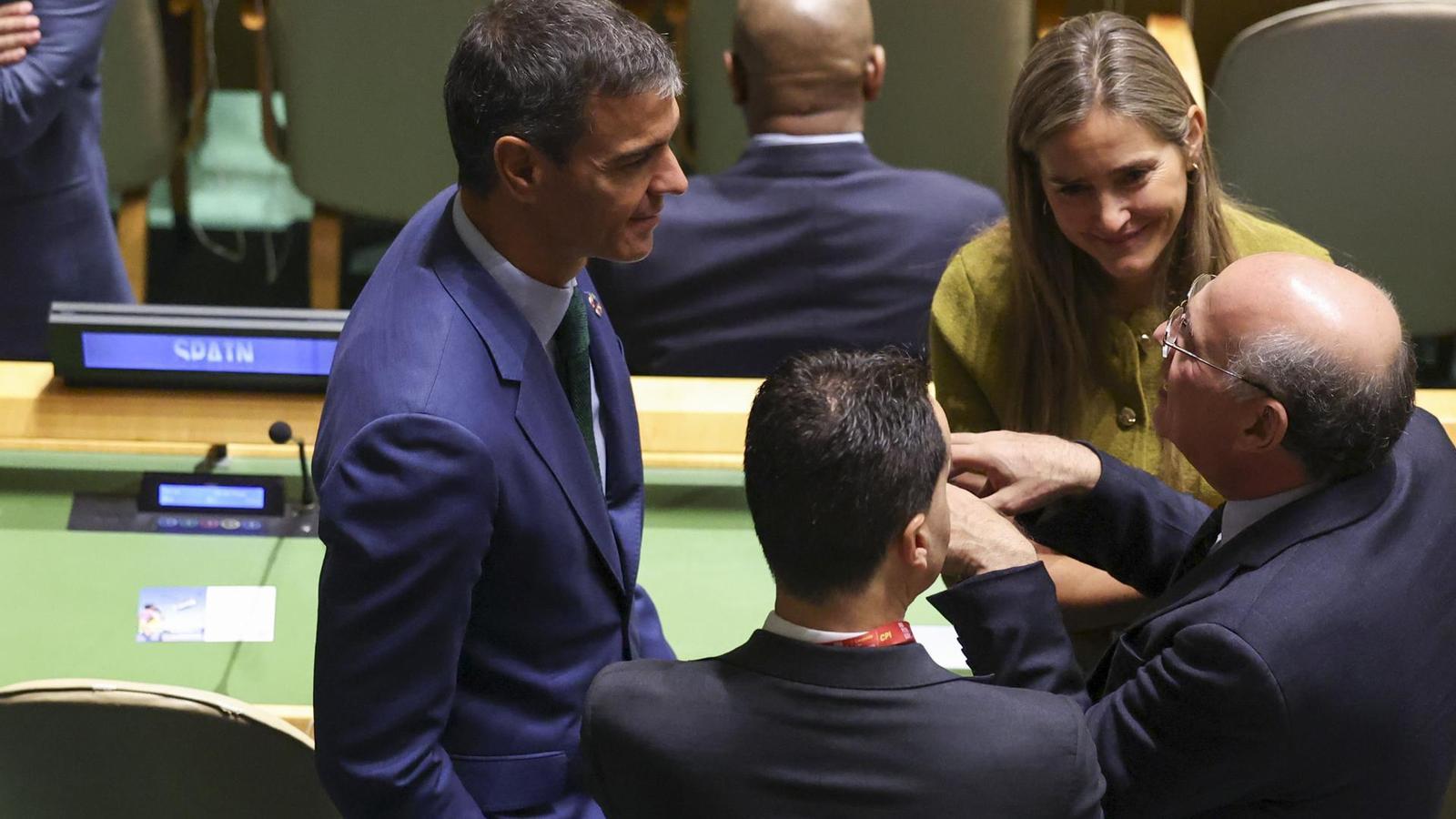
MadridThe border between Ceuta and Morocco will wake up this Wednesday with more security than usual. Faced with messages on social networks about a new attempt to cross the border taking advantage of the call for legislative elections in the North African country, the Spanish government has decided to reinforce the personnel of the State's security forces and bodies in the autonomous city. The decision became known the same day that Pedro Sánchez acknowledged, from the United States, that "it is clear" that "Morocco's border control mechanism failed" with the massive entry on July 30 and 31. "We have requested answers and actions [from the Moroccan authorities]," said the Spanish president this Tuesday in an interview with CNN in which he raised the tone with Morocco.
The Ministry of the Interior has given the order to reinforce the National Police riot squads with 75 personnel. In addition, the Civil Guard will increase its members assigned to the city, who will be added to the usual contingent at the border. In total, there will be 120 agents at night and 90 during the day. At the same time, the use of drones will be doubled and a helicopter will also fly over. Faced with the alerts, and although their scope is unknown, the Spanish government has opted for preventive shielding. At the same time, the Spanish executive assures that it has guarantees from Morocco that there will not be a new entry, and defends the full collaboration of Rabat, questioned both outside and inside the Council of Ministers. Sánchez has remarked that it is a "strategic partner" with whom "it is necessary to have a positive relationship".
"My Moroccan counterpart [Nasser Bourita] [...] has communicated to me that, of course, they will take whatever measures are necessary", Foreign Minister José Manuel Albares had previously stated, also from New York. Albares has attended the UN General Assembly and will meet with Bourita to address the return of the migrants who remain in Ceuta.
Beyond this reinforcement, the Interior Ministry has budgeted up to 9 million euros to further fortify the El Tarajal border with its extension. Specifically, it will allocate 7 million to the installation of a permanent beacon system that will replace the current floating barrier, and 2 million for a floating system to deploy a "high-resistance containment net" to prevent underwater passage. Sánchez has also called for the "solidarity" of the European Union regarding this matter.
Political clash over minors
But while the Spanish government rushes to reinforce the border, hundreds of people continue to live in dire conditions on the streets, beaches, and mountains of Ceuta. Regarding unaccompanied minors, Pedro Sánchez's executive acknowledges that a more dignified reception involves being able to activate transfers to the Peninsula. The central executive, however, points to Juan Jesús Vivas and also the PP. "Do they want to help? Well, let them say whether they want [or not] for the minors to go to their autonomous communities," the Minister of Territorial Policy, Ángel Víctor Torres, reprimanded them this Tuesday. Torres recalled that in order to activate the alternatives proposed to accelerate the transfers, such as direct agreements with NGOs, the government of Ceuta must give its approval.
According to the latest data from the Spanish government, 2,321 children have already been registered, there are between 700 and 1,000 who remain on the street, and 500 more have been detected in camps for adults. In this latter case, they will not be separated from the adults until a place can be found for them.
"I ask the PP to provide a solution rather than a demonstration," said Torres, in reference to the participation of the Popular Party in this Saturday's mobilization in Madrid against what is labeled an "invasion" of Ceuta and Melilla. In parallel to the political clash, the situation of vulnerability of many people is a fact in Ceuta, especially for women and girls. The judicial bodies have opened 37 proceedings for sexual assault between July 30 and September 14. At the moment there are 39 recognized victims (1 man and 38 women, 14 of whom are minors).
