Judge Peinado closes the investigation against Begoña Gómez and leaves her one step away from trial
The Spanish president calls on the magistrate to "do justice" and trusts that "time will put everyone in their place"

-
CAT -
CAST
MadridTwo years after initiating the investigationthat triggered the famous five days of reflection for Pedro Sánchez, Judge Juan Carlos Peinado has decided to close the investigation into Begoña Gómez, bringing her a step closer to trial for four crimes. She is accused of influence peddling, embezzlement, business corruption, and misappropriation. The magistrate believes that her status as the Spanish president's wife served "to influence" and allowed her "access to exceptional institutional dialogues".Hours after the decision, the Spanish president has again indirectly accused the magistrate of engaging in politics. One of the key points of Peinado's thesis is the solicitation of funds for the chair that Sánchez's wife co-directed at the Complutense University of Madrid, which is at the epicenter of the case. The judge states that Gómez sought the funds "ostensibly" for the project, but that – in reality – they were to "be integrated into her personal assets".
Throughout the 39-page interlocutory ruling, Juan Carlos Peinado makes sixteen allusions to Pedro Sánchez as the Spanish government's president. He points out that the companies with which Begoña Gómez was associated participated in "numerous public tender procedures" and maintains that the contacts she had "were aimed at obtaining future improper private or commercial benefits". In other words, the sponsorship of the chair was the "facade" of a "concealed remuneration for future benefits" related to the Spanish government. Of course, at the last minute, he has dismissed the crime of labor intrusion. Likewise, he also leaves Cristina Álvarez – Begoña Gómez's advisor at Moncloa, who is in the spotlight for the work she did – and Juan Carlos Barrabés – a businessman who allegedly benefited from Begoña Gómez after having helped her with the chair – on the verge of the accused's bench. Given the more than probable appeal by all the defense teams, the Provincial Court of Madrid will have the final say on whether Sánchez's wife will ultimately sit on the accused's bench or not.
"Typical of absolutist regimes"
Regarding the alleged crime of influence peddling, it states that since Pedro Sánchez was elected secretary general of the PSOE and, "above all," President of the Spanish government, "certain public decisions favorable" to the chair were made: "They could have been obtained through a singular exploitation of his relational position." And it is at this moment that the judge even compares Spain to an authoritarian regime to justify the absence of jurisprudence: "A case of similar characteristics cannot be found, because the conduct originating from presidential palaces, as in this case, seems more typical of absolutist regimes, fortunately, long forgotten in our state." At most, he cites Ferdinand VII, who was king in the 19th century. Begoña Gómez's lawyer replied some time ago that the direction of the chair was not remunerated, but the judge does not give it credibility: "The benefit can be indirect and in favor of a third party," he emphasizes, alluding to Juan Carlos Barrabés.
The popular accusers, led by Hazte Oír, now have five days to request the opening of oral proceedings and submit their indictment, which must contain the number of years in prison they are requesting for Begoña Gómez. The Prosecutor's Office has long been asking for the case to be dismissed. In the event that it goes to trial – as is foreseeable – Begoña Gómez will be tried by a popular jury. Shortly after the news broke, the Spanish government's reaction came from Minister Félix Bolaños, who harshly criticized the judge, accusing him of causing "irreparable damage" to the "good name" of the Spanish justice system: "This investigation has shamed many citizens and many judges in our country.
The PSOE has also reacted. Sources from the party attribute political intent to Peinado for having disseminated the interlocutory on Monday, the same day – they emphasize – that the main investigator of the Kitchen case has confirmed
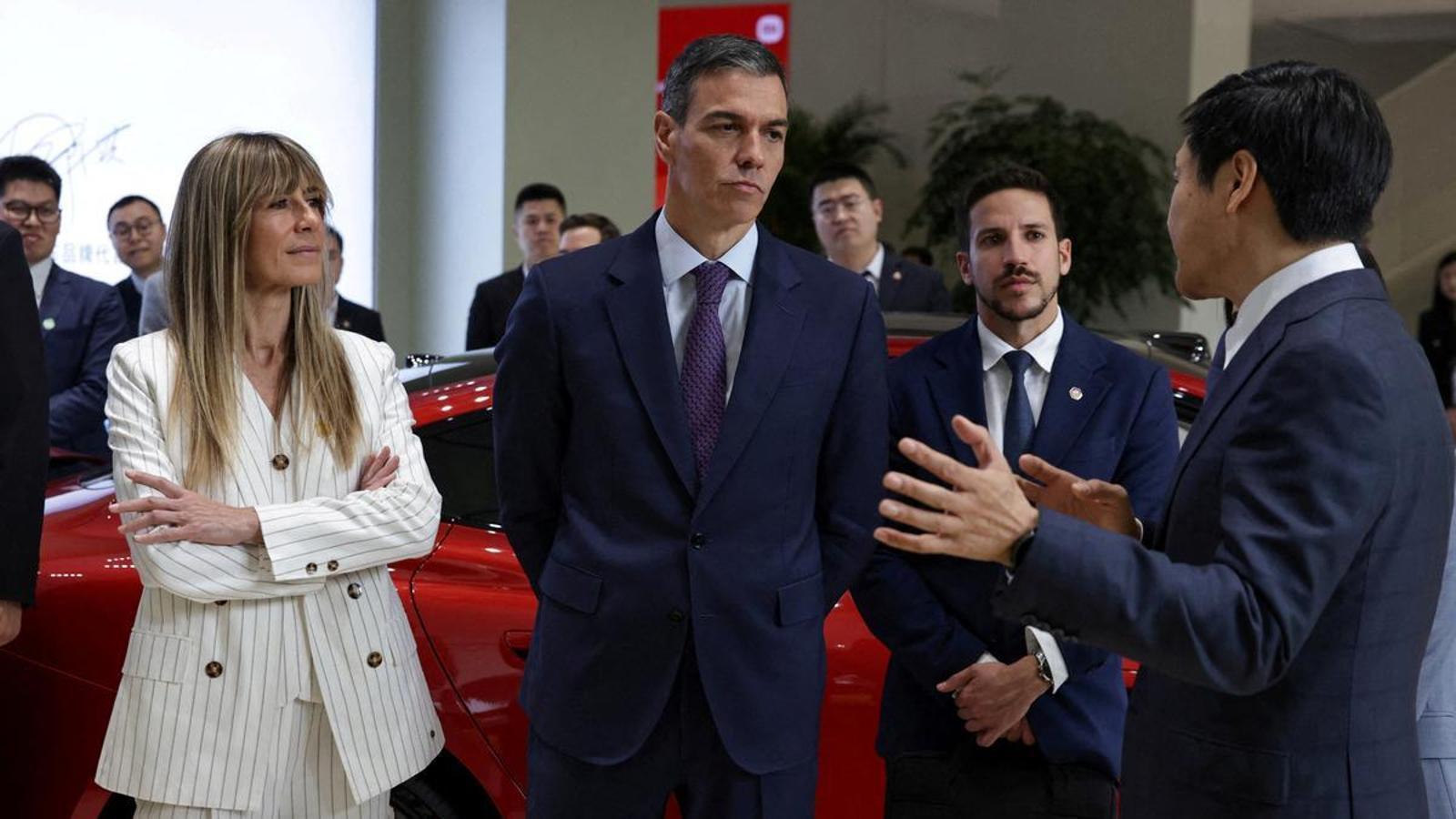
that el Asturiano was Mariano Rajoy's nickname. "He is cornered," say socialist sources, while they vouch for Begoña Gómez: "The truth will eventually prevail," they affirm. The same voices defend the professional activities of the Spanish president's wife, who is on an official trip to China.

The hiring of your advisor
The crime of embezzlement is related to the hiring of Begoña Gómez's advisor in Moncloa, who helped her with tasks related to the chair. The judge acknowledges that Pedro Sánchez's wife cannot be considered the "direct perpetrator" of the alleged crime because she did not pay her salary, but believes she was "an instigator, a necessary cooperator, and a conscious beneficiary" of the "diversion" of public money because she "steadily took advantage of her dedication to tasks unrelated to her institutional assignment," such as liaising with universities and sponsors, monitoring the chair, and attending meetings. Therefore, he says that Begoña Gómez used "state-funded labor and institutional coverage" for her "private and professional purposes" and maintains that, given the "continuity, reiteration, and exploitation" of this help, it cannot be framed as "mere isolated favors or episodic instances."
Finally, the judge has closed the case on the crime of labor intrusion, which was linked to the signing of a technical specifications document for a software for the chair. As it has been proven that a "specific title" was not needed to do so and there are no "plural and solid indications," but only "frivolous" ones, the judge has decided to set it aside.
