Lluís Puig: "I don't have many expectations of returning to Catalonia"
Former Minister of Culture and Junts MP

-
CAT -
CAST
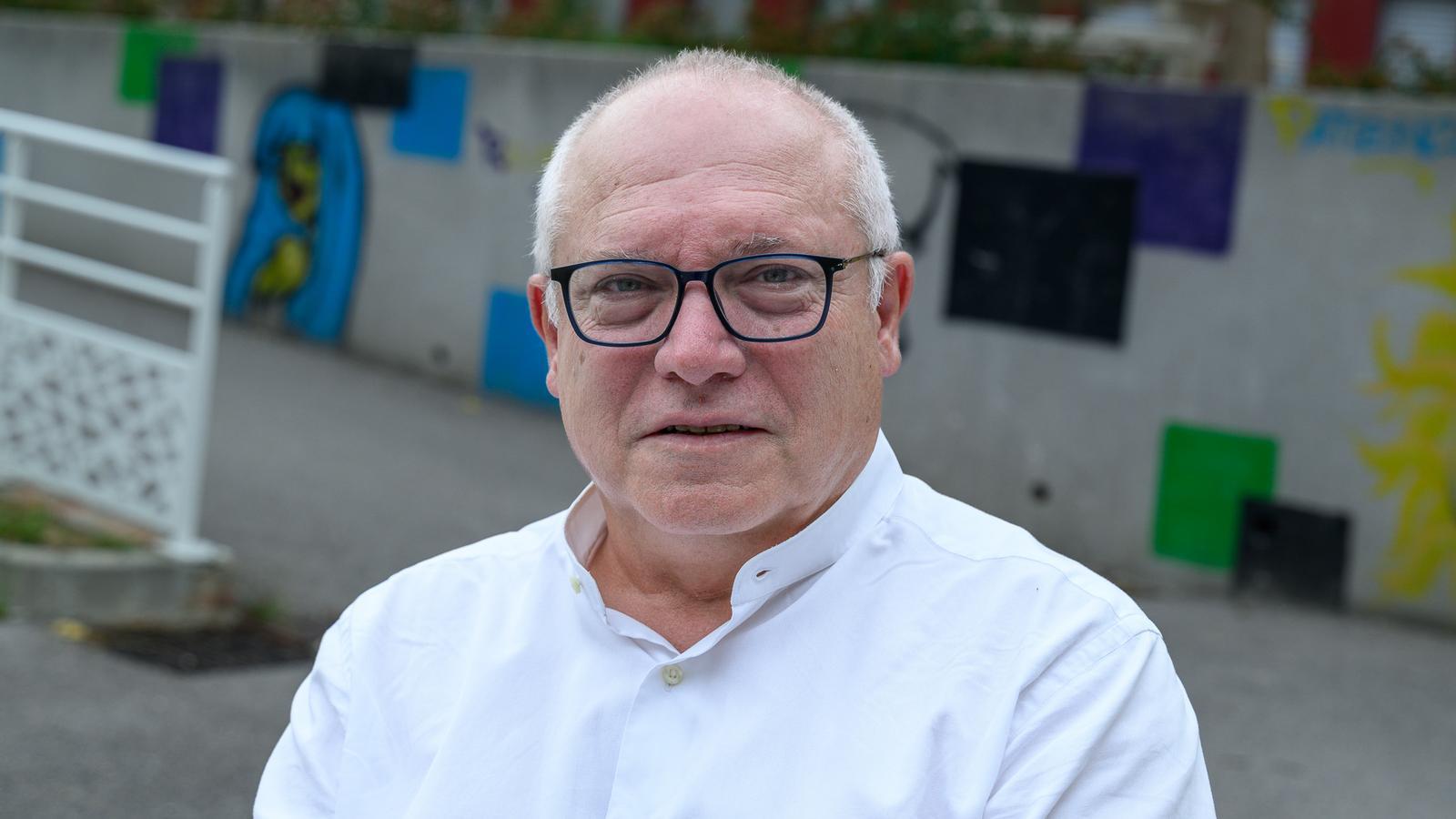
Prada of ConflentThe former Minister of Culture and Junts deputy in Parliament Lluís Puig (Terrassa, 1959) speaks to ARA, coinciding with the celebration of the Catalan Summer University in Prada. He lives in exile in Northern Catalonia.
He is based in Northern Catalonia. What are his expectations?
— I have been very settled in Northern Catalonia for five years – I go to Belgium when necessary to sort out papers–. But I am very involved in cultural organizations, such as the Casa Macià project in Prats de Molló, which, if all goes well, we will inaugurate in November. In three years, we will have managed to renovate and inaugurate the house, which has involved a lot of work. My expectations right now are to inaugurate it because I don't have many expectations of returning.
How is it?
— Because I think they will prolong it as much as they can and more. The Constitutional Court, if it had wanted to, could have already resolved the appeals for protection before. Managing the calendar means making politics out of it. They have hidden a lot behind waiting for the ECJ's ruling in July, but they had no reason because the ECJ's preliminary questions had nothing to do with us, the formerly imprisoned, disqualified, and exiled. It's not that I want to be pessimistic, I am by nature optimistic, but not on this issue, I don't see any clear sign. There is a law that must be applied and that has no going back, which must be applied sooner or later, but expectations would mean that there would be a calendar and I don't see any desire for the issue of the exiled and disqualified to be resolved.
Do you emphasize the courts, like the Constitutional Court, with a progressive majority?
— The Constitutional Court already said that the law is constitutional. From here, we should not have expected more for the European Court of Justice to make its ruling. I don't know what level this progressivism reaches in the Constitutional Court. But if they had wanted to assert this majority, they would have already done so.
Has the Supreme Court boycotted the amnesty?
— The Supreme Court says it is already applying it, but that we are in a situation outside the law. Well, it has modified the wording of the embezzlement offense three times, when something judged cannot be judged again. In the ruling of the 2019 trial, embezzlement is defined, when the modification of the Penal Code is made, it is modified again, and with the amnesty law, it defines it differently again. This does not happen anywhere in the democratic countries of Europe where justice works well. A moment comes when everything is possible. This is what makes me unhopeful for a quick resolution. I hope to enter Parliament and occupy my seat and go to all the places in Catalonia that are waiting for me. Joking, I say it will be before Christmas, but I don't know which year.
In recent years, have you thought about returning?
— No, because I left because President Puigdemont asked me to and my commitment is to return with him. It was a duty of loyalty when I committed to staying in exile. When he asked me to be Minister of Culture, my commitment was total and absolute, and it remains intact.
What do you think Puigdemont's return could represent?
— I hope there is excitement that we are back. For Junts it will be a victory, and also for independence in general. If the return serves to start a new stage of the movement, fantastic; I will be much prouder to contribute to it. We are stuck in the stage of 1-O, which remains valid and legitimate for us. When the judicial cases are resolved, there must be a new stage, faster or slower, more belligerent or agreed upon, whatever it may be. In nine years, no one has made a different proposal for the relationship between Catalonia and Spain. The current government wants to pacify, demobilize... But the only independentists lost along the way are the dead. The independentists are there, more or less mobilized.
How do you see Junts' direction?
— Junts was born in 2017 in unusual circumstances and has had to reinvent itself. The plurality of thoughts is good. It is a polyhedral beehive. This is a virtue despite there being commentators who say we don't know where we're going and that it's a mess. Well, fantastic because I don't see other options that know where they're going.
One of the challenges is the relationship with Aliança Catalana.
— I am friends with people from many political parties, but there are three with whom I have no relationship and who have never called me for support: they are PP, Vox, and Aliança Catalana. I have never had any relationship with them humanly speaking, but it is curious that this happens in three parties that are located at the same extreme. I am not interested in building anything out of resentment towards any person who has had to come to Catalonia to look for work or reunite with family.
Do you agree with Jordi Turull that it is not possible to make a deal?
— For me, yes. The polls have always given us bad results. The good poll is on election night. They seek to influence opinion. Despite this, even if all the polls said we should go expel the North Africans. I would not expel the North Africans and my party will not expel North Africans because, if not, I will leave the party. It is not a threat from me, I mean that I am in a party that has values and there are things with which I will never, ever, ever agree.
The Council of the Republic suffered a crisis. Do you think it can recover?
— I am very far from here, but I believe that the Council of the Republic is doing what it has to do: to make itself strong, to rearm itself in power, and the more strength it gains, the better.
Can the theft of the Sixena pieces be avoided?
— There is only one option regarding Sixena: that Minister Ernest Urtasun asks the Spanish Institute of Cultural Heritage to issue a report on the harm that their removal could cause, which he should have already done, but he is still in time. It is the only thing that can stop the execution of the final judgment. The ultimate responsibility lies with the Minister of Culture.
