Trump, the last consequence of Vietnam
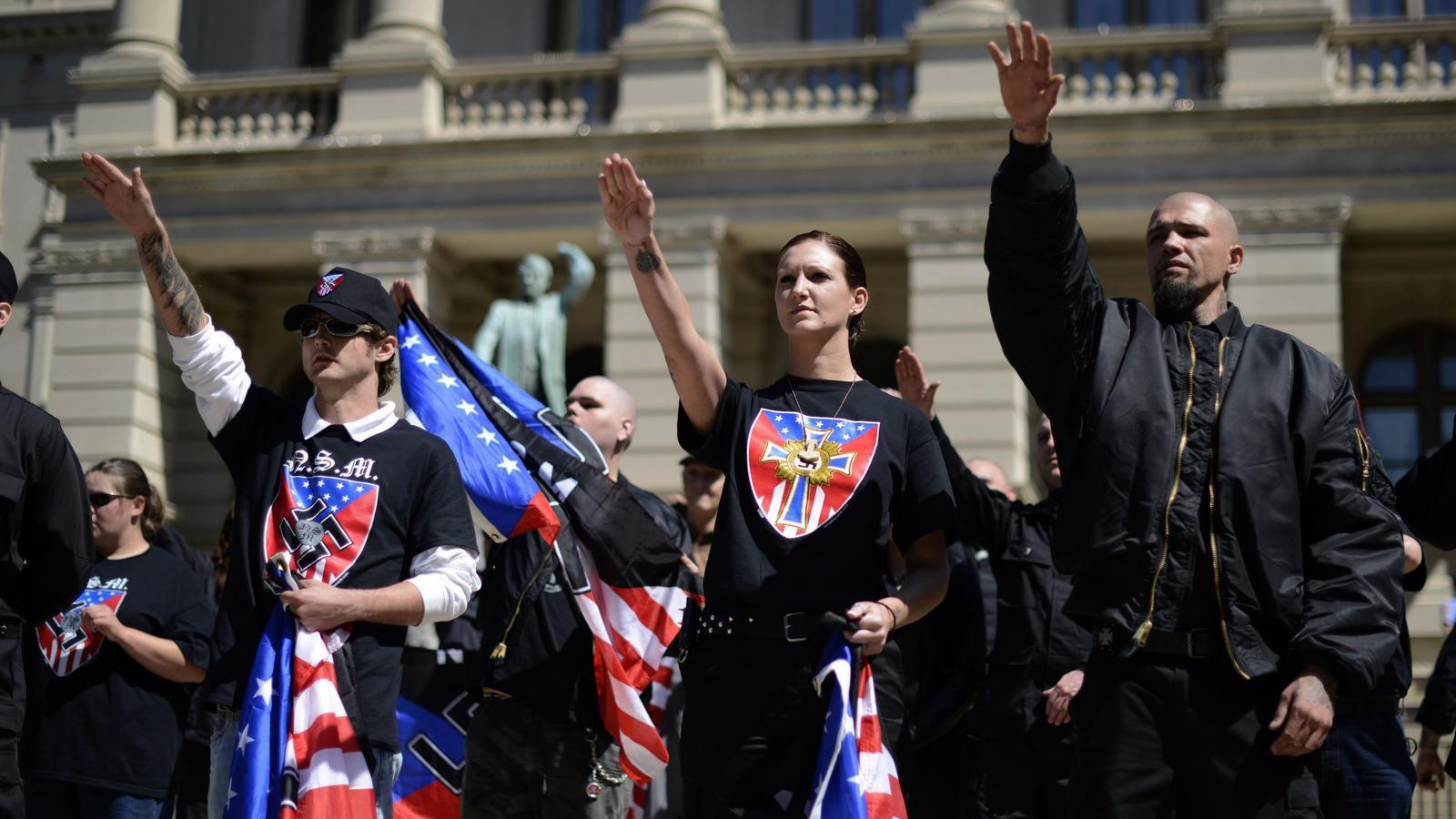

War is horror. Its impact on the defeated is, furthermore, long and deep. Nazism and fascism emerged after the defeat of Germany and Italy in World War I. The Soviet Union fell months after the defeat in Afghanistan. And Trumpism cannot be explained without the defeat of the United States in Vietnam. Half a century has passed, yes, but the concatenation seems clear.
June 11, 2001, was a sunny day in Terre Haute, Indiana. Around the city's federal correctional facility, a fair was organized with rides for children and music for adults: they were celebrating the execution of Timothy McVeigh, the far-right terrorist who six years earlier, on April 19, 1995, had destroyed a government office building in Oklahoma with a bomb. 168 people died there, including 19 children. The building also housed a daycare center.
The journalists who attended that festive execution could not have suspected that the crowd, white without exception and visibly armed, would end up sympathizing, a decade later, with McVeigh's racist ideas. And voting for Donald Trump.
Let's go back to the beginning. The return of the soldiers who fought in Vietnam was very bitter. They knew that a good part of the country had protested against the war and, in some way, against them. They knew they had been labeled murderers. And they were received with reluctance. That war, the last one the United States waged with conscripts, caused a very deep trauma.
During the war, the law allowing Black people to vote in all elections had been passed. The struggle for the civil rights of Black people had suffered unprecedented police brutality. In the very camps in Vietnam (for the first time it was a racially unsegregated army), fights between whites and Blacks were frequent. And the end of the war, in 1975, coincided with the worst economic crisis in the United States since 1929. Inflation and unemployment destroyed hundreds of thousands of families.
In the book Bring the War Home: The White Power Movement and Paramilitary America, history professor Kathleen Belew traces the evolution of events since the defeat in Vietnam. Her thesis coincides with that of God, Guns and Sedition (God, Guns and Sedition, not published in Spain), a 2024 book written by professors Bruce Hoffman and Jacob Ware.
The first post-war event was a sudden surge in the number of members of the old racist Ku Klux Klan organization. The second, a hitherto unthinkable reconciliation between the racists who had fought in World War II, and hated the Nazis, and American neo-Nazi organizations. The third, a conservative electoral wave that sought to restore the damaged “national pride”.
The conservative wave led, in 1980, to the presidency of Ronald Reagan. Once president, Reagan proclaimed that the Vietnam War had been “a noble cause” and lamented that American soldiers had been “denied permission to win.” The narrative was identical to that of Adolf Hitler: Germany was defeated in 1918 by the “betrayal” of politicians, who prevented the victory of their soldiers.
It is no coincidence that in 1978, three years after the defeat and two before Reagan, the novel The Turner Diaries was published, which the neo-Nazi William Luther Pierce signed with the pseudonym Andrew MacDonald. The novel narrates, from the future, a “holy war” in which whites manage to exterminate all other races (including Jews), “liberals,” and “politicians,” after which humanity is happy. No book has influenced the American far-right as much as The Turner Diaries has.
Timothy McVeigh, the Gulf War veteran who committed the Oklahoma bombing, was obsessed with The Turner Diaries. And on January 6, 2021, the Trumpist fanatics who stormed the Capitol installed improvised gallows next to the building: it was a clear reference to the “Day of the Rope,” one of the novel's most famous passages, in which “traitors” are executed en masse.
The two presidential terms (2009-2017) of Barack Obama were interpreted by the country's growing far-right as a confirmation of their fears: black liberals were taking power. It is also no coincidence that starting in 2007, the Tea Party movement pushed for a shift of the Republican Party toward the extreme right.
During the Obama years, a reconciliation as significant as the one that had united racists and neo-Nazis took place: anti-Semites embraced the cause of Israel. After Benjamin Netanyahu's return to power in 2009, Israel closely resembled the type of country (racist, armed, violent, religious, and ruthless) that the far-right wanted for the United States.
And after Obama, Donald Trump burst onto the scene.
