This is not May 68

In Paris, on a chipboard panel trying to protect a bank window from recent riots, someone has written in black spray paint: “Il fait noir au pays des Lumières”, it is getting dark in the land of the Lights. The slogan, adopted these days by young protesters, has been warning for some years that the threat of dark times hangs over France, the country of the Enlightenment and the Revolution, with the increasingly likely access of the far right to power. A threat that is not limited, unfortunately, to France, but which we should not consider an inevitable or, above all, irreversible fact.
As happens after every outburst of social anger, we all rush, with more or less success, to look for its causes and, often, to establish parallels with other moments in history. The protest of the lycéens, the French high school students, does not shy away from mirroring itself in the most illustrious precedent, so much so that the spokesperson for the Students' Union asserts that the movement is inscribed "in the tradition of May 68". And even though the protesters reinforce it with placards and slogans that say "The 68 generation is doing May 68 again" and "October 2026 is the new May 68", the comparison is perhaps slightly exaggerated and, in all likelihood, inaccurate.
In any case, as a tribune in Le Monde, signed by political scientist Boris Gobille, warned these days, "the difference between May '68 and October 2026 is that back then the atmosphere was red, while now it is brown". Thus, it will soon be sixty years since, in a time of economic growth and when higher education promised access to enviable jobs, "revolutionary hope permeated significant parts of the youth", who led a protest where the anti-imperialist struggle, the rejection of consumer society, and the outbreak of a new, freer morality were mixed. The movement failed, and the subsequent elections were won by the Gaullist right, but the impact of May '68 should not be assessed in electoral terms, but in those of a deep and lasting cultural and social change.
Today we are very far from that. The atmosphere has been tinged everywhere with certainly dark tones, sometimes expressed in an apocalyptic way, which fill us with all kinds of fears: from the climate crisis to the housing emergency, passing through the famous AI (the prophecies about which often recall those that at the time predicted a revolt of the robots against humans, exploiting our most irrational fears), in a social context marked by growing inequality, low wages and precarious living conditions, and in a political moment characterized by the shameless rise of the most grotesque and, nevertheless, dangerous demagogues –a rise that is presented to us as an unstoppable fact, turned into those self-fulfilling prophecies to which we have become so fond.
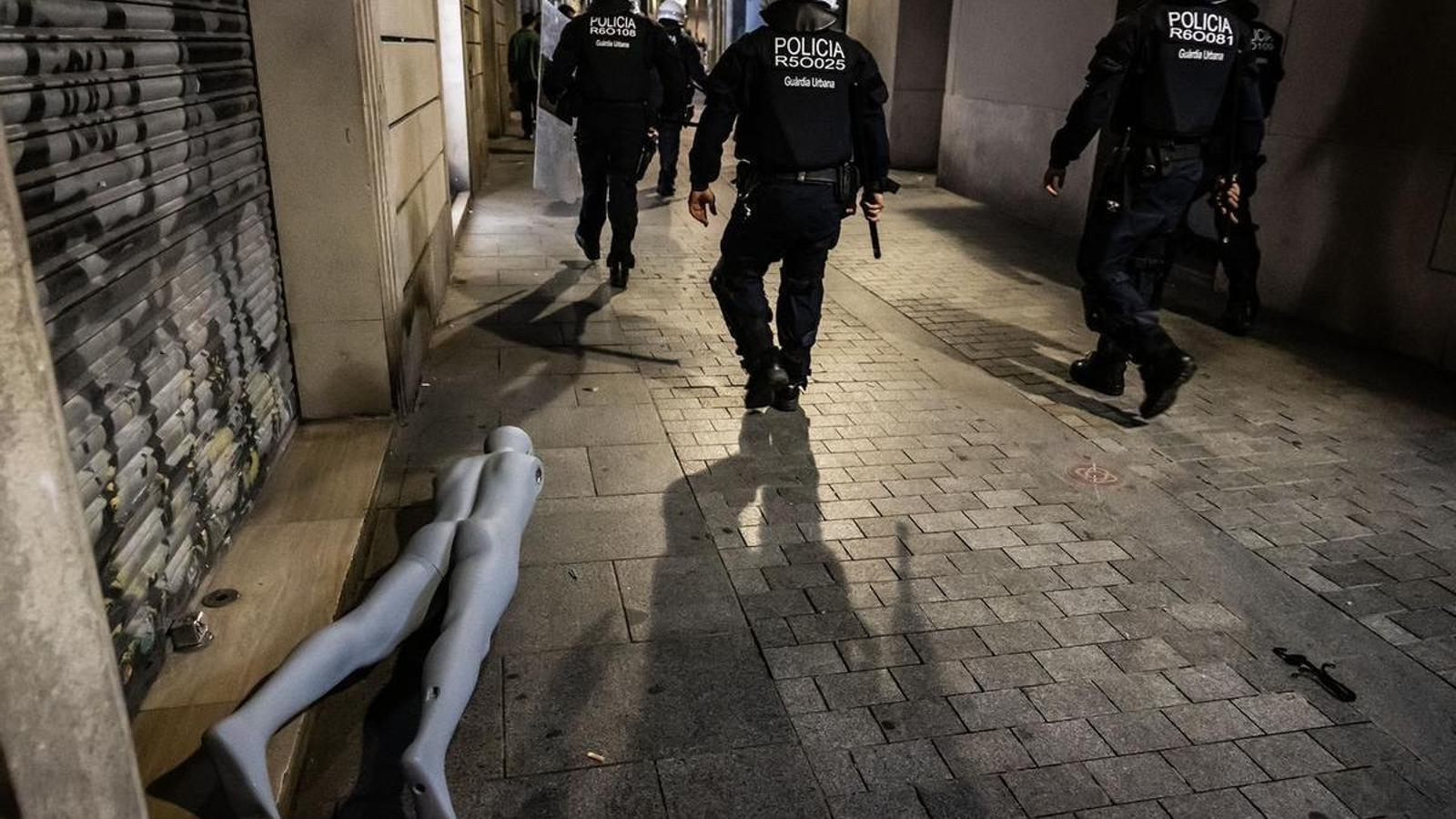
I am not very much in favor of drawing parallels with the political situation that allowed the Nazis to come to power in Germany in the thirties. Today's society has, fortunately, very little to do with that one. But it is evident that, as it was then, social unrest has its roots in a system that excludes and offers no kind of future to considerable parts of the population. Let us look at Italy: the journalist Mario Calabresi, who has just announced that he will lead the center-left candidacy for the mayoralty of Milan (a city with enough similarities to Barcelona), also uses the metaphor of light and darkness, when he says that in the capital of Lombardy there are "two cities": "One resplendent, like a shop window, and the other that feels unseen, with less light. This is a fracture that must be healed, because if not, someone will break this shop window". And this is precisely what has happened these days (also in Barcelona, last Saturday, with a mimetic and who knows if manipulated component, but which translates a reality of exclusion), when boys from the Milanese periphery have revolted with violence because they "feel that the city center is a shop where they cannot enter". It is difficult not to agree with the Milanese mayoral candidate when he concludes that "it is necessary to rebuild a community and a citizenship".

Although we sometimes seem to forget it, building a future in which the lights prevail over the darkness is in our hands, as shown by the students protesting in the streets across France, but also in Athens or Milan. Thus, contrasting education with "the complicity of fatalisms" is now more necessary than ever. Knowing, mind you, that many things in our present will need to be rethought, and also that perhaps the future will not be exactly as previous generations imagined it. This has been stated, with the characteristic lucidity of artists, by the veteran Francesc Torres, who has titled his Barcelona exhibition this autumn with an exact aphorism: "The future is no longer what it was".
