The furious fire or the bioeconomy

-
CAT -
CAST
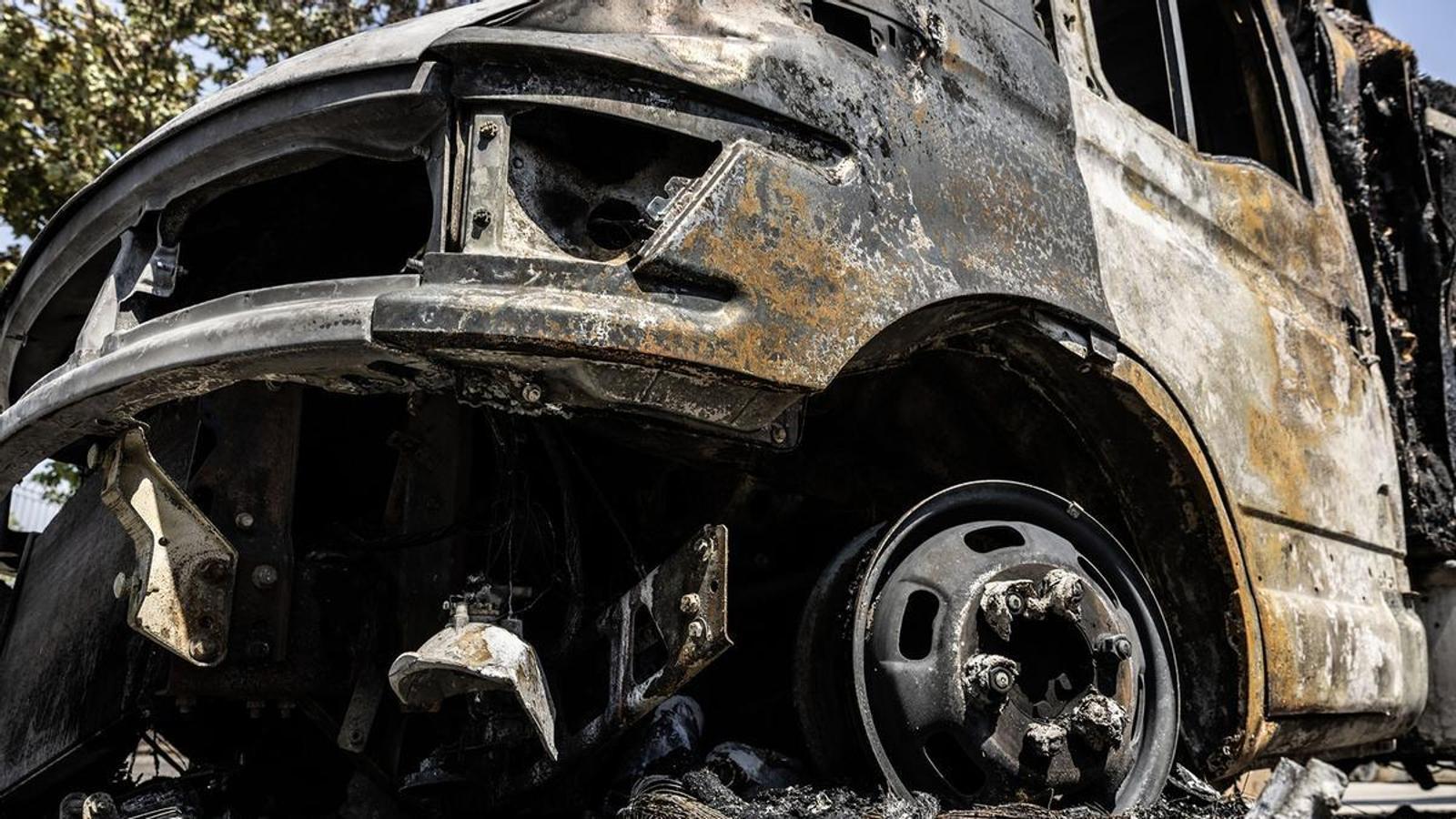
We only worry about forest fires when impactful images reach us through televisions or mobile devices and social networks. We have learned now, but it has taken a long time, that climatic conditions will largely define the forecast of the day's fire. We also know that the number of days that meet the conditions for large fires has increased considerably due to climate change, and that if previously the speed of propagation was below 2 kilometers per hour, now we can see a fire advance at 17 kilometers per hour.
The perseverance of expert firefighters has managed to convey to the general population, through the media, that depending on its behavior, the fire will be classified as 4th, 5th, or 6th generation. What we are still not doing enough, however, is linking the generations of forest fires to the decades of abandonment of agricultural life in each burned area of rural Catalonia. Nor do we sufficiently emphasize the continuity of fuel, that is, the presence of continuous forest without interspersed crops. A dense forest is one from which biomass elements are not extracted that could be the basis of an economic sector: they call it bioeconomy.
Every spring, when vegetation regrows, forests that no one cares for accumulate tons and tons of vegetation, which creates the mirage for us of believing that that green and beautiful sprout is a gift for our gaze at the landscape. And we do not realize that it is, at the same time, a fuel that increases in quantity and that if it burns, it will increase the severity of the fire. All of Catalonia's forest area is available fuel. Sooner or later it will burn, because fires existed before humans and have accompanied us throughout our evolution. And all of Catalonia's forest masses either have very difficult orography, because they are in high mountain regions, or have resident populations within the forest or at the interface between urban and forest environments. Therefore, we do not have the possibility of letting the fire evolve until self-containment, as the Canadians do.
It would be good that, when the media interview people suffering the consequences of large fires, they ask forest owners why they do not maintain their property in a state of conservation and management that eliminates diseased tree specimens and those that will not reach maturity, or why they do not try to extract the maximum biomass to make pellets or other products. In urban properties there is an obligation of conservation and rehabilitation, and forest owners cannot shirk their heritage either. In these aspects, that of costs, the role of the administration, the obligations of the owners and the criteria with which the forest is intervened, there is a debate that must be resolved once and for all. Municipal officials should also be asked why they approved some urbanizations or expansions of urbanizations, when the debate between compact and dispersed cities had already reached the conclusion that in very unaggregated nuclei it would be too difficult to manage water supply, public transport or security services. These municipal officials, instead of considering that the forest surrounding the homes was simply a natural wonder, should have warned of the evolution of fires and the need to create around them (taking it to the extreme) a biomimetic imitation scree, more than 500 meters wide.
In fact, farmhouses also had, not so long ago, forms of self-protection. The vegetable garden and vineyard close by, the threshing floor, the livestock pens, the fruit trees, irrigated corn... all to stay well away from the forest, which will one day burn. Now, although it is commendable that farmhouses are being recovered for other uses, in some the sense of self-protection has been lost and the forest has been allowed to envelop them. And the forest, one day, will burn.
This summer, the fire services available in Catalonia, which remain among the best in the world, have openly informed the public that some fires were beyond their extinction capacity. They were overwhelmed. Perhaps summer entertainment has saved us from having to think about the meaning of this expression. Faced with the new large fires, they will protect our lives, those of these human specimens, irresponsible citizens, who insist on not learning, but they will not attack the fire fronts until the orographic and climatic elements are favorable. The issue is no longer asking for more planes, even though Europe has the Emergency Response Coordination Centre and a whole fleet. The issue is managing the forest beforehand.
We are now experiencing inextinguishable fires. The inspector who directs the GRAF is our Jakob Mendel of fires. He does not have, as Zweig wrote about that character of his, a white marble table, but he does have a computer with which he follows the evolution of all fires since data has been recorded and proclaims it to anyone who will listen. Fires are no longer an environmental issue, they have become a very serious civil protection issue and an economic model, of an economy that will not succeed without help or leadership. An economy of which we have some examples as scarce as they are commendable.
The forest, perhaps not so extensive, should continue to be a natural place, but there must be human activity that empties it of fuel. And if this can no longer be done with the old models of family exploitation, a new efficient distribution of agricultural and forestry work will be necessary.
The insistence on the need for a change of course can be tiresome, but it no longer refers only to remote places. This summer we have seen relatively large populations confined or evacuated. Although changing the model is a gigantic task that can be discouraging and that denialist governments do not even want to start, it must be clear. The model that consists of letting wounded nature take its course is today the implacable antagonist of intelligent collective life.
