The disappearance of Catalan politics
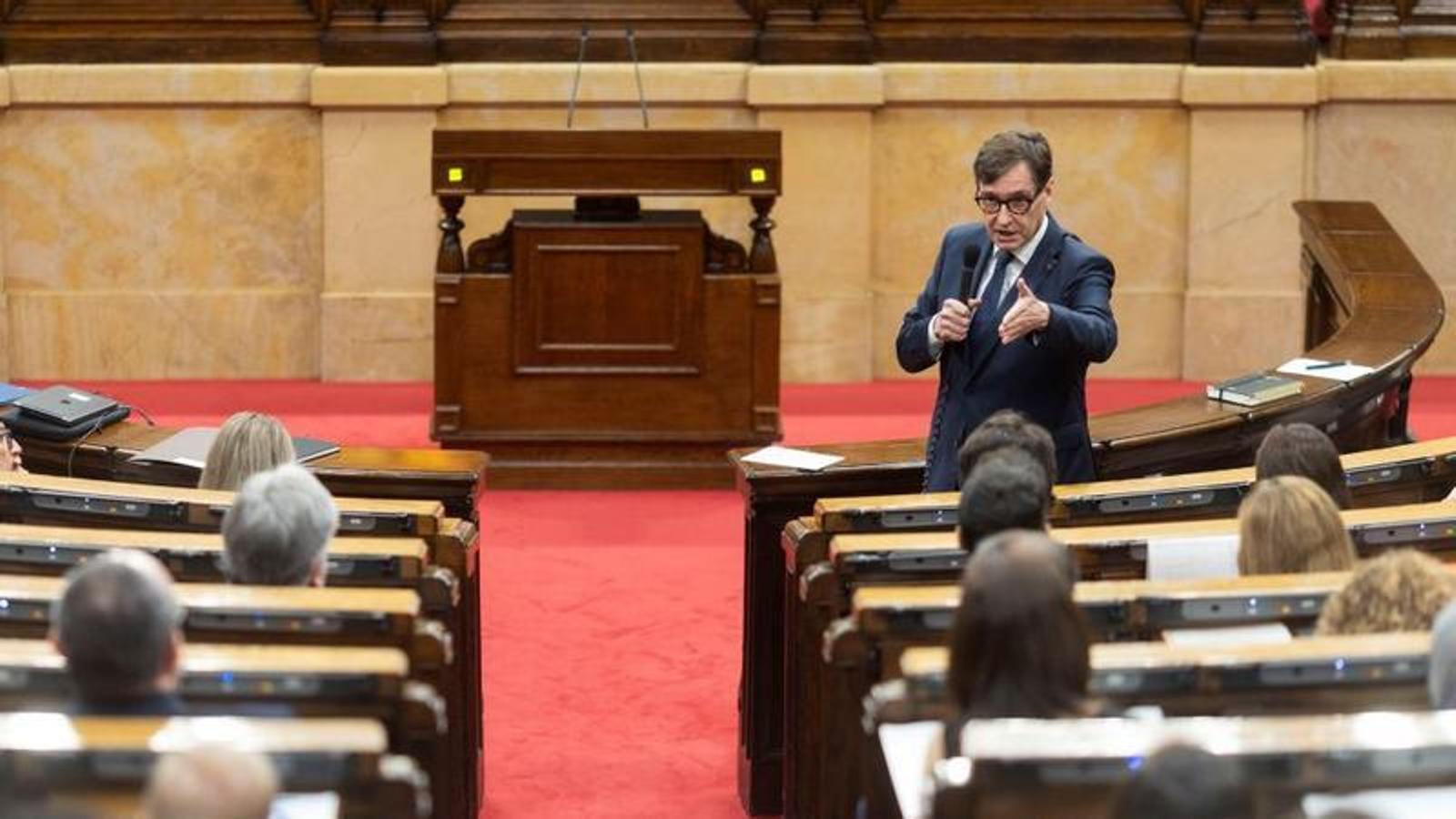

If President Pujol was not interested in opening the Pandora's box of independence, it was for several reasons, among them, surely, that he did not see it as opportune or prudent, but the fact is that he himself embodied the repressed impulse (or the latent conflict). The fact of having a nationalist presiding over the Generalitat caused special tension and attention, a constant edge of the precipice that forced everyone to express themselves, at least to express themselves, on the fit or misfit of Catalonia within Spain. It was the recurring theme, the unavoidable elephant, the eternally pending subject but on which everyone said their piece: Pujol was a kind of embodiment that the solution of '78 was insufficient and that it was necessary to delve much deeper into self-government and national recognition, under the threat (never explicit) that everything would overflow. Well, everything, in effect, did overflow: Maragall was not a nationalist, but he was the grandson of Joan Maragall and had an entire reform of the Statute as his project. The rest of the story we already know: explicit conflict until 2017 and beyond, and it has only been two years since the Generalitat decided to become a government without conflict. Without a pending issue. Without a cause, without national debate beyond administrative management.This transforms us, in effect, and more than ever, into a province. Into a branch. The Parliament of Catalonia no longer captures anyone's attention because neither Illa has any solution to the conflict other than to ignore it, nor can Sílvia Orriols avoid becoming repetitive with her Islamophobia, nor do Junts or ERC seem to show signs of being able to reawaken the movement created during the Procés (or, at least, obtain significant concessions from their commitment to dialogue with the PSOE). The blame is, we would say, shared. Nevertheless, it is the governing majority that sets the pace of the legislature and, therefore, it is convenient to admit that it is this one that opts for administrative, legalistic greyness, allergic to conflict (not to its approach, but to its very existence), the still prevailing domain of fear and threat, the association of common sense with passivity, and the reference to an abstract, confusing, and barren dialogue. "The Government of Everyone" simply does not include in this "everyone" half of Catalans who declare themselves independentists and, with this, it trusts that the sovereignist boredom with Catalan politics will make the intention, the movement, and the cause fade away. It is not a bad idea: the problem is that the price is the almost absolute disappearance of Catalan politics.
The same Illa appears blurred, semi-transparent, spectral. It represents nothing, aims for little, fights only for bread and food. It is the living embodiment of a country on life support, with stable vital signs, but so anesthetized that it no longer recognizes itself. By giving up so much on wanting to be more, it has ended up giving up on being something. Now the Generalitat is the government of another autonomous community, with the aggravating factor of being punished, watched, humiliated, and undeniably hated. It may be said that this is the price of having accentuated the conflict, but after nine years of "peace" and "concord," I believe I can say that this has, on the contrary, been the price of shying away from the conflict. Of not initiating its resolution, or of not culminating it. Of ignoring it, as if covering one's eyes would resolve the monster's presence.It is too high a price. The branch management of Catalan politics is absolute: the only debates promoted are those of the PSOE against the right, or those of Zapatero against the judges, or those of Rufián against the umpteenth promises of "plurinational majorities". We have reached a "todos dentro" —so invoked now by Iván Redondo but also existing as a slogan during the Transition—, which blurs Catalonia within a superior cause and which, therefore, makes it more dependent than ever. Now everything is housing, the self-employed, the ELA, massive regularizations, corruption cases of state parties. Catalan politics simply does not exist, either due to a lack of power and competences (which is also true) or due to a renunciation of leading the national debate anywhere. They must surely think that this was Maragall's mistake: pujolejar too much. They are mistaken. Maragall knew that a fight could be won or lost, but that the worst insult when managing a conflict is to ignore it. To ignore us. As if that could erase us. And failures are paid for, surely, but insults and condescension are paid for even more.
