The diabolical culture of housing
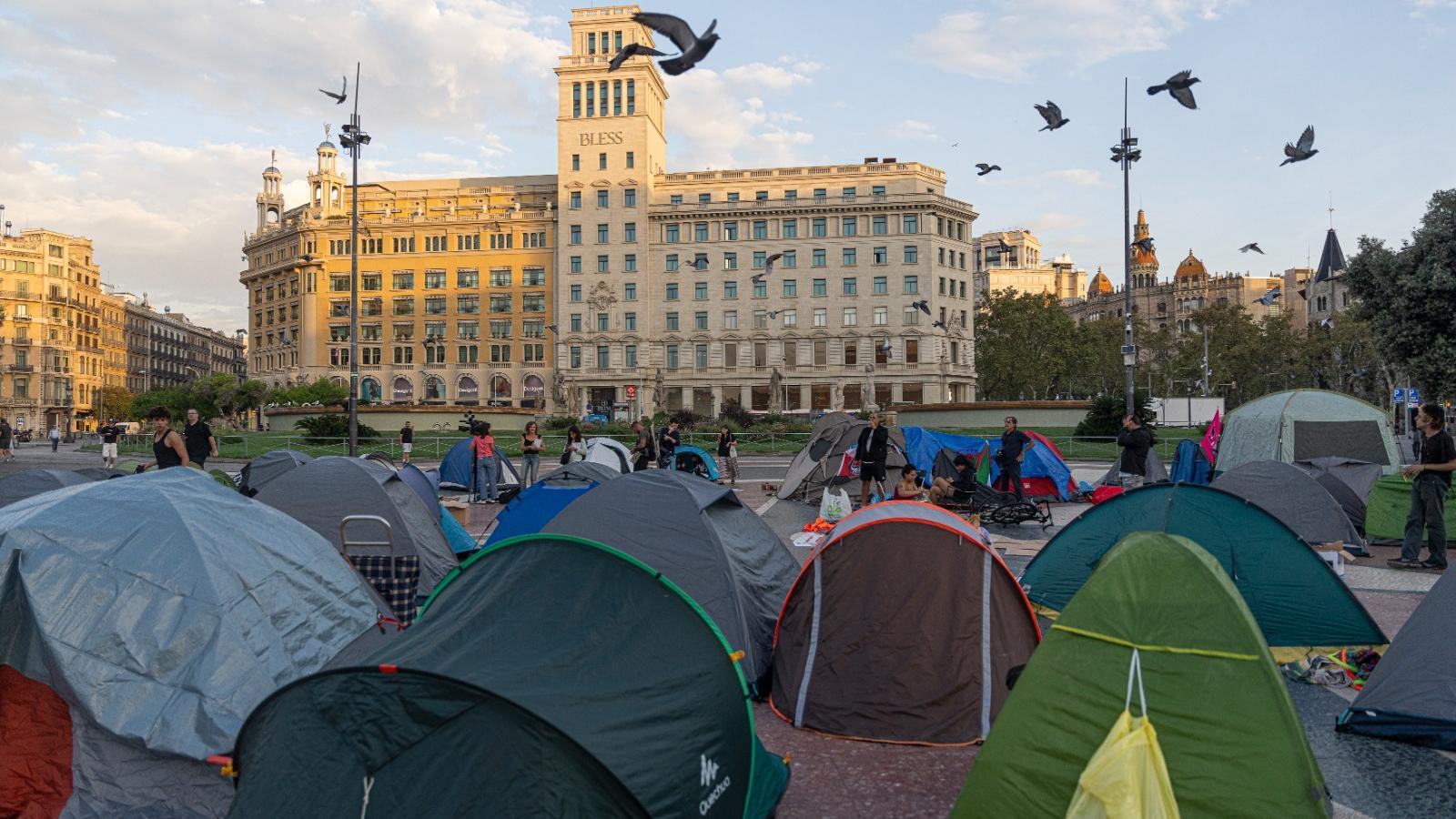

I believe that, right now, the great obstacle in the struggle for housing is cultural, and the paradox is that the problem is precisely the culture that has formed around what it implies to be the owner of a house. Because, as all the readers who try to understand the problem every week and commit to a solution must already know by now, we will not succeed with economists alone. I remember perfectly the squabbles following the 2008 crisis, and that was nothing compared to the mud we are seeing in the housing debate, in which experts of one stripe and the other throw at each other data and theories so opposed and incompatible, and with such bitterness, that the very meaning of the word expert is emptied of content and one feels on an exhausting rollercoaster and changes certainties and opinions after each reading.
That housing is a cultural problem can be seen in the distrust towards housing unions and the desire that floats among a probably majority sector of society to double down on the law of the jungle; the idea that if young people, the poor, and immigrants cannot afford a house, perhaps it is better to vote for everything to burn so that the strongest may be saved. Of all the theoretical labels that work well to explain this, one that I have liked lately is "popular individualism," a concept with which certain historians describe the desire for more autonomy that spread among ordinary people in the middle of the last century. On the bright side, the desire to decide about one's own life and stop accepting the place that society assigned you fueled demands for equality and projects for democratic participation. On the dark side, these yearnings were used to destroy the credibility of unions and other forms of association that required disciplined militancy over time and replace them with a type of protest that is much more ephemeral and emotional.
The material mechanism that has fueled this cultural change has been the commodification of housing. The pact that the devil offered is as follows: to renounce the stability guaranteed by the State during the post-war decades and, in return, to become the owner of an asset that would always rise in price. Although the middle class would continue to depend on work, owning a flat would compensate for the stagnation of wages. From the old separation between workers and capital that social democratic parties knew how to channel, we moved to a society in which workers who owned their homes were divided and pitted against those who did not have the same luck. By offering many people a material stake in the new economic model, the emerging system created a coalition of voters that identified those in the middle with those at the top.
Needless to say, this could not last forever: if apartments are to rise infinitely in price and salaries are to remain frozen, it is increasingly difficult to buy one with a salary. Thus we have arrived at what the economist Michael Byrne calls the "late residential property society," which describes the transition from the generalized home ownership of the last century towards a much more precarious model from which more and more groups are excluded. As the designer and architect Adrià Garcia says, "the current structure of property serves more or less well about two-thirds of society, and at the same time makes almost a third live poorly. And in the long term, it will serve fewer and fewer people, because the revaluation of housing increases the assets of the owners, but at the same time makes access for the rest to their own home more expensive, because it exposes them to the market".
Having reached this point, it is perfectly understandable that the sentiments reflected in the polls are contradictory. On one hand, the vast majority is genuinely anxious about the unsustainability of the system and understands that something must change. On the other hand, the popular individualism we mentioned makes us feel infinite skepticism toward any attempt at an organization as old-fashioned and rigid as the unions, and even more so toward a political class that has proven itself absolutely incapable of using the mechanisms of the State to improve things. But what we earn and what we pay to live does not depend only on the available resources and the logic of the market, but also on who has the power to impose conditions and who is organized enough to contest them. I would say that the apathy caused by the elections that Pedro Sánchez has just called arises from two certainties. The first, that we are still very far from a new culture of trust in collective action outside of political parties like the one that worked in the last century. The second, that a clumsy attempt to rebuild it could lead to new disappointments that end up collapsing the system.
