The children's crusade

I read La croisade des enfants (1896) by Marcel Schwob in the early eighties, when I was in my first or second year of university, in the beautiful and tiny Spanish edition by Tusquets with a prologue by Borges (I don't know where it ended up; I remember its golden cover). I re-read it in its original language recently, and it still seemed to me an extraordinary literary recreation of a historical fact that was adulterated, undoubtedly, but in essence real. These days I have thought about it in relation to another "crusade", this time with many quotation marks. I do not intend to make a comparison of the historical context or the facts, which have nothing to do with each other, but rather the phenomenon of virality; I underline this so that what I will explain below is not misinterpreted.
The Children's Crusade of the summer of the year 1212 is one of the strangest and most tragic episodes of the Middle Ages. It arose almost simultaneously in France and Germany, which is truly surprising. It was not a military expedition led by the Church or by the kings of the time, but a movement led by two children who had had mystical visions at almost the same time: a French shepherd, Étienne de Cloyes, about ten or twelve years old, and a German named Nikolas, from Cologne, more or less the same age. They claimed to have received divine messages encouraging them to recover the Holy Land, not with weapons, like the knights of the era, but through the purity and innocence of the pueri. In Latin, pueri means "children", but at that time it also referred to the humblest and most helpless people: the poor, the wretched. They said that the Mediterranean Sea would open miraculously in their path. They reached, according to sources, between 20,000 and 30,000 and, obviously, they caused a major social problem. The outcome was disastrous: many thousands of young people died of hunger and cold, especially when crossing the Alps, and those who managed to reach the Mediterranean ended up sold as slaves. The figures are uncertain, but it is estimated that on August 25, 1212, when they arrived in Nice, there were still between 2,000 and 3,000 of them.
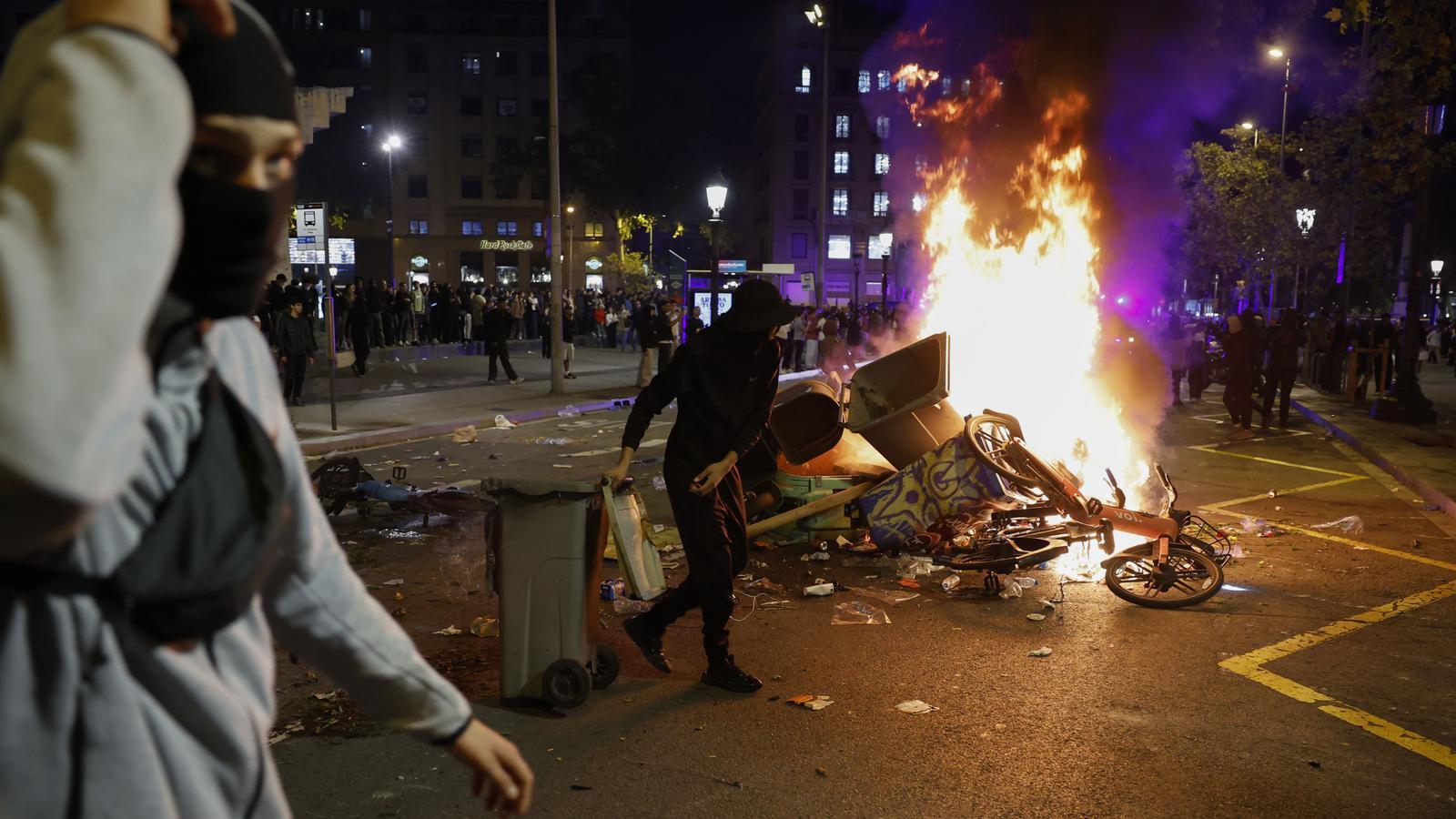
If the phenomenon is compared with the riots and adolescent revolts of contemporary Europe –sometimes triggered by real social tensions and other times by a simple desire for trouble–, interesting parallels can be observed, especially in the mechanism of contagion and in horizontal organization. In both cases, the viral effect stands out, understood as the uncontrolled spread of an idea or a collective behavior that propagates outside of traditional channels of authority. In the medieval crusade, virality was articulated through word of mouth, folk songs, and itinerant sermons in markets and along roads. Everything happened at an incomprehensible speed considering the era (the adventure began in June and ended in August). The combination of a context of religious exaltation and economic misery, as well as the charisma of the two child leaders, acted as a catalyst that ignited enthusiasm from town to town, generating an irresistible sense of belonging among the youth of that time. Nowadays, this same social contagion has accelerated exponentially thanks to social networks like TikTok and messaging applications like Telegram. The algorithms of these platforms amplify violent audiovisual material and turn protest or disturbance into a trend that must be replicated to obtain recognition among peers. The fundamental common element is the horizontal channel of transmission: neither the 13th-century crusade responded to the orders of the Pope or the kings, nor do current riots have a clear and structured leadership. Group dynamics, the search for prêt-à-porter identity, and the promise of being protagonists of a historical change or an exciting act of rebellion, with a material reward included derived from looting, act as the main engine. However, while the children's crusade channeled the frustration of a generation toward a transcendent spiritual salvation and a collective ideal, modern adolescent riots usually only express discontent through the vandalization of urban space.
Ultimately, both phenomena show how group pressure, however irrational it may seem, can be extremely powerful, irresistible, whether it is transmitted in the form of a medieval ditty or a video on social networks. The other relevant, decisive issue is that of leadership: the names of the two kids who started that story have endured, and that means something. What would happen if some of those who today smash shop windows in Paris or Barcelona possessed charisma and organizational capacity?
