The last debate in the history of TV3?
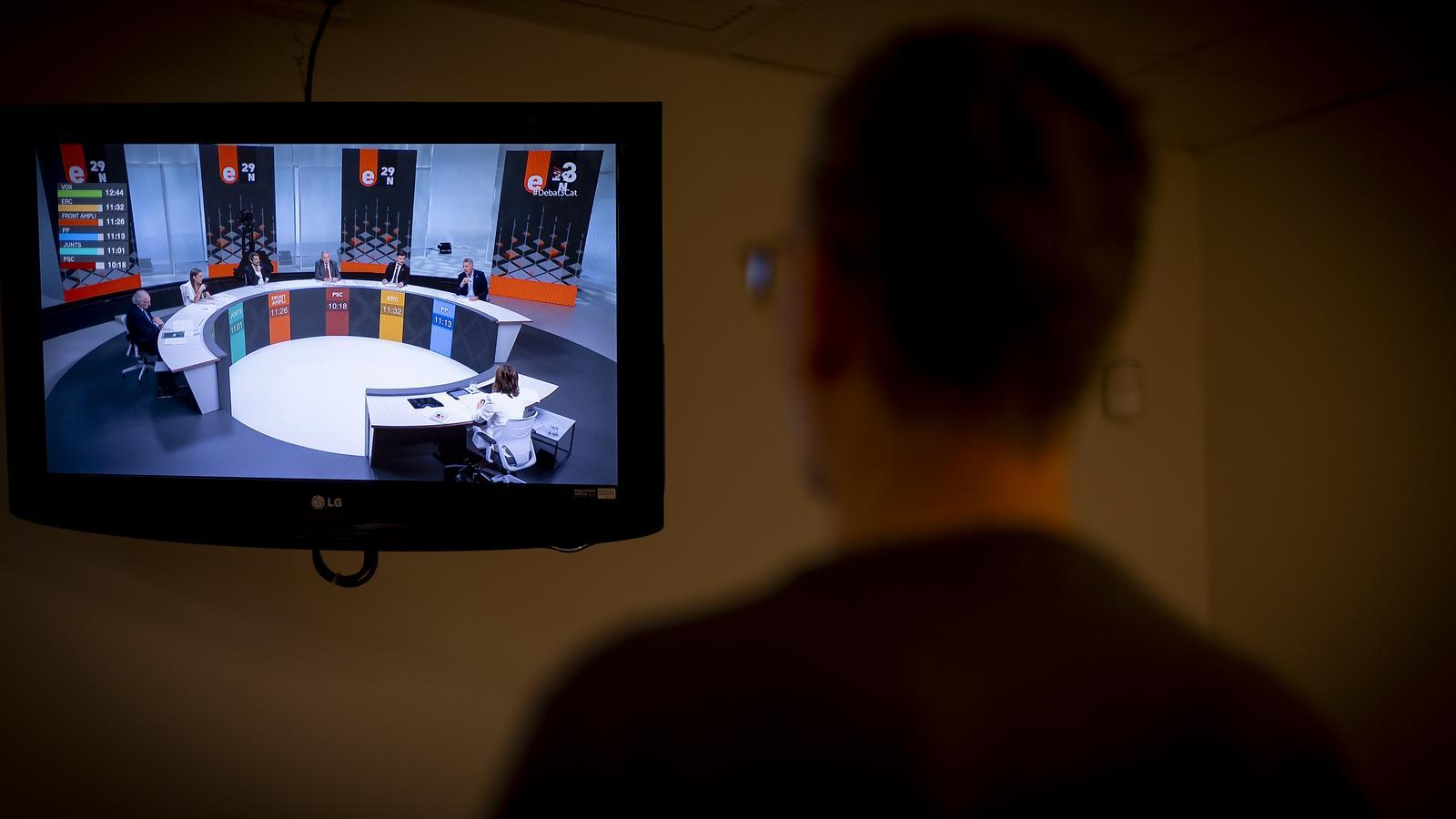

BarcelonaIn this campaign we have already seen two head-to-heads, an eight-way debate and yesterday, on TV3, we debuted with a six-way debate with the list leaders for Barcelona. Ada Colau delegated the mission to Ernest Urtasun. A debate without podiums, with a table and the candidates seated. TV3 has had better sets and more demanding lighting for these occasions. The Vox candidate Juanjo Aizcorbe was the only one not wearing the purple ribbon to commemorate the International Day for the Elimination of Violence against Women. The program began with the question game, one of the peculiarities of public television. Each candidate asked a question to one of their opponents, assigned by drawing lots.
A dynamic that quickly stimulates the flow of the discussion. The production was one of the strong points of the broadcast. The way of introducing the thematic blocks and showing the data through the zenithal shot was a good idea. It structured the program, located the viewer and contextualized the thematic block. The central circle formed by the tables became a virtual tapestry on which to project the information. On the other hand, the resource of the split screen to include the reaction of those alluded to and their rebuttals enriched the discussion and the viewer's point of view. When Gabriel Rufián warned of the possible closure of TV3, in the event of a victory by the right, the program's production was agile in capturing Albiol's reaction.
The minarets of Vox
The puzzled look of the Popular Party candidate made us think that the mayor of Badalona couldn't quite believe it. One of the phrases of the night was uttered by Aizcorbe, the Vox candidate and the least trained of all in the exercise of debating. He was so focused on his papers that he couldn't care less about Oltra's questions or the interventions of the others. In the inflated speeches he read, there were phrases of pretentious epic: “Catalans, fight so that the bell towers do not become minarets”.
Ariadna Oltra struggled to control the time and ensure that turns to speak were respected, although, at times, the vehemence of some candidates made it difficult for her. It was a symptom, however, of the confrontational effectiveness of the debate in which the politicians were eager to challenge each other. Perhaps the comfort of being seated contributed to the spontaneity. “Can you listen or are you nervous? I am not speaking to you, I am addressing the Catalans!”, protested Albiol. “Why don't you stop talking, man? You are very annoying!”, the Popular Party candidate reiterated to Rufián later on. We do not know if Albiol will end immigration, but he gave it his all by restoring order at the table so they would not interrupt him.
The tension between Miriam Nogueras and Gabriel Rufián, one of the themes of the entire campaign, became evident once again on TV3. Aizcorbe protested by labeling the left-wing candidates as looking like Pericot and Mandinga. The Vox candidate let out the most genuine Catalan expression. It was a heated, energetic, and entertaining debate. Rufián began by saying that if the right-wing parties won, they would shut down TV3. From Sunday on, we will know if it was a flawed prediction or if this has been the last debate in the history of TV3.
