Piketty and public wealth
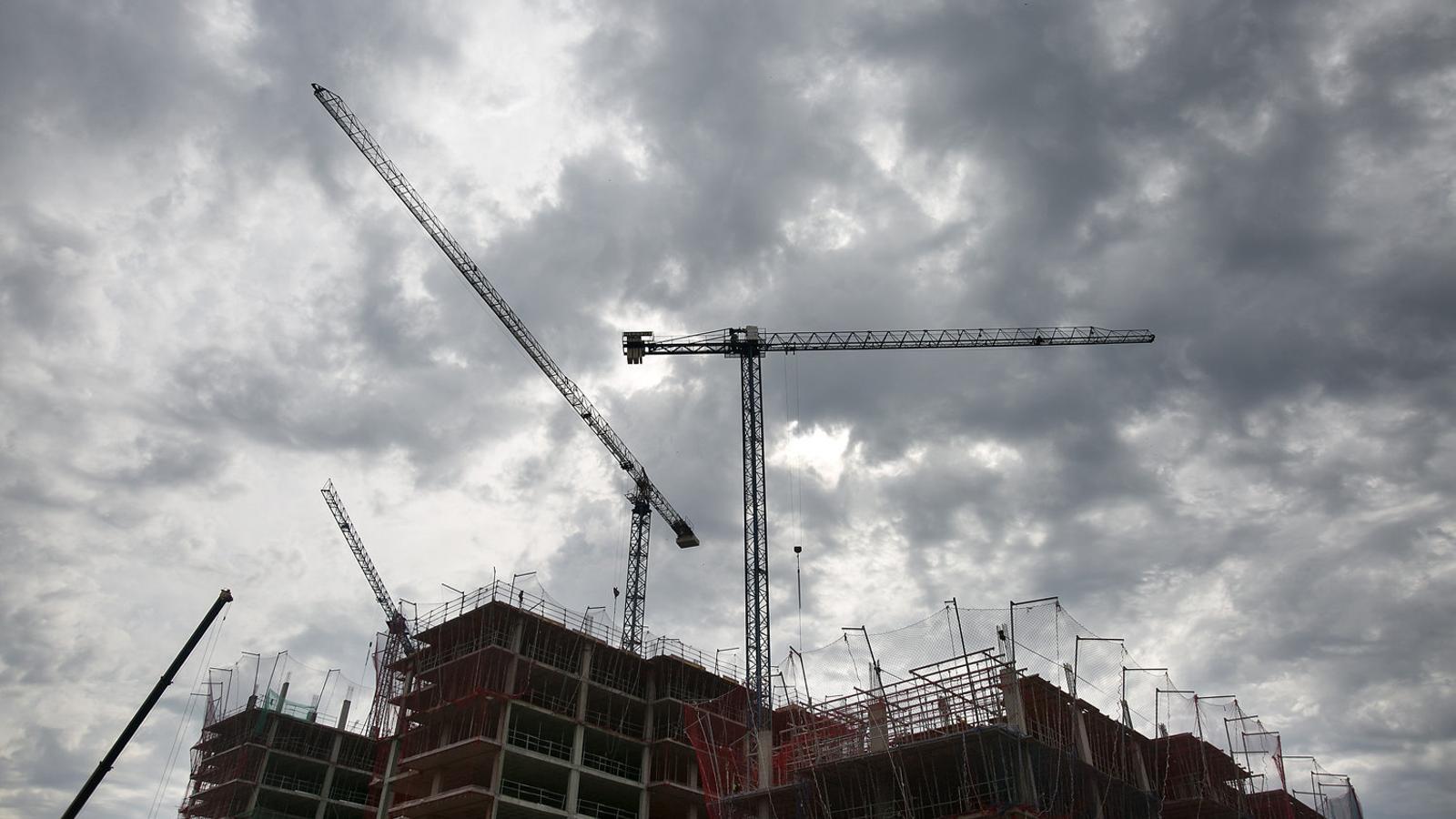

In housing matters, the media regularly publish messages or replies between developers, academia (very divided, by the way), social movements, and a succession of governments that are too erratic regarding investment in affordable housing. These are very confrontational positions that constantly make us doubt the capacity of democratic governments to guarantee and expand the welfare state. Everyone agrees that the goal of 50,000 social housing units in Catalonia is a good initiative, but the results achieved so far give rise to all sorts of contradictory messages. What is preventing the promised volume of production from being achieved? Amidst these tensions, the narrative of the harsh reality of today's cities emerges, which authors such as Llucia Ramis, Javier Gil, Paulina Flores, Jordi Amat, and Marta Jiménez Serrano describe with cunning and, at the same time, sadness.Of the many readings that can be made of Thomas Piketty's work, there is one that has to do with the deconcentration of power and property, the power relations that confront tenants and landlords, and their respective narratives. A good contribution from Piketty is that he emphasizes the inequalities generated not only by the concentration of ownership of the means of production (the focus of classical Marxism), but also by housing ownership. The unequal life prospects that tenants may have compared to the options of owners (who, for the most part, are such by inheritance) call into question the deconcentration of power and property that had been achieved since the French Revolution. The poorest 50% of the population has a tenth of the average wealth of the total population and remains too exposed to the dynamics of the market housing price. Piketty refers to feminist authors who have for years argued that the household economy is a very important part of urban family economies and that, added together, they affect the functioning of national economies. It makes me think that the way cities solve the housing issue will have very important macroeconomic implications in the coming years.Spain is one of the wealthy countries that leave half the population without access to affordable housing out in the cold. It is a rich state in the sense that it has companies that accumulate many properties, but with the paradox that it has a dwindling public heritage. And in housing matters, only 2% of homes are public property.
The first public housing estates in Spain were a terrible legacy of Francoism. Blocks of flats in massive housing estates, built quickly and with poor quality. For this reason, during the Transition, the transfer of the actions of the National Urbanization Institute and the State Public Housing Promotion Institute to the Generalitat meant a difficult inheritance to manage: little maintenance has been done and many times they have been privatized to avoid headaches for the administration.But fifty years later, when the CEO barometer is published, access to housing becomes the most important problem for the majority and 85% of those surveyed consider that the priority is to build public housing. If the pandemic demonstrated anything, it is that homes, when there are serious problems, become the main refuge for families. For years, the State has allocated millions of euros to finance access to owner-occupied housing through deductions in income tax, and this has favored the stability of a middle class that has been able to buy an apartment. But this public money has ended up in private hands and has not benefited the poorest 50% of society. The autonomous communities have had to allocate a large part of the public housing budget to cover social aid for rent payment, so as not to leave people on the street. In the Generalitat's budgets, there is an annual provision of 160 million for rent payment aid, almost double what is allocated for the public sector to promote affordable housing. Public banking has earmarked 600 million to finance the construction of up to 7,000 affordable homes, but there are few developers dedicated to social housing, and in any case, it is money that must be repaid with guarantees. If building free housing is complicated, protected housing is a race against obstacles.In 2025, 3,517 subsidized housing units have been completed in Catalonia (and 16,175 free market housing units). This is a good figure when compared to the 1,893 in 2024 or the 2,243 in 2023, and it is attributable to the impact of the Next Generation funds that Europe has put in place to help build energy-efficient affordable housing. But we are still at half the affordable apartments that were completed in 2010; specifically, 6,675. European aid ends this year, and I wonder why, if the production volume is so low, no one is asking to increase public investment.The State's land law had historically obliged municipalities to create public land assets, but the ministry has never monitored this obligation and many cities have sold land to cover other expenses. There are many laws that point in the direction of reducing dependence on the private housing market, but it is necessary to see the real impacts of laws and plans, because a state will never be egalitarian if access to housing continues to be an unaffordable monthly expense for half of its families.
