Organization of the Disunited Nations
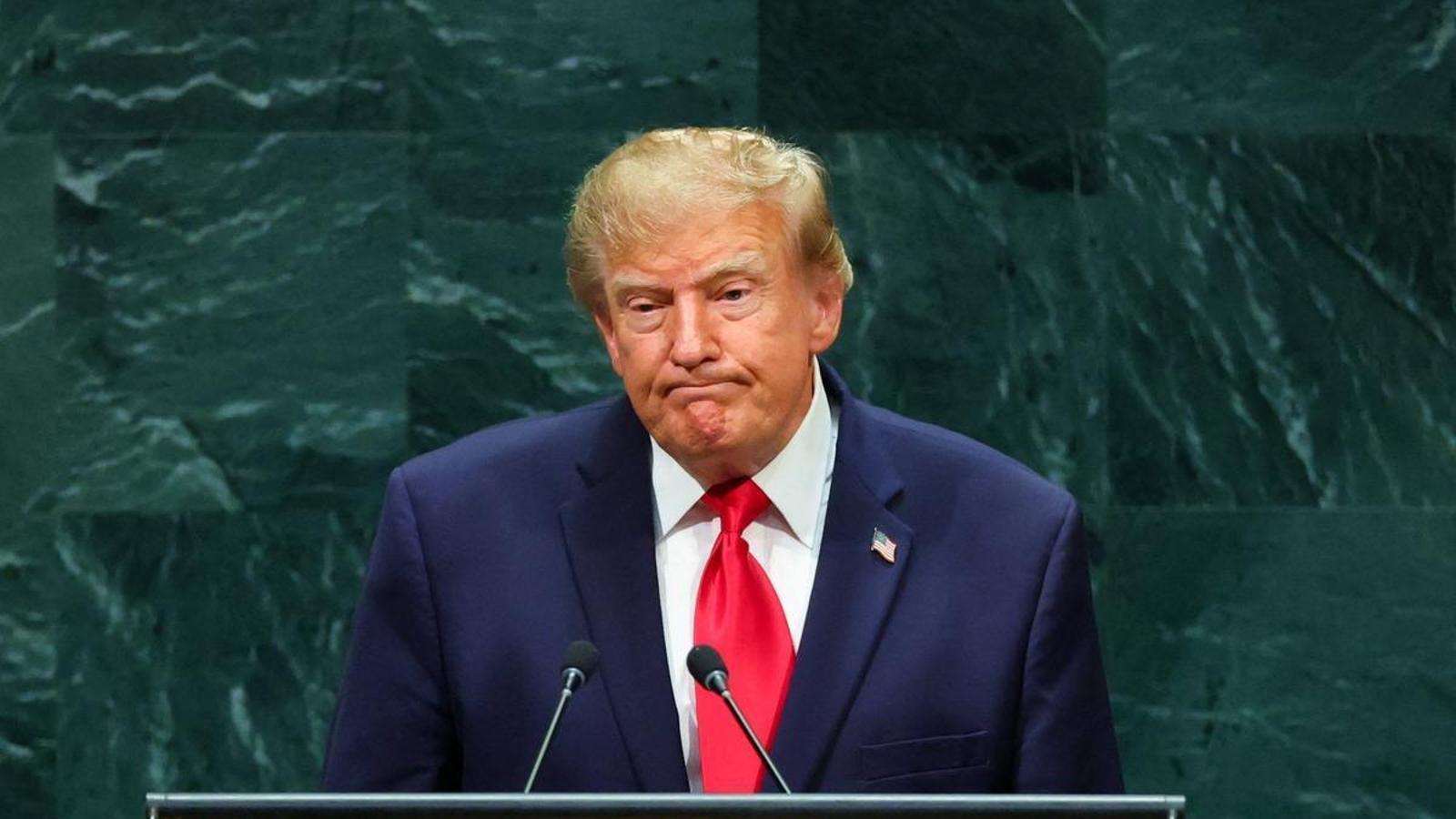

1. Here is a redundancy. For three days, New York has been the capital of the world. The UN General Assembly has staged, through speeches by the main heads of state or government, how tangled the planet is. Behind the lectern, and too busy reading the acrylic teleprompter, everyone has their say. Each leader says what they think their audience wants to hear, the majority speak on behalf of their own country's exclusive interests, and some naive Europeans still go around clutching lilies, calling for diplomacy, international law, and multilateralism as the only possible way out of all the evils, which are not few. There has been talk of the war in Iran, the one in Ukraine, the one in Gaza, or the one in Sudan. And Javier Milei, as much in his own world as anyone else, still claims the Falklands as “a national cause.” By the way, the president of Argentina craps on the UN... but he was there.
2. That is the irony. Even if it is just to call each other names, or to assert that the United Nations Organization is of little use, the reality is that up to 130 world leaders were there. That in a moment of simultaneous wars and extremely strong international tension, all conflicts are addressed without filters shows us—what a small comfort—that there is still a space where everyone can sit near each other. Even if the boycott by numerous delegations that left the room to avoid listening to Netanyahu's speech shows how polarized the Assembly is. The image spoke for itself. Even if Trump threatens to annihilate Iran and Pezeshkian responds that they are willing to dialogue but not to capitulate to countries that break international laws, the conflict is being discussed. And it is logical to think that, behind the cameras, in less solemn and more private rooms, the New York summit serves to keep open the diplomatic channels that allow for parallel contacts, more discreet but less harsh than public speeches.
3. Once the Assembly is closed, the realization is that we have an increasingly divided UN. Your heart sinks when you realize that, at the moment when the UN would be more necessary than ever, it seems to have less capacity than at any other historical moment to resolve conflicts. This is the sharpest criticism. Too many speeches and little capacity for action. Good intentions but without any capacity for implementation. We have known for a long time that its Security Council continues to block the truly important issues because the five powers with veto rights (United States, Russia, China, United Kingdom, and France) always vote in favor of their particular interest. Therefore, the distance between what the UN proclaims, in good faith, and what happens on the ground is enormous. Gaza is, probably, the clearest example. Emmanuel Macron, who gave a high-flying speech, asked a question out loud that should make one think: what value is there in talking about peace if one cannot even guarantee humanitarian access?
4. The underlying criticism is even more interesting. The UN may be reflecting the current world faithfully, but, on the other hand, it is incapable of governing it. Unfortunate contradiction. A United Nations more disunited than ever. An essential but impotent UN, which sees how the great powers wage war outside its rules. And the Assembly, with its hands tied, can do nothing to stop the Trumps of the day who, blinded by absolute power, forge ahead, ignore international norms, and go their own way on a whim, without criteria or control. How far away is Eleanor Roosevelt's wish that the UN be "the common house where nations resolve their differences before weapons resolve them".
