Now we will tell you who can vote
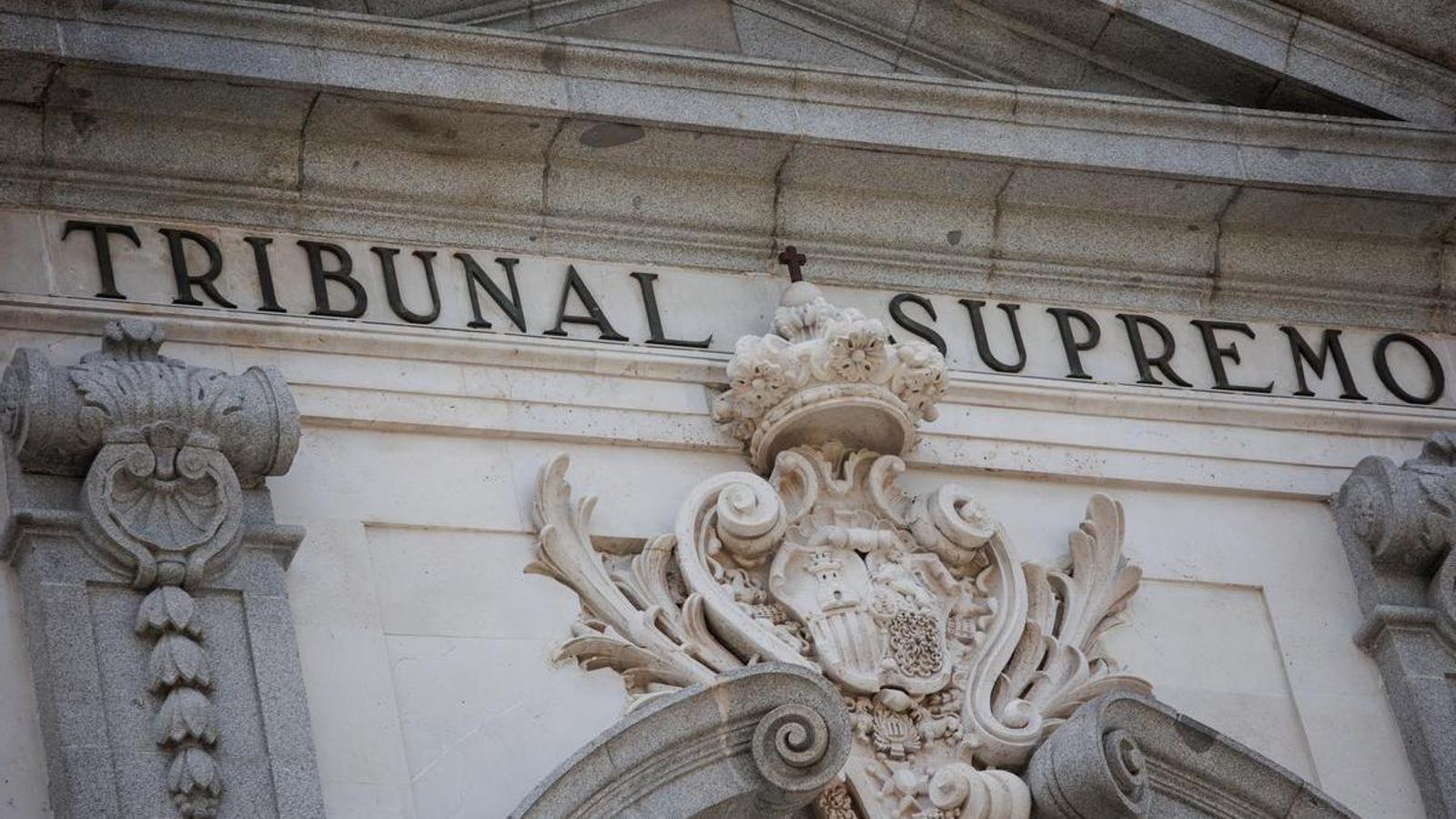

It has become a routine operation for civic entities—or directly parties—of the far-right or Spanish ultra-nationalists to take their political demands to the highest judicial instances, and for judges and prosecutors to take on the task of converting them into sentences or resolutions of mandatory compliance for the citizenry and/or institutions. This is what is known as the judicialization of politics, a mechanism that was greased and fine-tuned (“fine-tuned” was a key word) during the years of persecution and criminalization of the Catalan independence movement, and which has now reached cruising speed against all enemies of Spain that stand in its way, starting if necessary—as we have also been seeing for some years now—with the government of Spain itself.
We have reached an especially worrying point, in which a high court (the Supreme Court) orders the vote to be prevented for a group of citizens, following a request made to order by the aforementioned ultra-nationalist right. The group is that of the descendants of exiles who had to leave Spain due to political persecution during the Franco regime, who had been naturalized by virtue of the application of the eighth additional provision of the Democratic Memory Law, an additional provision that has come to be known as the grandchildren law. The Supreme Court had applied precautionary measures against the vote of the 163,020 citizens who availed themselves of it, the State Attorney's Office had requested that these precautionary measures be rendered ineffective, and finally, the Supreme Court has responded with an interlocutory order (with the dissenting vote of magistrate María Alicia Millán) that denies the State Attorney's Office's reasoning and therefore confirms the decision to leave all these citizens without a vote for the elections on November 29. Those who went to the courts denouncing the grandchildren law were Vox and an entity called Iustitia Europa: the far right likes names in Latin, for the same reason they usually like films about Romans. Among the Supreme Court's arguments to justify its decision, it includes nothing less than the need to ensure, according to them, the “purity” of the electoral process, it is understood that starting with the census.
The Democratic Memory Law came into effect in October 2022, which means that the descendants of exiles who obtained Spanish nationality as a result of its application were able to vote in the elections (regional, municipal, general, and European) of the years 2023 and 2024. In 2026, however, they will not be able to do so. The decision, as is obvious, is repugnant to the slightest democratic sense, in itself and because it opens the door to the possibility of continuing to strip away the most essential right, which is the vote, from other citizens who do not fit well with the “purity” required by a group of ectoplasms with pretensions of being saviors of the fatherland, whatever it may be, and by their coreligionists of the Supreme Court. As always: today it is the descendants of the exiles, tomorrow it could be all of us. It seems, however, that many still have not understood it.
