Bad times for temperance
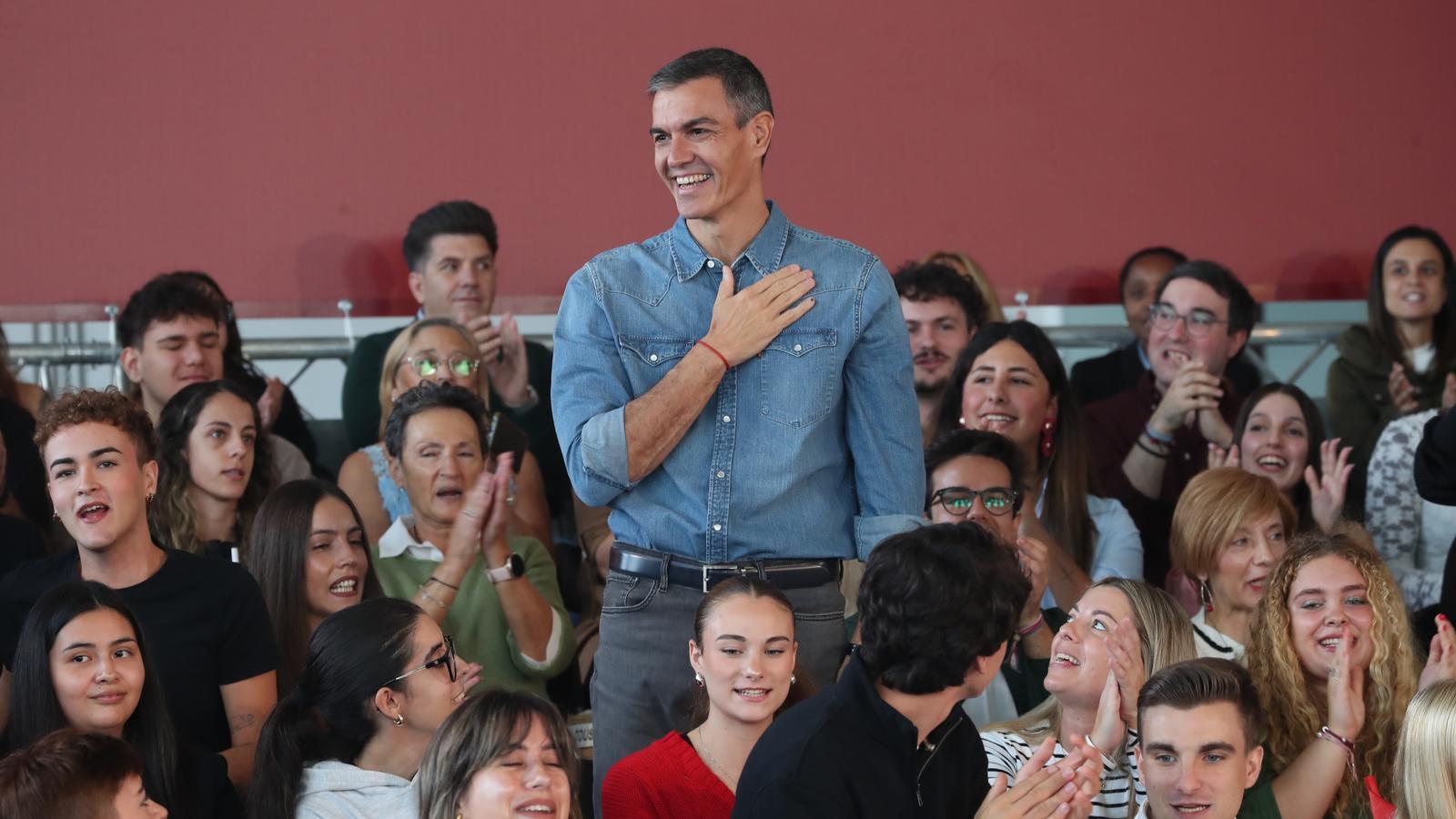

Pedro Sánchez, at a rally in Ponferrada, lashed out at the Supreme Court for pressuring him to approve the grandchildren's law. A law that would allow the grandchildren of republican exiles to vote in Spain. Sánchez must think that the majority of these exiles, in Latin American countries, would vote for progressive options. But that is assuming a lot. Among them all there are those who would, of course. And surely there wouldn't be many who would vote for the PP, of course. But there would also be some—I am thinking of the grandchildren of Catalans—who might choose Catalanist options. In any case, the phrase he let slip was this: "Will the grandchildren of the exiles of Francoism not be able to vote, while the grandchildren of the Francoist regime will?"
In the first part of the sentence, Pedro Sánchez speaks of the “grandchildren of the exiles,” and in the second, he speaks of the “grandchildren of the Francoists.” That is speaking in broad strokes. It is not moral to speak of grandchildren of Francoists, because not everyone who stayed behind was one. There remained imprisoned republicans, farmers without any affiliation who had no resources, republicans without money, and of course, naturally, also grandchildren of Francoists. Franco's granddaughter, Carmen Martínez-Bordiú, remained.
A grandchild does not have to agree with what their grandfather did. That is speaking very much in broad strokes. But we are in the era of the reel. The good guys and the bad guys talk about good guys and bad guys and, consequently, they cease to be good or bad. Everything is black or white, everything is very big or insignificant, everything is done by shouting. And, if you try to nuance, both sides label you as woke or a fascist.
