Necessary general strike

General strikes are a fundamental instrument for the articulation of democratic societies. General strikes, sector-specific strikes, and, of course, the right to strike itself. We have reached a point where perhaps we must start here. This does not prevent many of us from having questioned on occasion the appropriateness of calling one general strike or another. But now we are in another moment in the history of democracy in which what is being called into question is not the content or the meaning of a specific strike, but the very act of the strike and even the right to call for it and to support it. It is a demand of those who wish to arrive at post-democracy, or those who are already living installed within it. Fundamental rights and freedoms must retreat, must be minimized, or must be abolished. Trump may have suffered a defeat in the midterm elections, but the Alex Karps, the Chris Olahs, the Elon Musks, and the Mark Zuckerbergs continue to work on a new order of large digital corporations that dilutes and aspires to replace the mechanisms and institutions of liberal democracies as a form of power organization in our societies.
What is at stake, let us say it again, is democracy itself. The right to decent housing and a fair wage, which is what is being demanded in this general strike, is at the foundations and at the forefront of the defense of democracy. The claim that this is not a strike against the current governments (whether regional or the central government presided over by Pedro Sánchez) is not true, or not entirely true. The discussion is not about whether the strike is against the government or against the opposition. It is simply that we can still identify between a government that has fallen asleep on housing policies and does not react until it is faced with a social emergency, and another possible government formed by parties that wish to access power to dismantle the rule of law, the social state, and the welfare state. There is a left-wing government that has not worked well nor has it worked enough: but the alternative being proposed is another government that, if it does work, will be to dismantle the fragile social conquests that have been achieved in these fifty years of insufficient and defective democracy, but democracy, after all.
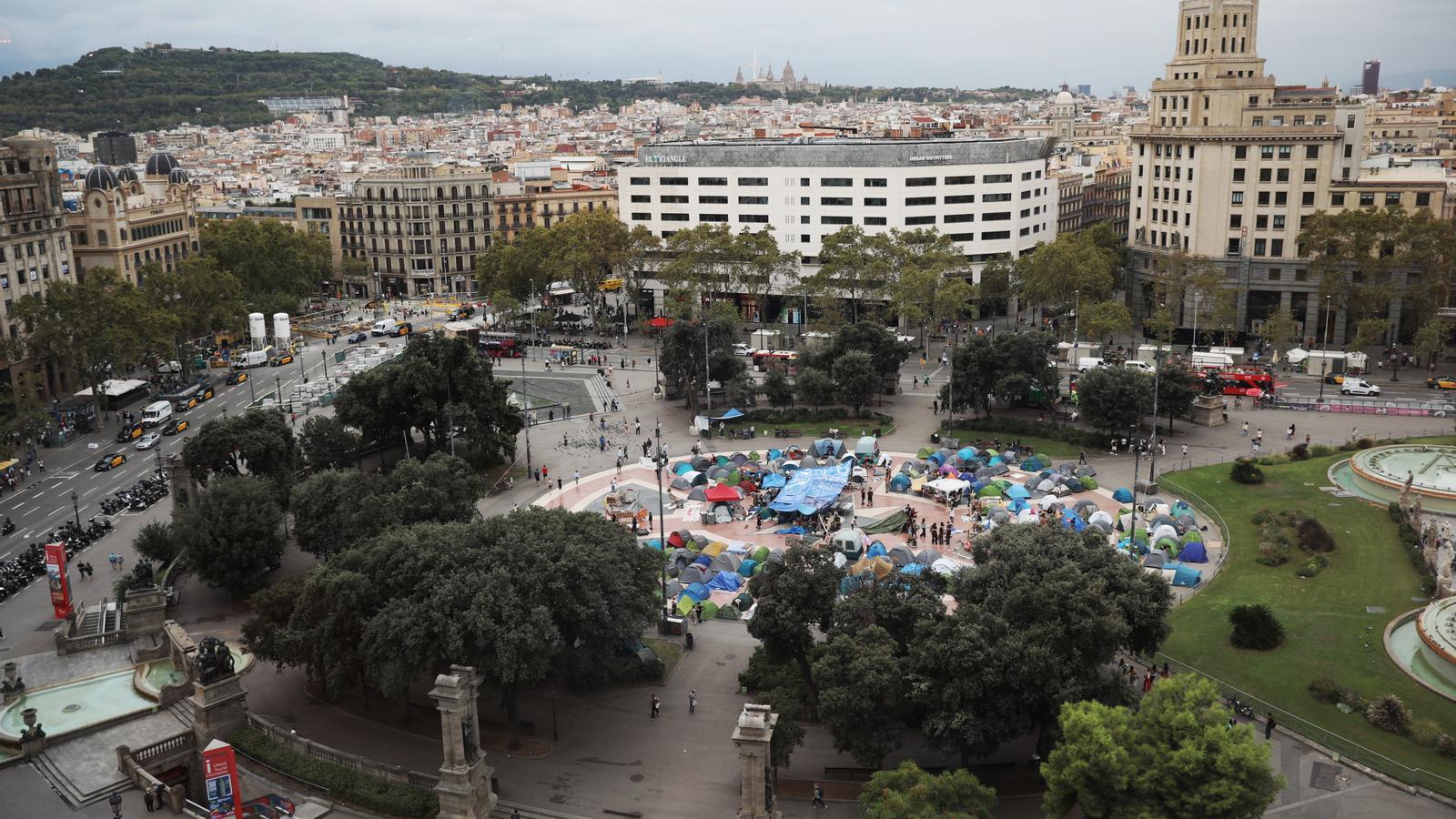
A general strike in the midst of a housing crisis, and on the eve of a general election, is a collective gesture of democratic self-assertion that, to begin with, must be greeted with the utmost respect. It is not acceptable to try to disqualify it with partisan arguments or with the repertoire of insults and populist tropes into which public debate has degenerated for some years now. In the Spanish state, right now, there are mayors (like the one in Palma, like the one in Madrid) who see fit to send the local police to cancel citizen protests such as the housing encampments that were in the squares. When authoritarianism ceases to be a hypothesis and becomes a real threat, a general strike is, quite simply, necessary.