Near the end

-
CAT -
CAST
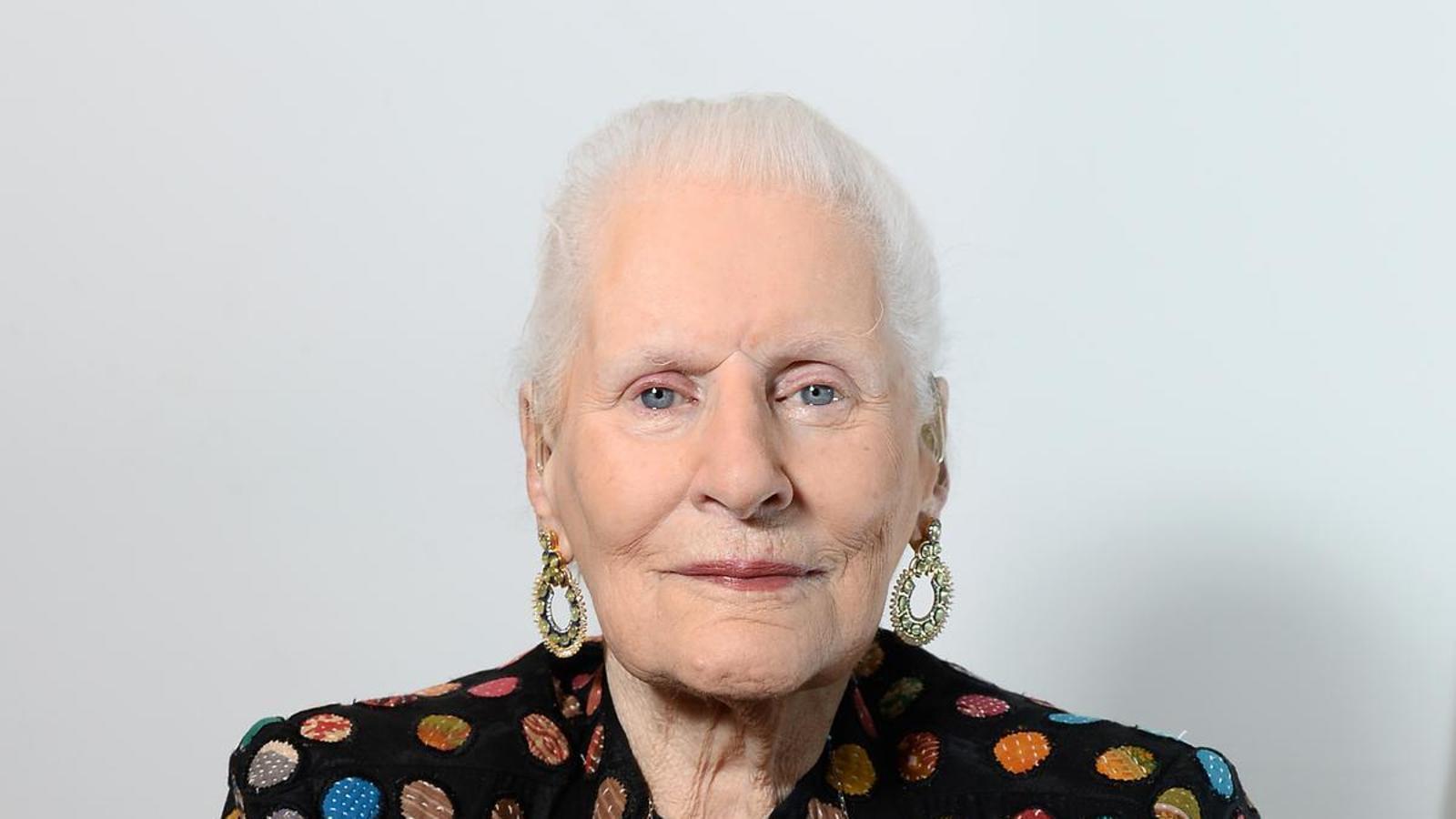
The English editor Diana Athill discovered, once retired, that writing was what really made her happy. She wrote novels and memoirs, and when she had already turned ninety she published Somewhere Towards the End, a book with a very explicit title in which she reflected on old age and the proximity of death, among many other things. Athill's calculations were wrong, and the author lived another decade that allowed her to publish four more volumes.
Reading Somewhere Towards the End (in Catalan with Univers, translated by Mar Vidal; and in Spanish with Asteroide, by Regina López Muñoz) is like going to visit a clever, cultured, and funny grandmother, with an interesting and bold life and a wise and lucid gaze. These are the reflections of a long-time editor, but they are also the confessions of anyone who knows they are reaching the end of their journey. Diana Athill speaks—without hang-ups or snobberies—of love and sex, of religion, of anti-racism, of art, of family and inheritance, of motherhood, of old age, and of death. And, obviously, of writers and books.
In this last section, Athill asserts that, as a reader, she began to set fiction aside (she only saves the classics and some stellar names like Sebald, Foster Wallace, and Alice Munro): "Age has made me fussy, like a person who has lost their appetite and is only tempted by very select delicacies."
Faced with the limitations imposed by old age, Athill sees a compensation: "You realize that nothing mattered in the deepest sense, so you can take everything lightly." Regarding death, she adopts her mother's sentence: "I'm not afraid of fear, what scares me is dying."
Diana Athill did not have children; she became pregnant at 43 by a slip-up (which as an old woman she considered unconsciously intentional), but she suffered a miscarriage that put her life at risk. The joy of having survived, she writes, helped her overcome the sadness quickly.
Her reflection on motherhood makes one ponder: "That our body is designed to conceive means that many generations will have to pass before women are freed from the psychic patterns dictated by their physique, however simple the gesture of taking a pill may be; and there is the possibility that we will never be able to conquer this psychic freedom." Perhaps it is true that near the end things are seen more clearly.
