Linguistic agonies

After a long time pursuing it, I managed a couple of weeks ago to get the original 19th-century edition of Las Papillotos, by Jasmin, in four very well-edited volumes published in 1842, 1843, 1853, and 1863. They arrived on Sant Jordi's Day, and at the end of the article I will explain why it seems like a not very good premonition to me – rather, a bad omen. Jacques – or Jacme – Boé, known literarily as Jasmin or Jansemin (Agen, 1798-1864), was a Gascon barber-poet who turned the old popular speech of Agen, a dialect of Occitan, into a literary instrument of unusual strength in the 19th century. Son of a humble family, self-taught, a great orator, he worked his whole life as a hairdresser while writing and reciting poetry in a dialectal variety that is now dying. His fame as a poet arose mainly from the recitals that took him to many theaters and salons in France. His musical diction and the vivid use of the langue d'oc captivated an audience that was discovering – and here one must choose words carefully to avoid creating illusions or anachronisms – a striking but politically harmless cultural anecdote.He published several volumes under the general title of Las Papillotos, which brought together long verse narratives combining white humor, pathos, and a gentle portrayal of popular life. Sentimental and vehement, Jasmin dignifies humble characters and turns everyday life into poetic material. In the mid-19th century, he was celebrated by Parisian critics and writers, and some consider him a precursor to the Occitan literary renaissance. The passage of time, however, worked against him: the Occitan dialect he wrote in ceased to be transmitted. This linguistic disappearance has led Jasmin to be read both as a creator and as a mere witness to a lost and irrecoverable world. He died in Agen, respected and popular, with a striking bronze statue and all, leaving behind a work that today is perhaps more archaeological than literary. He turned Las Papillotos into one of the most unique literary monuments of the Occitan language with narrative poems such as L’Abuglo de Castel-Cuillé, Françouneto, Maltro l’innoucento, Lous dus frays Bessous, etc. They are extensive tales, full of dramatic and truculent twists, good-naturedness and tenderness, which portray the lives of ordinary people with an emotional intensity that the urban public of 19th-century Paris found, ambiguously, exotic and familiar at the same time. Jasmin's strength lies in an uninhibited, elastic, sentimental language, closely linked to the spirit of Romanticism and, above all, to rural France. His characters are sensible peasants, virtuous maids, artisans, abandoned children. He treats them with dignity, often eliciting a tear from the respectable public. Although it may seem strange, the reception of this work was extraordinary: in the mid-19th century, Jasmin was an editorial phenomenon, as well as a celebrated rhapsode. The 20th century, however, relegated him to oblivion, a victim both of institutional contempt for the "patois" – as some called and still call Occitan – and of discomfort with a popular romanticism that no longer fit modern canons. This weekend, I happened to read a dozen of these poems. It's like hearing a voice that still sparks, but that comes from a landscape that has faded, ghostly and a little depressing.
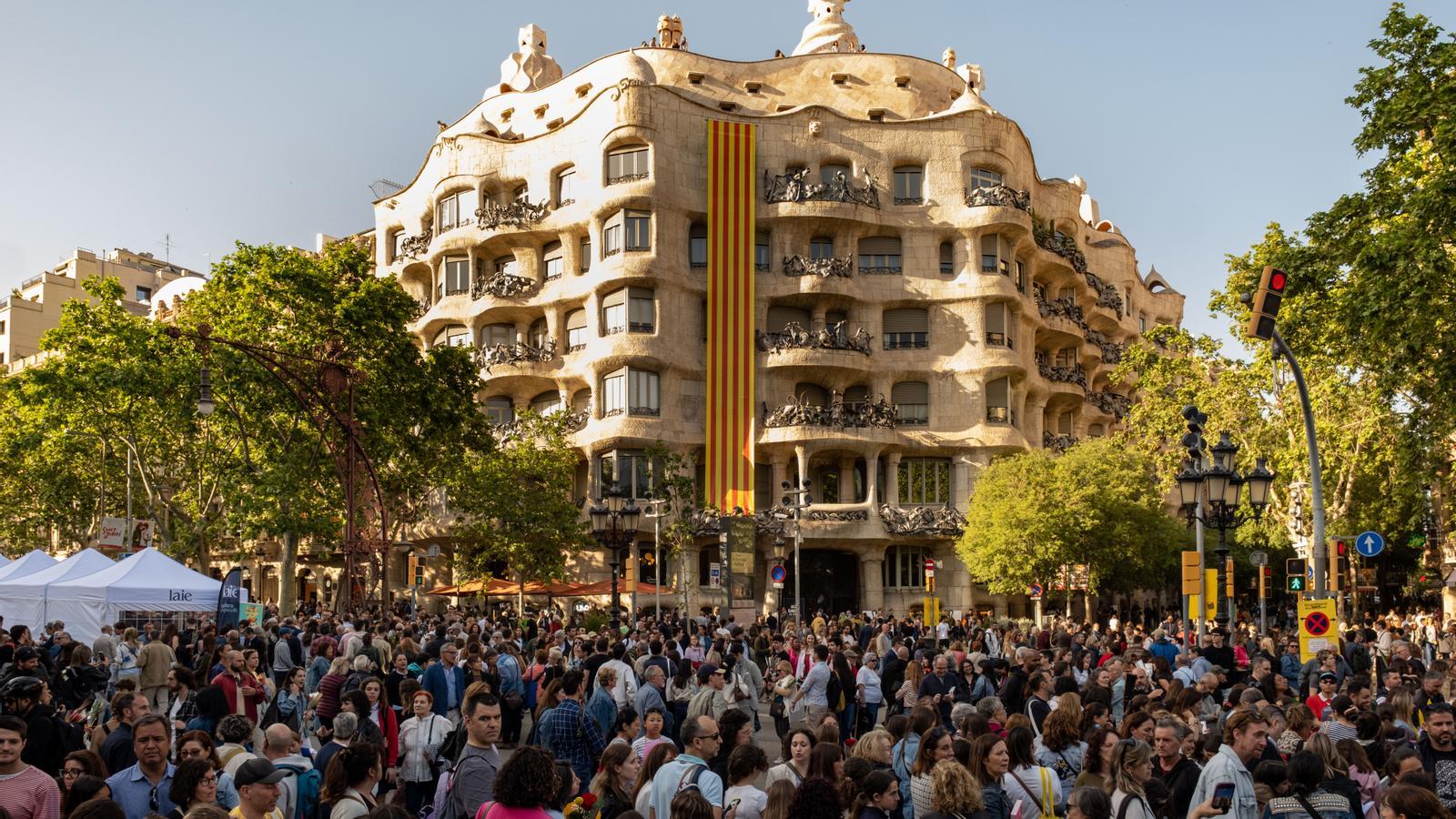
Despite systematic persecutions, prohibitions, and successive substitution processes, Catalan has maintained a social and cultural continuity that has preserved it as a living language. Between the late 19th and early 20th centuries, it became, albeit in a hesitant, intermittent manner, a language of modern culture with institutions, normalized grammar, and its own public space, while Occitan remained fragmented into local varieties without a strong and real normative center until very late. The Ofici Public de la Lenga Occitana surveyed 8,000 people in 2020 to measure knowledge, practice, and transmission. Although the full report does not provide a single global figure, it confirms that daily practice is very much in the minority and that most "knowers" are not active speakers. Today, the social use of Catalan is also becoming clearly a minority: 32.6% of the population according to Idescat.Upon receiving Las Papillotos precisely on Sant Jordi's Day, I thought about the increasingly illusory nature of this celebration in relation to the Catalan language. Perhaps the books published this year, including mine, will be auctioned off in a few decades as if they were a quaint and harmless editorial anecdote from times gone by. The victory of the PP-Vox coalition will undoubtedly shorten the agony. Forgive my sadness.
