As explained to ARA in 2023, Ira Sachs is a director who always lets himself be “guided by filmmakers of the past”. In The man I love, his return to the Cannes competition seven years after Frankie, he is inspired by Maurice Pialat's Van Gogh to portray Jimmy George, a brilliant actor and performance artist on the 1980s New York theater scene who, despite the serious illness he suffers from, faces life, love, and what could be his last great role with enthusiasm and abandon. In this melancholic and elliptical film, with a notable cast led by a Rami Malek dedicated to the cause, Sachs is not interested in filming the agony, but rather the pain of seeing the lights and shadows of someone you love, knowing it will be the last time.The other film in the competition, Notre salut, would make a good double feature with Moulin. In both films, the Marseillaise is sung, in fact, but if in the biopic of Jean Moulin it was sung by a group of resistance heroes about to be executed by the Nazis, in Notre salut it is sung by members of the Vichy collaborationist government shortly before fleeing the Allies. Director Emmanuel Marre tackles this dark episode in French history through the story of his own great-grandfather, a prominent member of the Vichy government's Ministry of Labor. By taking the point of view of this complex and frustrated man, an enthusiastic supporter of Pétain who sees the occupation of France as an opportunity to redeem himself from past failures and straighten out his family life, Marre speaks about the banality of evil and the moral bankruptcy of French society without resorting to simplistic portrayals or lessons.
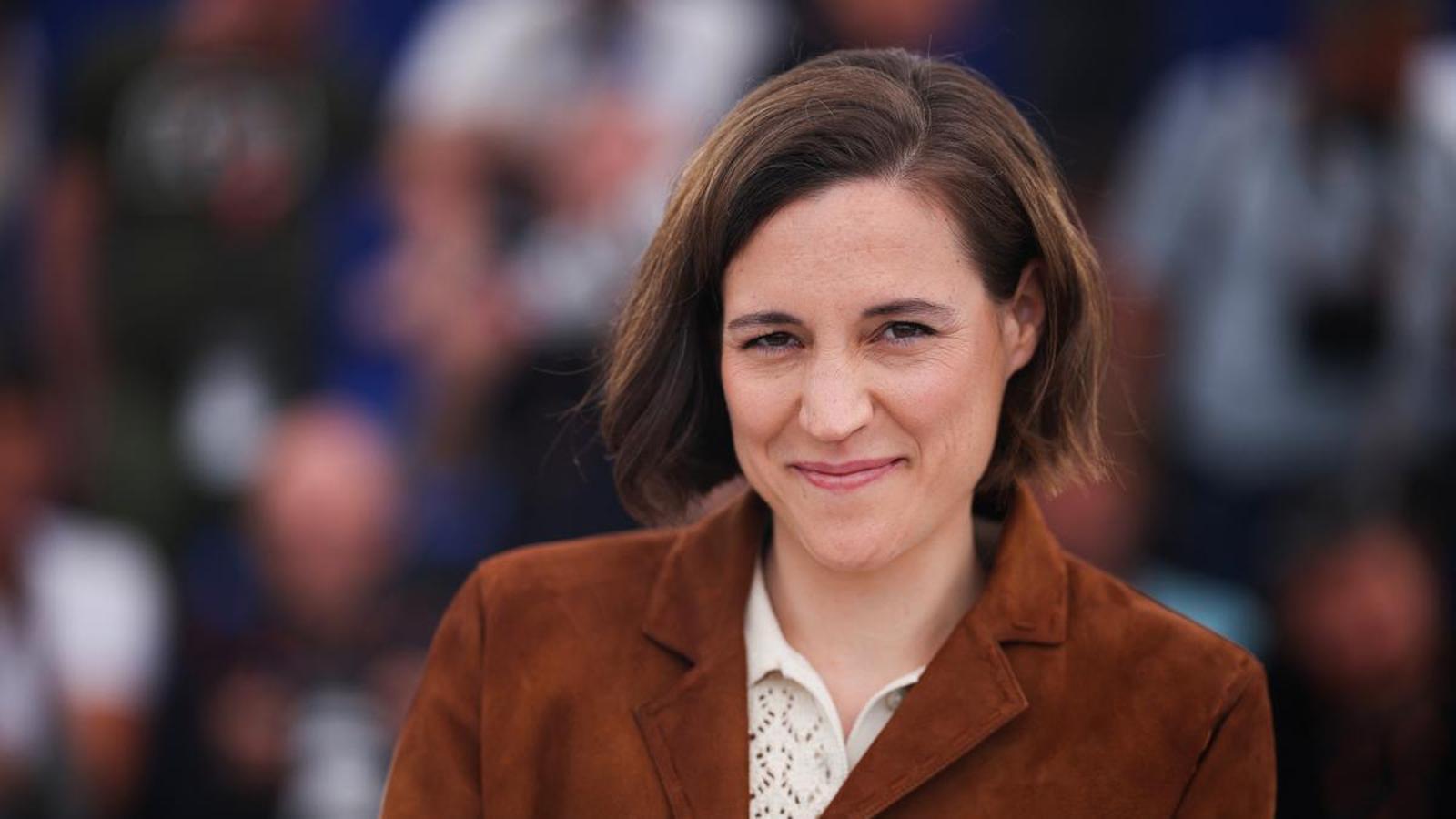
Carla Simón: "I would love to direct a music video for Rosalía"
Filmmaker. Presents the short film 'Flamenco' at the Cannes Film Festival
-
CAT -
CAST
Special envoy to the Cannes Film FestivalOne year after premiering Romería there, Carla Simón has returned to the Cannes Film Festival with a freshly baked short film: Flamenco, produced by Icex, the public body that promotes the internationalization of Spanish companies. Starring choreographer and bailaora Rocío Molina and with musical direction by Niño de Elche, the work, which can now be seen on Icex's website, serves as a rehearsal for the director's next feature film, for which she is preparing a flamenco musical.
How did the opportunity to make the short film arise?
— It's a proposal from producer Oscar Romagosa. I don't usually take on commissions and I don't like advertising, but he assured me I would have total freedom. I could choose between fashion, design, and music, and since I'm preparing a musical about flamenco, I chose music to explore the permanent tension that exists in flamenco between tradition and the avant-garde.
And how do you get to Rocío Molina?
— Rocío was perfect, because she is someone who has reflected a lot on the subject of the short film. She has studied flamenco at the academy, but then she has taken it to very groundbreaking places, so she dialogued very well with the artistic proposal. Furthermore, she is an incredible dancer. She was on tour, but she really wanted to and joined the project. We finished filming two weeks ago and we did very fast post-production to arrive in time for Cannes.
When thinking about representations of flamenco in modern cinema, one of the first references that comes to mind is the work of Carlos Saura. What have been your references?
— In the history of Spanish cinema there are many representations of flamenco, it is almost a subgenre, but we often associate it with an idea of very conservative cinema due to the context in which the films were made. Then there are more experimental things like Saura's, but for me the great reference is Rovira Beleta, the director of Los Tarantos. What he portrayed no longer exists, but I liked the idea of taking a genre that is so many years old and revisiting it from a contemporary point of view. Investigating the archival material on flamenco, you realize that flamenco was born around the same time as cinema, and that it has often been represented by filmmakers from outside, which perhaps has to do with the emotion it conveys, that it pierces you.

In the short film, intersperse some of these archive images with Rocío's main plot.
— , view of D’A]. There are also many images of the program Bailar la muerte, seen at D'A]. There are also many images from the program Rito y geografía del cante that Televisión Española made in the 70s and which portrayed many artists, and also more experimental things like Val del Omar.
You had already used some of your previous shorts as a laboratory to try things out for later films. What interested you most about rehearsing in Flamenco?
— The short film allowed me to explore what work dynamics are like when you work with music and flamenco. As a director, I am used to working in a certain way with my team, but in a short film like Flamenco the creation is more collective, with artists like Rocío Molina, who is the director of her own works. Therefore, the dynamic is more complex, and making the short film has been very useful to ensure we speak the same language and see which creative process works best.
What is your relationship with flamenco music? Did you listen to it at home as a child?
— Yes, my father used to play flamenco for us sometimes. In the end, I come from a family of musicians, my father and my brother are musicians. And when flamenco was playing, I always connected with it from a very emotional place. And I also have a personal story with Lole y Manuel, because I met them through my mother's letters, as I explained in Romería. And, after having done such personal things, flamenco was a universe that I don't know very well but that I felt like exploring in depth, which is one of the best things that cinema allows you to do.
The tension between tradition and modernity of flamenco also resonates in Rosalía's music, whom you saw in concert a few weeks ago. Will we one day see a Rosalía music video directed by Carla Simón?
— I would love to direct a music video for Rosalía. It's a collaboration that I hope will happen someday.
This year you are the president of the jury for the official short film section of the festival. How is the experience going?
— This starts this Wednesday, because the shorts are shown at the end of the festival, but I'm really looking forward to discovering new things and getting inspired. Compared to last year, when I was very pregnant and with a lot of accumulated tension from the pressure of premiering the film, this year I feel like I'm just here to enjoy.
