In Catalan, 'please'
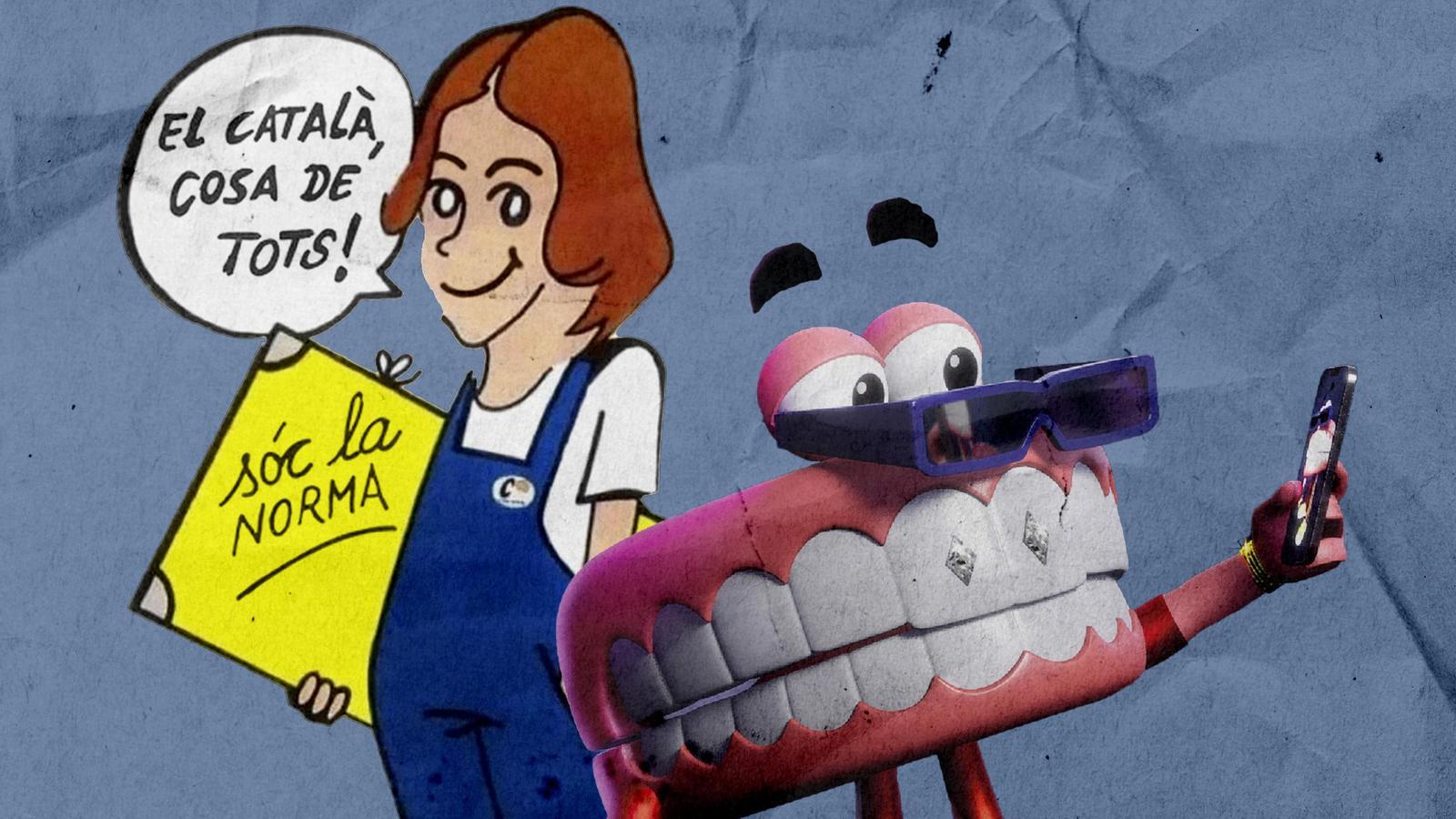

“Walking the streets, I have lost my soul.” That is how a song by GREC began, one of the pioneering pop-rock groups of the eighties here in our country. Being children of immigration, they embraced Catalan on stage with naturalness, a true symptom of normalization. If cities have a soul, and not just an urban silhouette –skyline, according to Barcelona's official website as the capital of architecture–, I fear that some have sold theirs. When they put themselves on the map as mass destinations, they lose their way. The list of concessions to predatory tourism is long, from allowing the circulation of extravagant vehicles for dull routes to letting monstrous cruise ships dock (like the Legends of the sea, a floating city with a capacity for 10,000 people) or expanding the airport to increase traffic. Red carpet by land, sea, and air. Other less visible gifts, fiscal and financial, have turned us into the great European paradise for vulture funds. There are many ways to attract, just as there are many ways to exclude.
Walking the streets today, a symbolic facilitating dimension stands out: language. The linguistic policy law aims to protect the speakers of a minoritized language. It mandates, for example, that general information signage and fixed posters, as well as documents offering services in establishments open to the public, must be, at least, in Catalan. That is on paper, because non-compliance is flagrant, inspections are non-existent, and sanctions are ridiculous. And we cannot blame the far-right (which has not yet implemented its program) nor the halal shops or Chinese bazaars, which mostly comply, but rather the franchises and the sector that makes a killing, happily, with tourists and expats; unlike the Italians who have made an identity and a draw out of preserving the name of every thing. There are those who consider sanctions for linguistic infractions unpleasant while they applaud fines for drinking or urinating in the street, uncivil practices that increase as much due to the rising cost of living or the overcrowding of homes as they do due to debauchery. Others demand tax breaks for those who comply with the rule. I wonder if they would defend a prize for not exploiting workers or not discriminating against staff based on gender.
However, signage for establishments or product labeling are only part of the deluge of information we consume. And I find it especially serious that the renunciation of Catalan is carried out by the administrations that should be preserving the language itself, which is increasingly banished from the public agora and urban space. If Spanish enjoys the protection provided by the State machinery, English takes advantage of the market's multinational logic to infiltrate advertising, both commercial and institutional. Coming across the giant poster, in front of the Design Museum of Barcelona, for a luxury real estate development with the slogan Recentering your life (without translation), made it clear to me that those apartments, with their open spaces and Mediterranean light, were not for outdated locals but for citizens of the world; or at least, of the global north. But what really shocked me was coming across a vehicle from the Badalona city council with the logo City of Badalona, the brand chosen for the new street cleaning service. It is easy for this cosmopolitan whim to spread elsewhere and for other uses. Many imported linguistic structures are contaminating signage and official speech. And we complain that young people drop weak pronouns when the authorities themselves phagocytize genuine usage! Advertisements in English are proliferating, addressing both the resident and visiting public, and others are stuffed with anglicisms to the point of ridicule. For what reason is our architectural heritage open day dubbed an Open House? Why, in the grotesque promotion of the “Club65 Live Experience” at Tibidabo, do they talk about silver people, longevity talks, premium category, free subscription, show cooking activity, or food truck vehicles? Under the false premise that it sounds cool, meaning fresh and modern, English slips into texts of all kinds while Catalan, considered soft or tacky, vanishes from urban and digital leisure.
We pay close attention, and rightly so, to the expansion of Spanish in socialization spaces due to the furious offensive against linguistic immersion. Sadly, it gives wings to the supporters of segregation, who conceive the Catalan school as a kind of hobbit village, a redoubt of immaculate identities. On the other hand, in certain power structures, such as the courts, Catalan has always been testimonial. We must pay attention, however, to the streets and shops where English is making inroads. I am not talking about the inevitable interference in conversation, but the brazen intrusion into public communication. Perhaps instead of focusing on immigrants, the weakest link in the chain, we should demand coherence from 100% public capital organizations; taxpayer money, as an American would say. And at the same time, demand responsibility from private capital, especially in exploitation sectors with impossible hours and miserable wages, such as tourism or hospitality. It would not be unreasonable for Catalan courses, paid for by the Consortium for Normalization, to be held during working hours. It is not about burdening shopkeepers with supplementary charges, but rather that extractive companies return to the society where they are established some benefit that compensates for the impact of their business. Translate corporate social responsibility into concrete commitments and not into slogans or paper.
This is not about regulating the words of affection or creation, so intimate and versatile, but about taking care of the language and not wasting its prestige by denying it for a bowl of lentils. I appropriate Míriam Cano's lament in Eleusis, intended for another dispossession: “Someone said that there were temples here, / but only the vibration remains / of the unspoken word”.
