Human journalism in times of AI

BarcelonaThis newspaper was born with an ambition that remains fully valid: to make a quality newspaper, conceived in Catalan, rooted and at the same time open to the world, committed to society and to a way of understanding journalism based on rigor, independence, critical spirit and the defense of democracy.
Now we are sixteen years old, which is an eternity in the recent history of the media. In 2010, smartphones were just beginning to transform our lives. We still believed that social networks would mainly serve to connect people and that the internet would lead us to a better-informed society.
Since then we have discovered a few things. Among them, that technology is not necessarily synonymous with democratic progress and that disinformation disguises itself as journalism.
It had never been so easy to access information and it had never been so necessary to distinguish between information, knowledge and truth.
After the internet and social networks, the new disruption is called artificial intelligence and we journalists compete with machines that write in seconds what takes us hours. It is a somewhat uncomfortable situation for a profession that has always had a very high opinion of itself.
And, yet, I believe that this revolution offers us an extraordinary opportunity: to ask ourselves again why we exist and what value we contribute to society.
Machines can write, summarize, translate and answer questions in a matter of seconds. But generating a convincing response is not the same as investigating reality.
A machine can summarize an investigation into corruption, but someone had to discover the facts. Someone had to talk to sources, cross-reference documents, ask uncomfortable questions and assume the responsibility of publishing it.
Enric González, a friend and collaborator of ours, once told me that “journalism is the art of wasting time.” He is absolutely right.
We journalists spend hours talking to people who apparently have nothing to tell us, asking questions that lead nowhere, reading books or documents that seem irrelevant, or waiting for someone to decide to trust us.
And, suddenly, a story appears.
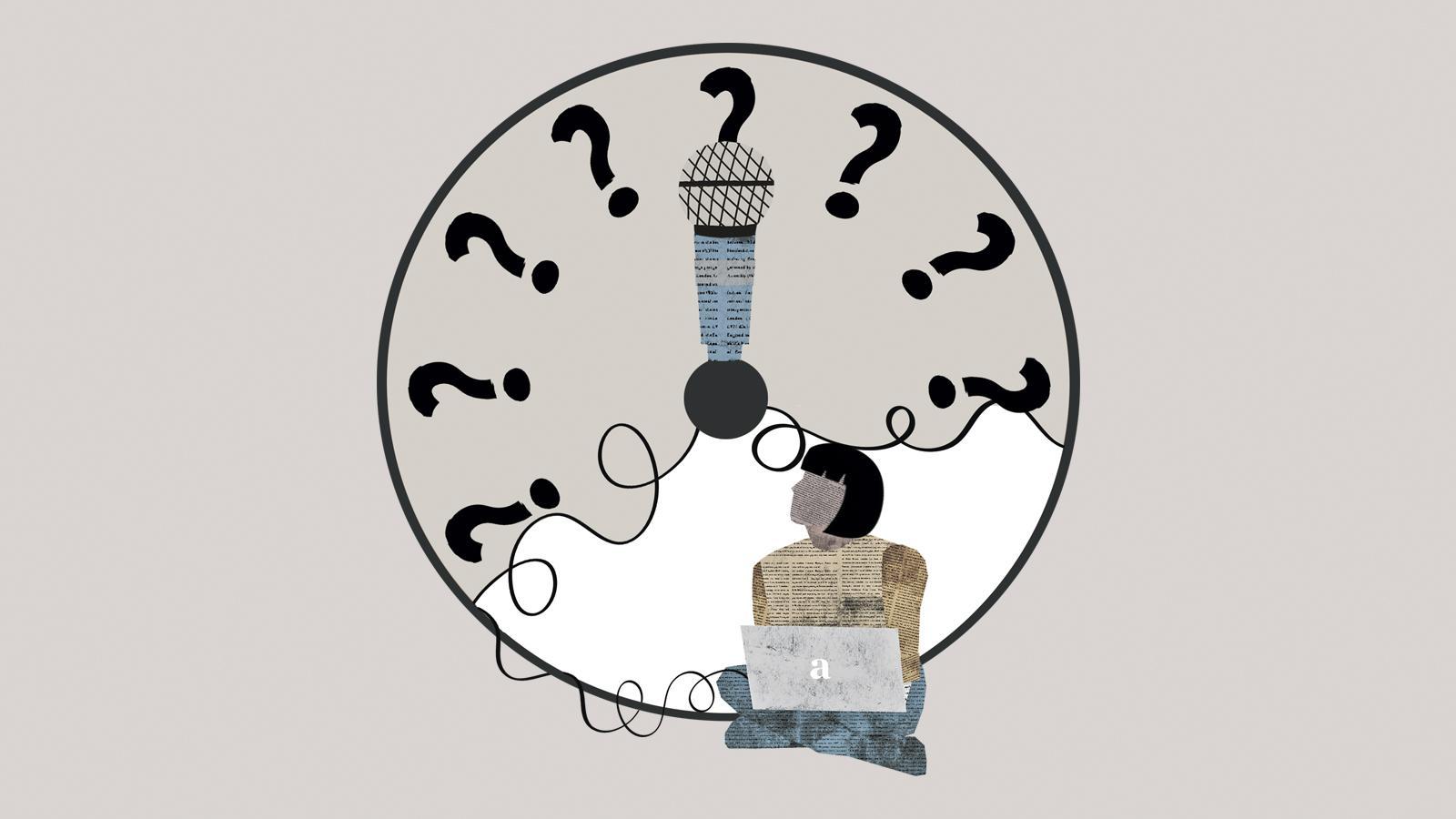
Today, the future of journalism consists, paradoxically, of using the most advanced technology to recover the old privilege of wasting time asking questions.
And here the great economic problem appears.
For years, newspapers accepted an unequal pact with technology platforms. They distributed our content, captured a good part of the advertising revenue, and, in exchange, sent us readers.
Now artificial intelligence can offer answers directly, without citizens visiting the media outlets that produced the information. We are facing a disturbing paradox: journalism may be increasingly necessary socially and, at the same time, less economically profitable.
From the very first day, ARA's response to the uncertainty in the sector has been to invite readers to pay for information. This has brought us tens of thousands of committed subscribers. True militants for democracy who are our reason for being. But we need to be many more in order to travel where there are problems, have time to investigate, prepare ourselves better, and have the freedom to ask the right questions. To have stability.
This year we have set ourselves six priorities:
- To do irreplaceable journalism. More original information, more investigation, more local journalism, more specialized knowledge. We cannot compete with machines in speed, but we can in rigor, judgment, and the capacity to discover facts.
- Grow the direct relationship with readers. We want to be a newspaper that listens to society and that deserves your trust. That is useful to you. A safe place.
- Incorporate artificial intelligence to produce better journalism. Take advantage of its possibilities without renouncing editorial responsibility, professional judgment, and human verification.
- Defend intellectual property and the economic value of information with European alliances.
- Investing in talent and professional culture. In journalists who know how to ask, listen, verify, explain, and, above all, doubt. Credibility does not depend on the tools we use, but on the decisions we make.
- Reclaiming journalism as a democratic infrastructure. A free society needs independent media capable of oversight, investigation, guaranteeing pluralism, and building a shared foundation of facts.
ARA is a serious newspaper. Not a newspaper that tells readers what to think, but a newspaper that helps them think for themselves. This sometimes involves causing discomfort. Even to our readers. We believe that a newspaper that only confirms the convictions of its audience may be a comfortable business, but it will hardly be a good newspaper.
By extension, journalism that does not cause discomfort may never be wrong, but it is also possible that it will be of no use at all.
The fact is that great editors are tested not by having brave opinions, but by being willing to accept the consequences of publishing.
Today the fundamental question is: how will we guarantee that useful journalism for citizens and democracy continues to exist, whatever the future may hold?
We will do so by asking uncomfortable questions and verifying the answers. Fleeing from our prejudices, but with an incorruptible framework of defense of democracy and the idea of Europe.
Every reader, every subscriber, performs an act of trust in journalism and in democracy. We receive it with responsibility and joy and we are deeply committed to doing human journalism.
