Heads and tails of the trial of Jordi Pujol
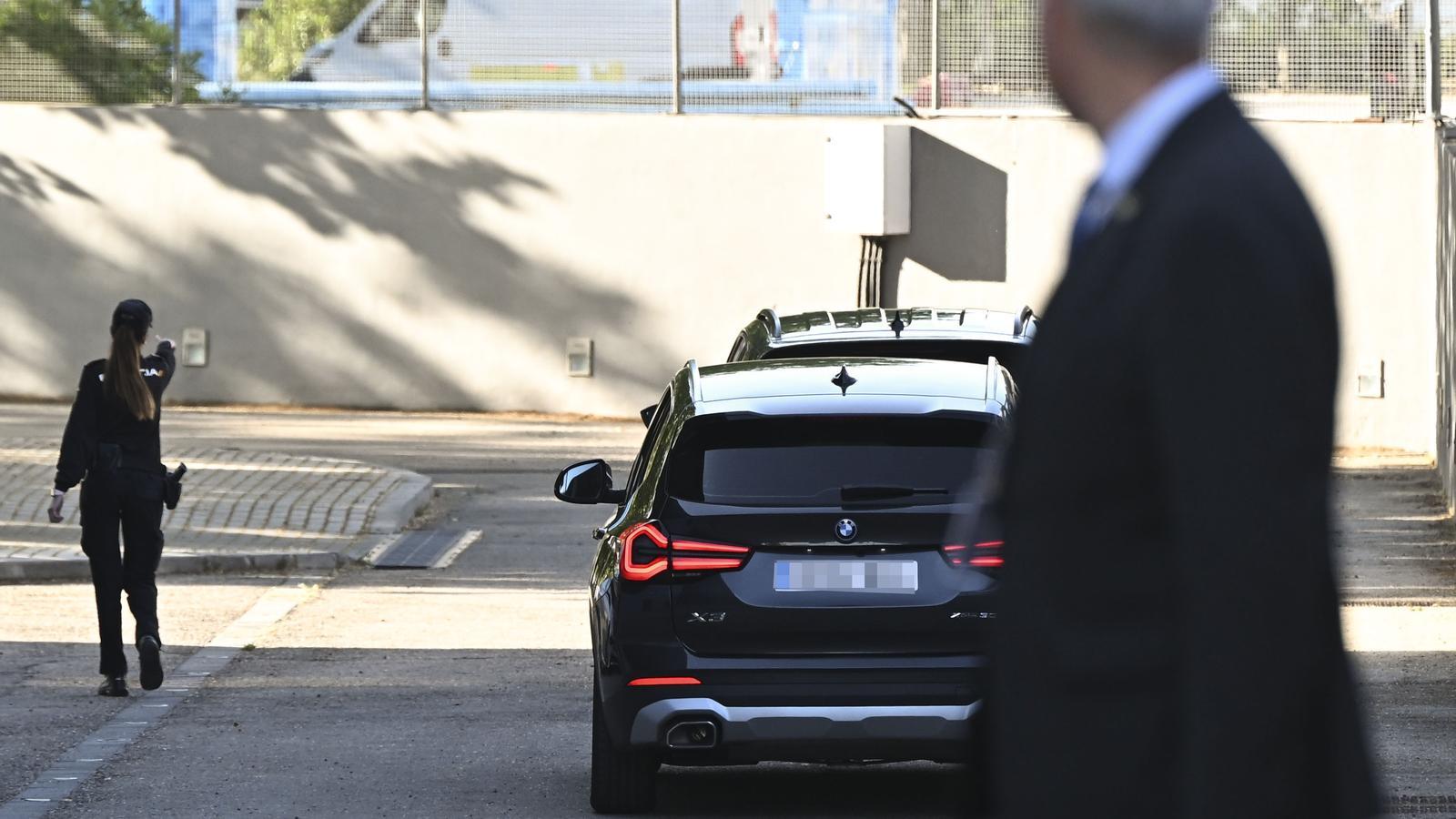

President Pujol wanted to testify in the trial that is taking place at the National Court. I am convinced that he wanted to do so for two reasons: because of his character, always a fighter; and because he considers himself innocent of the accusations that have been made against him for many years. He has enough lucidity to know that he wants to defend himself, but according to repeated medical opinions, he does not have enough mental agility to do so with full guarantees. Despite numerous pieces of evidence in this regard, they made him go to Madrid, in an act of hurtful insensitivity and pathetic dehumanization of justice.
The court that was to try him justified making him appear in person so as not to confuse advanced age with a lack of mental capacity. In theory, it is a good argument, but in this case, it does not hold up at all. The issue is not age, it is mental capacity. Unfortunately, we all know people much younger than President Pujol who suffer from very severe cognitive impairments, and fortunately, we also know people who, exceptionally, have great lucidity despite accumulating many years of life. However, in this specific case, when the trial began in November last year, forensic doctors, specialists appointed by the National Court, had already unanimously ruled that the president suffered from cognitive deficits that prevented him from defending himself. Therefore, making him go to Madrid has nothing to do with the judge's argument of protecting the concept of “an elder person”, because if six months ago he could no longer defend himself, it is evident that now he can do so even less. Age does not forgive, as the popular saying goes... and at certain ages, in a few months, capacities do not usually improve, but rather the opposite. Everyone knows this, and it is prophecy...
The conclusion, then, is evident: they sent him to Madrid because his name is Jordi Pujol, because he has been what he has been, and because he represents what he represents. As they say in Spanish, “por ser vos quien sois”. What Pujol represents is what most bothers them and what they most repudiate: a Catalan nationalist, cultured and sensible, with enough leadership and social standing to articulate a project that disrupts their idea of a uniform and centralist Spain. The Pujol who defended the modernization of Spain, who stabilized crucial moments in Spanish politics, a convinced Europeanist... neither interests them nor do they take him into account. What prevails is that, in their eyes, a stronger Catalonia equates to a weaker Spain. And Pujol is the symbol of a Catalonia that recovers and reinforces its identity, its Catalanity, and its national project. Even this weighs more than the Pujol who on several occasions publicly stated, and politically defended, that Catalonia's independence was not the way.
In recent years we have been able to observe that in high spheres of the State, the concept of zero tolerance prevails with the idea that Catalonia should rise nationally. The extremely harsh repression to decapitate the sovereignist movement is still a latent proof of this. In the peak years of the Process, our country raised its profile as a nation with aspirations for freedom as never before. The depth of the punishment we have experienced, and still experience, is directly proportional to the feeling of humiliation and wounded pride that many felt, and to the firm will they have to cut off any resurgence of the future at the root. And let us not forget an essential fact, without which the distrust that the figure of President Pujol continues to generate cannot be understood: they attribute to him that his work in government, that of a modern Catalonia but above all more conscious of its Catalan identity and its condition as a nation, has been the main foundation of recent sovereignist aspirations. Self-government, which some independentist Catalans see as a weakness that holds us back, in Madrid they see it as a fortress that gives us wings. Not going any further, this observation, accompanied by dubious negotiating skills, is what explains that when Rodalies is transferred to us, the State wants to continue to have a decisive role in it, or that when a singular financing based on fiscal autonomy is agreed upon, the State is not willing to stop managing the major taxes.

The trial of President Pujol, which will no longer have a sentence in the judicial sphere, has a downside and an upside. The downside is what we have described so far. The downside is the evidence that not everyone is equal before the law, as is often proclaimed. No person of his age and in his circumstances would have been summoned to Madrid. But he is Jordi Pujol, he has the history he has, and he represents what he represents. However, this episode also has an upside, which will weigh much more than the downside: in the eyes of many people, even detractors or adversaries, the harshness and mockery he has suffered, and the dignity he has shown, create an empathy that will help tip the scales of the most decisive sentence for a person like him: the one dictated by the people and preserved by History.
